
Local service guide
Boston warehouse organization: Hiring and Planning
Arrange warehouse organization in Boston by agreeing on the inventory tasks, handling responsibilities, and acceptance checks before hiring. Request a quote that separates labor, supplies, equipment, and hauling. Choose a crew that explains who will move stock, update location records, and seek approval for disposal. Assign truck access and removal arrangements before setting the work date.
Define the work your staff needs
Walk the storage area with the staff member who handles receiving or picking. Identify active stock, incoming goods, returns, packing supplies, and items awaiting a decision. Name a business contact who can approve stock movements and removals. Ask the crew to put uncertain items in a hold area for that person to review.
Describe a result your staff can check: labeled storage locations, matching location records, an agreed returns area, and a handover walkthrough. Specify whether you want counting, discrepancy reconciliation, shelf cleaning, or sorting of existing contents. Keep changes to racking or building systems outside the organizing scope until you have reviewed the proposed work with the appropriate specialist.
Compare quotes and handling responsibilities
Give each bidder photos, a zone list, access instructions, and your proposed work window. Flag heavy goods, elevated stock, and items with handling restrictions. Ask who will move those goods and what equipment they intend to use. Request proof of insurance and ask the provider to explain coverage for damage to inventory and premises.
Ask for separate amounts for labor, labels, bins, equipment, hauling, and access arrangements. For hourly work, agree on crew size, billing increments, and a spending limit that requires your approval. For a fixed price, establish how the provider will charge for added zones or unlisted stock. Identify who will purchase supplies and approve substitutions.
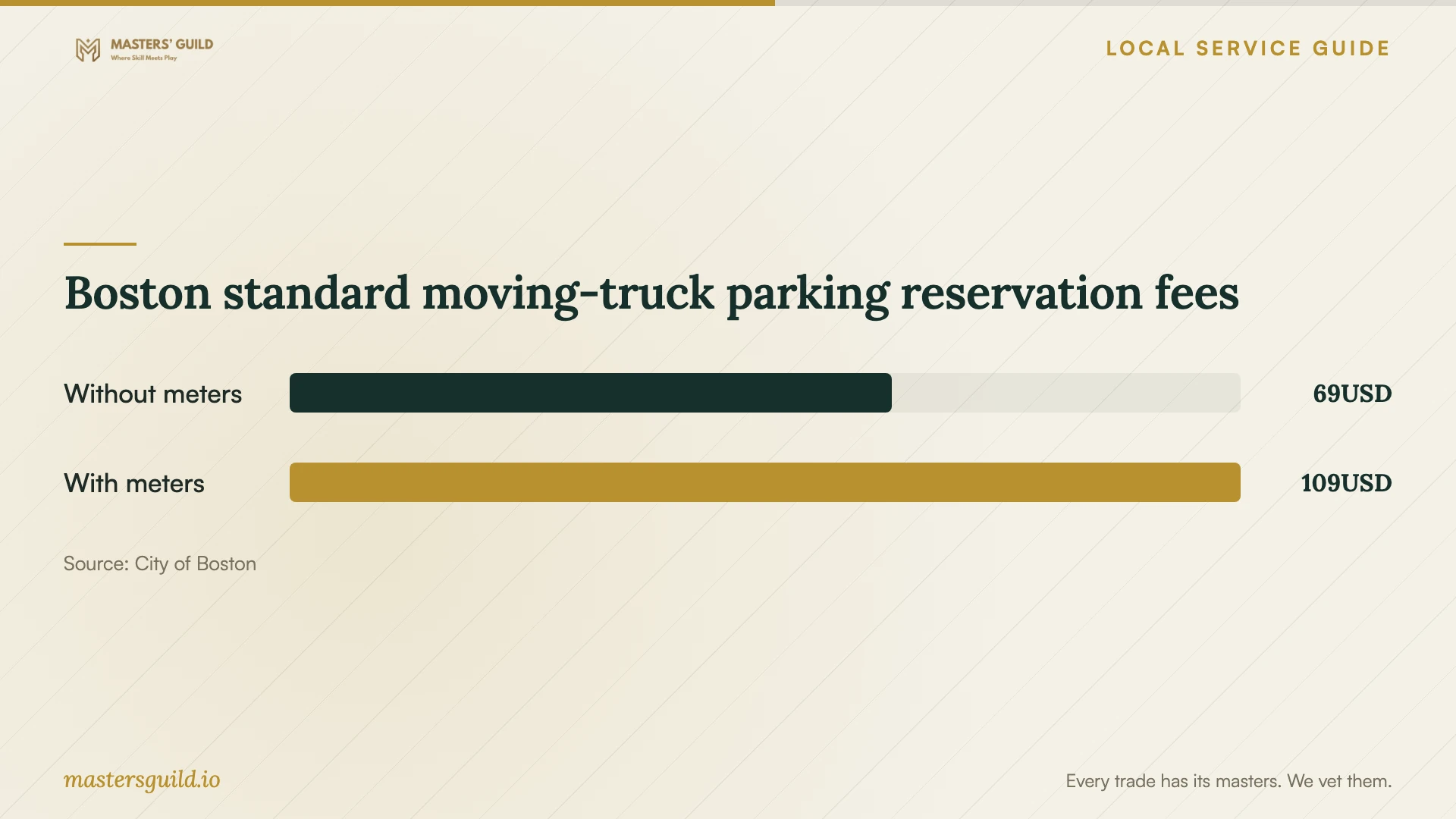
Boston’s moving-truck portal lists $69 without meters and $109 with meters for a standard one-day reservation covering two parking spaces. Include an eligible reservation as a separate access expense. These published fees do not establish an organizing labor rate or a total project price. [2]
Prepare, run, and accept the job
1. Approve the plan. Before confirming the booking, agree on included zones, the handling plan, the price basis, and the person authorized to approve changes. Define the records and walkthrough you expect at completion.
2. Prepare the first work area. Before the crew arrives, photograph the starting arrangement and identify stock that must remain available. Agree on a temporary holding area and tell receiving staff where to place deliveries during the work.
3. Review the first completed zone. Ask a staff member to locate selected items using the proposed labels and location list. Resolve naming or recording problems before the crew applies the same arrangement to other zones.
4. Authorize removals. Review the hold area and approve a written removal list before goods leave. Ask the crew to record any items that remain undecided rather than treating them as discards.
Arrange loading access before setting the date
Confirm dock access, property-manager vehicle restrictions, and any elevator booking with the people responsible for the premises. Ask the provider whether it needs street loading. Boston issues moving-truck reservations for moving trucks, not personal vehicles; confirm vehicle and address eligibility with the Parking Clerk before applying. [1]
Allow at least 15 days for an online application, following the city’s instruction page, and apply no more than eight weeks ahead. The portal states a two-week minimum, so use the longer lead time to plan the job. The city accepts in-person applications from three days to eight weeks before the move. [1] [2]
Confirm the hauler and complete handover
Ask the organizer to identify any removal subcontractor and the material it will collect. Boston requires commercial hauling permits for vehicles carrying covered debris through city streets, including trash and recycling. Public Works reviews applications, and the city requires vehicle approval and payment before final permit approval. Confirm the truck and the company’s authorized debris category before collection. [3]
5. Accept the handover. Compare the finished zones with your agreed scope, review stock discrepancies and approved removals, and record unfinished tasks with an owner and deadline. Obtain the updated location list and have staff demonstrate how they will use it. Name the person responsible for maintaining each zone and specify any follow-up work you want priced.
Boston standard moving-truck parking reservation fees
Local details that affect your job
Assign curbside preparation and cleanup
Boston’s standard moving-truck reservation covers two spaces for one day from 7 a.m. to 5 p.m. Post signs at least 48 hours before the start. The city also requires distributing fliers to cars within a half-block each day for at least two days before the move, or one day before for metered spaces. Assign these tasks before booking and name the person who will remove signs, fliers, and debris afterward. [1]
Check state-road jurisdiction
Boston cannot issue moving permits for all of Arborway, Jamaicaway, Fenway, Riverway, Charlesgate East, or Charlesgate West. Its portal also excludes 1101-1209 Boylston Street and 11-468 Park Drive because these are state-owned road locations. If your loading address falls within an exclusion, ask about the applicable state permission process before committing to curbside loading. [2]
Check the collection truck
Boston charges commercial haulers $300 per truck and requires permit renewal every two years. This fee concerns the hauler’s operating authorization, not your cleanout price. Ask for the collection company’s name, the truck it will use, and its authorization for your debris category. Make that check part of approving the removal subcontractor. [3]
Choose the scope and access arrangements
| Your situation | Scope to request | Before booking |
|---|---|---|
| Stock stays inside | Sorting, labels, and location-record updates | Define who approves movements and checks completed zones. |
| Heavy or elevated stock needs moving | A handling plan with equipment responsibilities | Review the plan and insurance information. |
| A moving truck needs reserved street space | Parking application, signs, fliers, and cleanup | Confirm eligibility and application lead time. |
| Loading falls on a listed state-owned road | Access arrangements outside Boston’s moving-permit program | Resolve the applicable state permission process. |
| Trash or recycling will leave | An identified commercial hauling subcontractor | Confirm the truck’s Boston authorization and debris category. |
Your hiring checklist
- Prepare a zone list and photos for each bidder.
- Identify customer property and goods requiring handling instructions.
- Provide the label format and inventory records you want the crew to use.
- Request the quote, insurance information, and change-approval terms in writing.
- Confirm access arrangements with the property manager and provider.
- Identify the removal subcontractor before approving collection.
Frequently Asked Questions
How much should I budget for organizing labor?
Request a quote for your inventory tasks, zones, crew, equipment, and access needs. Ask the provider to separate supplies and hauling from labor. Agree on a spending approval point for hourly work and a price-change process for added tasks.
Do I need a parking permit for an internal reset?
Ask whether the provider needs street loading. Boston says a moving-truck parking permit is optional, but it guarantees legal parking space for the move. Confirm that the vehicle and address qualify before arranging a reservation. [1]
Can the organizer remove unwanted inventory?
Ask who will collect it and approve a removal list first. For covered debris such as trash and recycling, Boston requires commercial hauling vehicle permits. Confirm the collection truck and the company’s authorization for the material you plan to discard. [3]
How should I accept the completed work?
Have staff find selected items using the new labels and records. Review the agreed scope, held stock, discrepancies, and removal list with the crew. Record unfinished tasks and correction deadlines, then obtain the location list and maintenance instructions.
Sources and scope
This guide combines the sources below with practical planning guidance. Figures apply to the stated geography and period; request a written quote for your property.