
Local service guide
Warehouse Organization in Billings, MT
Arrange Warehouse Organization in Billings by defining the stock to sort, who approves removals, and whether the crew will handle labeling, heavy moves, or haul-away. Ask for a written scope and a walkthrough before accepting a quote. Plan the layout around the city's fire-inspection clearances, and separate commercial hazardous waste from ordinary disposal: the regional landfill excludes it. [1] [2]
Define the reset before choosing a crew
Choose the outcome you need: labeled stock locations, a cleared receiving area, a count of retained inventory, or a full storage-zone reset. Walk the space with the bidder and mark the boundaries of the job. Include overflow stock, returns, damaged goods, and materials awaiting a disposal decision.
Assign one employee to approve moves and removals. Give the crew a hold area for uncertain items, and require approval before anything leaves the premises. For inventory that you track in software, specify who updates locations and quantities. Ask for a location list and a handover walkthrough as part of completion.
Protect access before filling storage bays
The City of Billings Fire Prevention Bureau asks businesses to keep means of egress unobstructed, stairwells clear of storage, and electrical panels clear by 36 inches. Its checklist also calls for visible, unobstructed extinguishers and accessible sprinkler control valves. Mark these areas on your proposed layout before the crew moves stock. [1]
For overhead storage, the city's checklist specifies 18 inches of clearance from sprinkler heads in a sprinklered building and 2 feet from the ceiling in a building without sprinklers. It also addresses combustible storage near furnaces and water heaters. Have the bidder identify these constraints during the walkthrough rather than treating all vacant space as usable storage. [1]
Treat the checklist as a planning aid. The bureau says some listed items may not apply and inspectors may address violations outside the list. If your proposed layout raises a question about fire access or storage clearance, resolve it with the Fire Prevention Bureau before approving the move plan. [1]
Match the provider to the handling work
Ask the bidder to distinguish light sorting and labeling from pallet moves, elevated stock handling, and rack alterations. Describe the stock weights, shelf heights, available equipment, and loading access. Request a plan naming who will operate equipment and who will supervise work around your employees.
Request evidence of insurance that fits the proposed work, and ask how the provider handles damaged goods or inventory discrepancies. For rack repair, anchoring, or reconfiguration, request a separate scope from someone qualified for that work. Keep those decisions out of a general sorting instruction.
Set the disposal route before loading
Billings Regional Landfill does not accept commercial hazardous waste. Public Works directs businesses to a licensed hazardous-waste disposal company. If you find old chemicals or unidentified containers, keep them separate and obtain a disposal decision before allowing the organizing crew to load them. [2]
The landfill's accepted-waste page lists materials requiring special handling, including electronic waste and asbestos or vermiculite. Contact the landfill at 406-657-8285 to confirm handling and acceptance for the specific business load. Do not assume that an item appearing on the accepted list makes commercial hazardous waste eligible. [2]
Require the hauler to identify the destination, secure the load, and supply disposal receipts. Public Works requires secured loads at the regional landfill and assesses an unsecured-load fee when vehicles fail its criteria. Agree who pays disposal charges and any additional charges before collection. [3]
Compare quotes and agree on the handover
Ask each bidder to price the same scope. Request crew size, working hours, supplies, equipment, haul-away, and disposal as separate entries. For hourly work, set an approval point before the crew exceeds the agreed budget. For a fixed quote, document exclusions and the process for pricing extra work.
The supplied official sources do not establish an organizing labor rate. Use the landfill fee chart to discuss the disposal portion of a quote, and ask the hauler to confirm the applicable waste category and origin. Avoid applying the page's residential allowance to a business cleanout. [3]
Schedule the reset around receiving and dispatch needs. Agree which area remains operational while the crew works. At handover, walk the retained stock locations, review the hold area, reconcile approved removals, and check labels against your inventory records. Assign an employee to maintain the layout after the crew leaves.
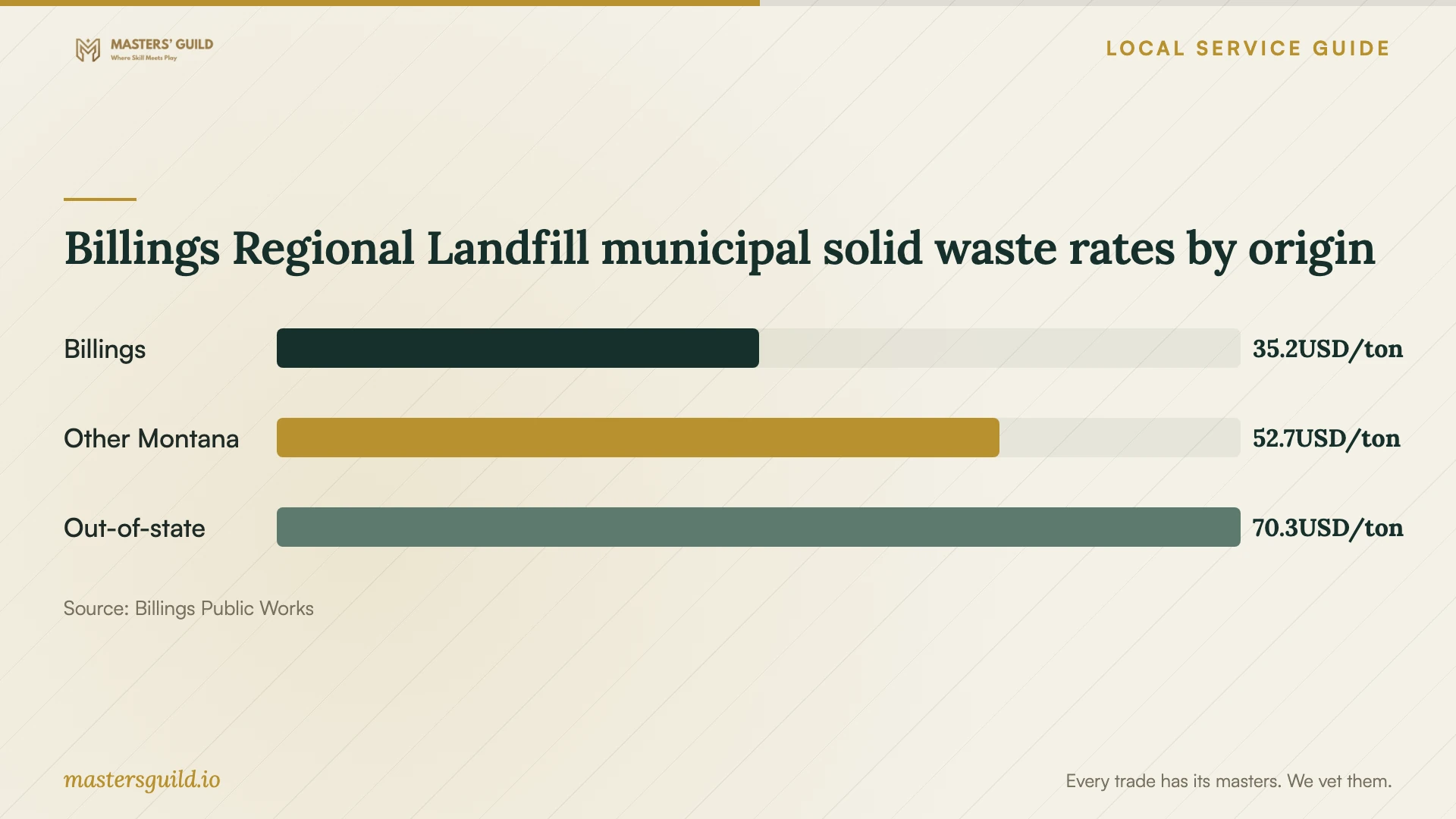
Billings Regional Landfill municipal solid waste rates by origin
Local details that affect your job
Local fire clearances affect your layout
Billings' business fire checklist specifies 36 inches of electrical-panel clearance and storage clearance of 18 inches from sprinkler heads or 2 feet from ceilings without sprinklers. Give the organizer these constraints before requesting a bay layout, and keep exits and stairwells out of the storage plan. [1]
Commercial hazardous waste needs a separate provider
The regional landfill excludes commercial hazardous waste and directs businesses to a licensed hazardous-waste disposal company. Identify that material before hiring a general haul-away crew, and request a separate disposal arrangement. [2]
Waste origin affects the published disposal rate
The landfill's schedule effective July 1, 2026 lists municipal solid waste rates by origin: $35.15 per ton for City of Billings waste, $52.73 for Montana waste outside Billings, and $70.30 for out-of-state waste. Ask the hauler to confirm the origin classification and applicable charges for your load. [3]
Choose the scope that matches your stock
| Your situation | Work to request | Point to resolve before booking |
|---|---|---|
| Accessible stock needs sorting | Sorting, location labels, and an inventory handover | Who approves moves and updates stock records? |
| Heavy or elevated stock needs moving | A handling plan with equipment and named operators | Does the proposed crew have the equipment and insurance for the work? |
| Storage crowds exits or electrical panels | A layout reset around fire access | Reserve clear egress and the city's 36-inch electrical-panel clearance. |
| Commercial hazardous waste needs removal | A separate licensed hazardous-waste disposal company | The regional landfill excludes commercial hazardous waste. |
| Ordinary waste needs haul-away | Transport with confirmed acceptance and disposal receipts | Confirm waste origin, applicable landfill charges, and secured loading. |
Your hiring checklist
- Photograph the work areas and list stock categories, approximate weights, and access constraints.
- Mark keep, hold for approval, and remove areas before the crew arrives.
- Give bidders a layout that reserves fire access and equipment clearances.
- Name the employee who approves disposal and updates inventory records.
- Confirm handling equipment, operators, insurance, and any separate rack-work scope.
- Confirm the disposal destination and separate any commercial hazardous waste.
- Require written approval for extra work and retain hauling receipts.
- Walk the finished space and reconcile labels, locations, and approved removals.
Frequently Asked Questions
How much should I budget for organizing labor?
These official sources do not provide a local organizing labor rate. Request a quote after a walkthrough, with labor, supplies, equipment, transport, and disposal separated. Ask what triggers extra charges and who must approve them.
Can an organizer take old business chemicals to the landfill?
Do not assume acceptance. Billings Regional Landfill excludes commercial hazardous waste and directs businesses to a licensed hazardous-waste disposal company. Confirm the material's disposal route before the crew loads it. [2]
Can we use empty space above our stock?
Check the overhead clearance before changing storage height. Billings' checklist specifies 18 inches from sprinkler heads in sprinklered buildings and 2 feet from ceilings without sprinklers. Ask the Fire Prevention Bureau to resolve questions about your proposed layout. [1]
What should count as a completed job?
Write acceptance criteria into the scope: agreed stock locations, readable labels, reconciled removals, disposal receipts where applicable, and a reviewed hold area. Have your designated employee walk the space with the crew before signing off.
Sources and scope
This guide combines the sources below with practical planning guidance. Figures apply to the stated geography and period; request a written quote for your property.