
Local service guide
Warehouse Organization in Baltimore, MD
Arrange Warehouse Organization in Baltimore by agreeing on storage zones, stock handling, labels, inventory updates, and disposal responsibilities before comparing quotes. Ask providers to plan around your deliveries and picking work. Confirm commercial disposal destinations and discuss indoor heat procedures: Baltimore restricts household hazardous waste days to residential use, and Maryland applies its heat standard to qualifying indoor workplaces. [1] [2]
Define the work and the handoff
Give providers photographs, a floor sketch, and a description of the stock they will handle. Mark receiving, picking, packing, returns, and items awaiting a decision. Identify areas that must stay open. Assign someone who can approve disposal and location changes during the work.
Specify what you expect at completion: a location list, updated stock records, readable labels, and a walkthrough with staff. Ask whether the crew will move pallets, supply equipment, or change storage fixtures. Request a separate assessment for rack alterations or building work so you can review those tasks before authorizing them.
Choose a crew for your handling tasks
Describe heavy items, elevated stock, restricted products, and equipment access before booking. Ask who will supervise, which tasks each worker will perform, and which tasks the provider excludes. Request evidence of insurance appropriate to the proposed work. Have your warehouse supervisor approve equipment access and the boundaries around active operations.
Start with a representative zone if you have not settled on the layout. Have staff test receiving and picking with the proposed location names. Check that they can distinguish similar products and record moves without duplicate locations. Agree on the sample before the crew continues through the remaining areas.
Compare quotes and arrange the work window
Ask each provider to price the same tasks. Request separate amounts for labor, labels and bins, equipment, hauling, and disposal. For hourly work, confirm crew size, estimated hours, a spending limit, and who can approve extra work. For a fixed quote, list the included zones and the conditions you will use to accept the completed job.
Choose a work window around receiving and dispatch commitments. Decide whether the crew will close one zone at a time or use a staging area. Assign someone to record stock moves and reconcile quantities before picking resumes. Ask how the crew will leave unfinished areas at the end of each shift.
Confirm disposal before the crew loads waste
Baltimore DPW describes its residential recycling centers as a service for city residents and requests valid Baltimore City identification. DPW limits household hazardous waste days to residential use. Ask your hauler to name the receiving facility and confirm that it accepts your specific business waste before approving removal. [1]
DPW lists construction and demolition debris acceptance at Quarantine Road Landfill or Northwest Transfer Station, with valid small-hauler eligibility at the transfer station, for $135 per ton. DPW includes debris from construction, alteration, rehabilitation, and repair in this category. If you plan fixture removal, ask the hauler to classify the resulting material and confirm eligibility and charges before loading. [1]
Account for heat inside the warehouse
Maryland’s MOSH heat standard covers indoor and outdoor workplaces where employees face a heat index at or above 80°F. Employers must monitor the heat index, maintain a written prevention and management plan, and train workers and supervisors. Ask the provider who will monitor conditions in the work area and arrange cooling and emergency response. [2]
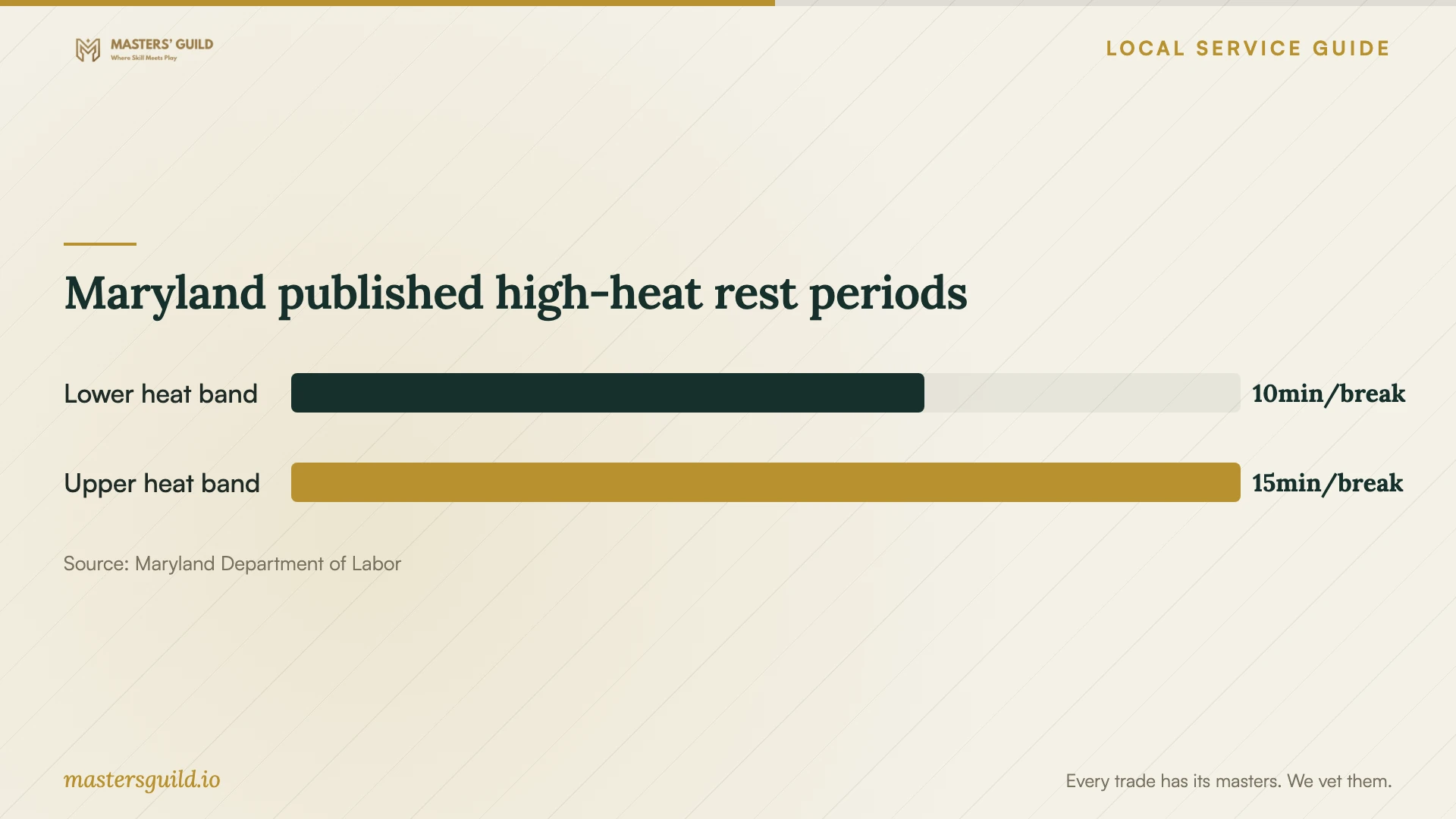
MOSH’s worker guidance requires employers to provide at least 32 ounces of cool drinking water per employee per hour at no cost when the heat index reaches 80°F. At higher heat indexes, employers must monitor employees and provide specified rest periods or alternative cooling and control measures. Ask the provider to account for these procedures in its staffing and completion proposal. [3]
Maryland published high-heat rest periods
Local details that affect your job
Sisson Street hazardous waste days exclude business use
Baltimore holds household hazardous waste collections at Sisson Street Residential Recycling Center, 2840 Sisson Street, on the first consecutive Friday and Saturday of each month from June through December, with holiday adjustments. DPW restricts these collections to residential use. For warehouse chemicals, ask your hauler to confirm a commercial destination before you schedule removal. [1]
A newly assigned crew needs a heat planning discussion
Maryland’s heat standard took effect September 30, 2024 and applies to qualifying indoor exposure. Employers must provide acclimatization for up to 14 days for employees newly exposed to heat or returning after seven or more days of absence. Before agreeing to a compressed schedule in a hot warehouse, ask the provider how it will handle acclimatization and employee monitoring. [2]
Choose the scope before booking
| Your situation | Booking approach | Confirm before work |
|---|---|---|
| Light stock sorting and labeling | Request an organizing scope | Disposal authority, sample labels, and location records |
| Heavy or elevated stock | Request a handling plan | Crew responsibilities, equipment access, and excluded tasks |
| Business chemicals for disposal | Confirm a commercial destination | Baltimore household hazardous waste days serve residential users only |
| Fixture removal or building debris | Separate debris handling in the quote | DPW lists a $135 per ton construction debris fee; confirm facility eligibility |
| Employee heat index exposure of at least 80°F | Discuss heat procedures before setting the schedule | Maryland requires heat monitoring, a written plan, and training |
Your hiring checklist
- Photograph the work areas and mark zones that must stay open.
- Assign someone to approve disposal and stock location changes.
- Provide inventory records and identify stock awaiting a decision.
- Approve a sample storage zone and location label.
- Request itemized labor, supplies, equipment, hauling, and disposal charges.
- Ask the hauler to confirm commercial acceptance at each destination.
- Discuss heat monitoring, water, cooling, and crew acclimatization.
- Agree on quantity reconciliation and a staff walkthrough.
Frequently Asked Questions
How should I compare quotes?
Give providers the same zone list and handling tasks. Ask for separate labor, supplies, equipment, and hauling amounts, plus a process for approving extra work. Define the inventory records and walkthrough you expect at completion.
Can the crew take warehouse chemicals to household hazardous waste day?
Baltimore DPW limits household hazardous waste days to residential use. Ask the hauler to confirm a facility that accepts your business chemicals before removal. [1]
Do heat requirements apply indoors?
Maryland’s MOSH standard covers indoor and outdoor workplaces where employees face a heat index at or above 80°F. Ask the employer about monitoring, its written plan, training, drinking water, and cooling arrangements. [2] [3]
How do I maintain the new layout?
Assign responsibility for adding locations and updating labels. Have staff test receiving, picking, and returns during the handoff. Agree on a review after staff use the layout and define who will approve corrections.
Sources and scope
This guide combines the sources below with practical planning guidance. Figures apply to the stated geography and period; request a written quote for your property.