
Local service guide
Long-Distance Moving in Baltimore, MD
Arrange Long-Distance Moving in Baltimore by giving movers the same inventory and access details, comparing written estimates, and assigning responsibility for truck space before booking. Baltimore City lists moving trucks among its right-of-way permit types and states a standard processing time of 15 days. Discuss loading arrangements before committing to pickup. For a move that stays within Maryland, ask for the mover’s state household goods registration. [1] [2] [3]
Identify the route and the company carrying your goods
Start your request with both addresses, your inventory and preferred dates. Describe the route rather than relying on the phrase long-distance. Ask each business to name the company that will collect and transport your goods. Keep that legal name with the estimate, contact details and paperwork.
In its November 4, 2025 announcement, the Maryland Department of Labor states that a person or company may not charge for household goods moving services within Maryland using a commercial motor vehicle unless it holds state registration. The department says the requirement applies regardless of the company’s location and that applicants must provide proof of liability, cargo and workers compensation insurance coverage. [2]
The department announced that enforcement would begin March 1, 2026. That announcement does not confirm subsequent implementation or current enforcement status. For an in-state move, ask the Department of Labor to confirm the company’s registration before booking. [2]
Ask an interstate mover for its USDOT number, the transport authority it proposes to use and the name that will appear on your contract. Request written answers about who handles claims and which loss or damage protection you can choose. Identify the carrier before paying a deposit.
Compare estimates with the same inventory and access
FMCSA’s interstate household goods guidance requires the carrier to survey the goods and provide a written estimate, although an individual shipper may waive the survey. The carrier can conduct the survey on-site or through live or recorded video that lets it identify the shipment. Before issuing a bill of lading, the carrier must state whether the estimate is binding or non-binding. [3]
A binding estimate guarantees the total cost for the quantities and services it lists. With a non-binding estimate, the carrier estimates the cost using shipment weight or volume and requested additional services, then bases final charges on actual shipment weight. Review the inventory and service list beside the price. Ask how the mover will document changes before accepting either estimate. [3]
During the survey, show the route from the proposed truck position to your rooms. Include entry steps, interior stairs, elevators, door openings and furniture needing disassembly. Ask the mover to describe packing, storage, carrying distance and any transfer to a smaller vehicle in the estimate. Give each bidder the same information about both addresses.
Build your budget from matching written estimates. Request separate amounts for optional services, the deposit and the payment schedule. Keep your travel, temporary accommodation and essentials budget beside the transport quote. Before signing, ask each mover to explain any service that appears in one estimate but is missing from another.
Arrange Baltimore truck or container space
Baltimore City’s Department of Transportation issues temporary-use right-of-way permits and includes moving trucks, storage containers, sidewalk closures and street, alley or lane closures among its permit types. The city directs applicants to OpenGov, where they can submit documents, track approvals, communicate with the permitting team and make payments. [1]
Before booking, ask the mover to identify its intended loading position and vehicle size. Ask the city which permit and conditions apply to that placement. Name the person who will apply, pay and retain the approval. For a container, discuss placement and collection with the city and the supplier. [1]
The city states a standard processing time of 15 days for all listed permit types. Allow time for that process and ask the permitting team about your proposed dates before relying on a short turnaround. Confirm fees and any placement or signage conditions with the team before finalizing your plan. [1]
For an apartment or condominium, ask the building manager about loading access, elevator reservations and protection of shared spaces. Confirm destination arrangements with the receiving building or local authority too. Include both addresses’ access plans in the mover’s job description.
Prepare for loading and confirm delivery
Ask the mover for the pickup window, delivery window, contact person and procedure if either date changes. Decide where you will stay and which belongings you need while the shipment travels. Carry medicines, identification, keys and important documents yourself.
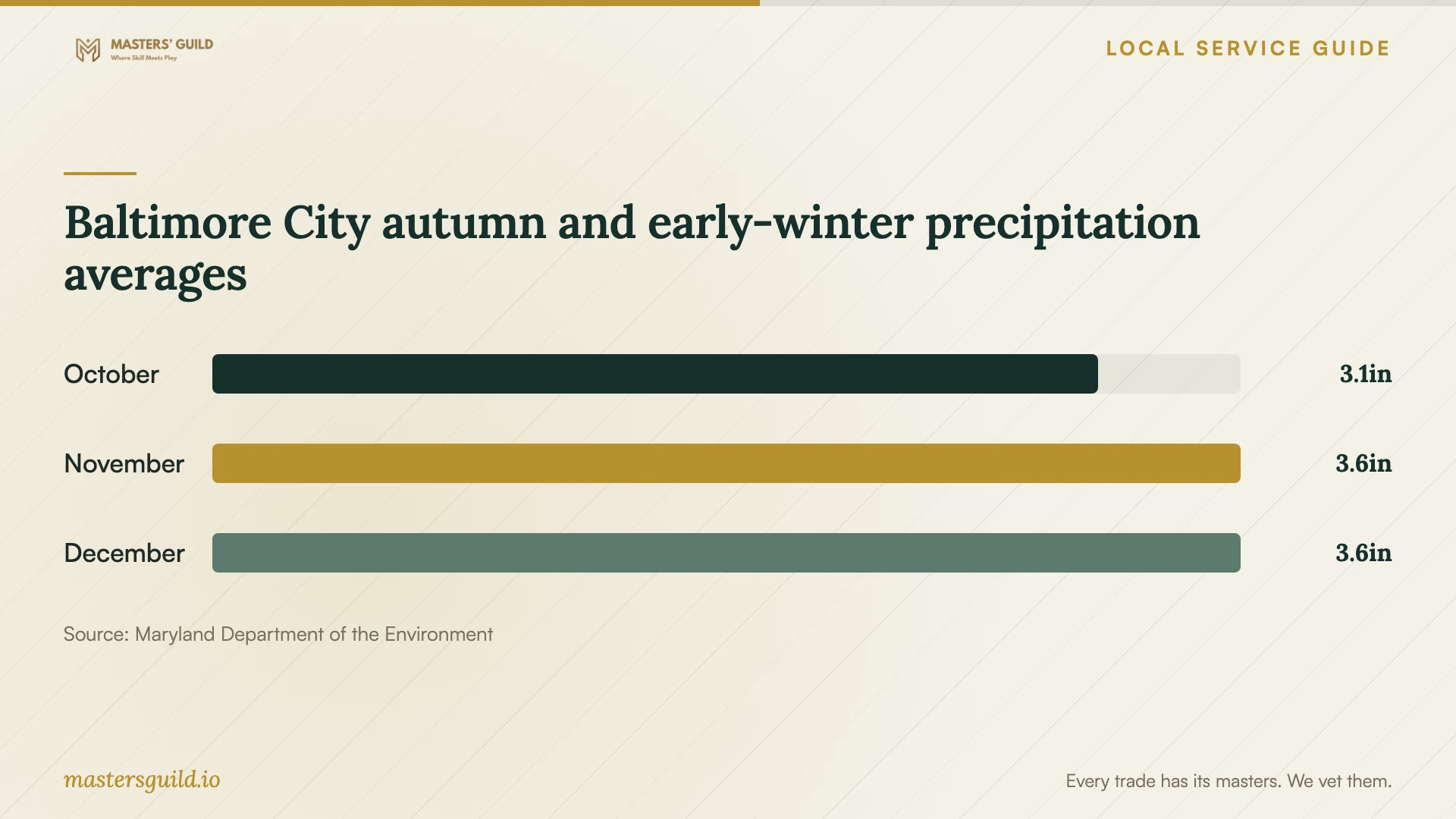
Maryland’s published monthly precipitation table lists Baltimore City averages of 3.1 inches in October and 3.6 inches in both November and December. Use these figures to prompt a rain-protection discussion: ask about furniture covers, doorway protection and keeping cartons off wet surfaces. These monthly averages do not predict your moving-day weather. [4]
Photograph furniture and fragile items before packing. Label cartons by destination room and keep a separate list of belongings you carry yourself. Before the truck leaves, review the shipment inventory with the crew and retain a copy. At delivery, compare items against that record, photograph concerns and request the mover’s written claims procedure.
Baltimore City autumn and early-winter precipitation averages
Local details that affect your job
Assign the city permit application before booking
Baltimore City lists moving trucks and storage containers within its right-of-way permit program and uses OpenGov for applications. The city states a standard processing time of 15 days. Before accepting a pickup date, confirm the proposed public-space use with the city and agree with the mover who will submit the application, pay and keep the approval. [1]
Check Maryland registration for an in-state move
Maryland’s November 2025 announcement describes a registration requirement for paid household goods moves within the state using a commercial motor vehicle, regardless of the company’s location. The department announced enforcement would begin March 1, 2026; the announcement does not establish current enforcement status. If your destination remains in Maryland, ask the Department of Labor to confirm the mover’s registration before booking. [2]
Choose your next step before accepting an estimate
| Your situation | What to confirm | Next step |
|---|---|---|
| Your household move stays within Maryland | Maryland’s announced registration requirement covers paid moves using a commercial motor vehicle | Ask the Department of Labor to confirm the company’s registration. |
| Your interstate estimate is binding | The guaranteed price covers the listed quantities and services | Review the inventory and service list before signing. |
| Your interstate estimate is non-binding | The carrier bases final charges on actual shipment weight | Ask how it will document weight and explain final charges. |
| You plan to use public space for a truck or container | Baltimore lists these permit types and states a 15-day standard processing time | Confirm the applicable permit with the city and assign the application. |
Your hiring checklist
- Write down both addresses, your inventory, preferred dates and belongings you will carry yourself.
- Identify the transporting company and ask which registration and transport authority cover your route.
- Arrange a survey and show loading access, stairs, elevators and furniture needing disassembly.
- Compare written estimates with matching inventories, packing choices and access details.
- Confirm public-space requirements with Baltimore City and assign the permit application to a named person.
- Agree on pickup and delivery windows, payment timing and the procedure for changes.
- Photograph belongings, retain the shipment inventory and prepare rain protection with the crew.
Frequently Asked Questions
How far ahead should I arrange a moving-truck permit?
Baltimore City states a standard processing time of 15 days for its right-of-way permit types, including moving trucks. Contact the permitting team before committing to a loading date and confirm requirements for your placement. Ask the team whether it can accommodate your proposed date before relying on that interval. [1]
Does Maryland registration apply to a mover based outside the state?
The Department of Labor’s announcement says the requirement applies to paid household goods moves within Maryland using a commercial motor vehicle, regardless of the company’s location. Ask the department to confirm the mover’s registration before booking an in-state move. [2]
Can an interstate mover estimate my shipment through video?
Yes. FMCSA permits an on-site or virtual survey. For a virtual survey, the carrier must use live or recorded video that lets it identify the goods. Show the full inventory and discuss access at both addresses so the mover can describe your requested work in the written estimate. [3]
Does a binding estimate cover belongings I add later?
FMCSA describes a binding estimate as a guaranteed cost for the quantities and services shown on that estimate. Before adding furniture, packing or storage, ask the mover how it will document and price the change. Keep the revised agreement with your moving records. [3]
Sources and scope
This guide combines the sources below with practical planning guidance. Figures apply to the stated geography and period; request a written quote for your property.