
Local service guide
Warehouse Organization in Atlanta, GA
Arrange Warehouse Organization in Atlanta by giving providers a defined work area, an inventory summary, and your receiving and dispatch schedule. Compare itemized quotes for sorting, labeling, equipment, and removal. Ask candidates to explain their commercial inventory process, and separate any construction or specialist disposal work before agreeing on a start date.
Choose a crew for your inventory and working conditions
Describe the problem you want the provider to solve: mixed stock, unclear locations, crowded staging space, or an archive that needs review. Include photographs, approximate carton or pallet counts, storage heights, and access restrictions. Tell bidders whether staff will continue picking orders while the crew works.
Ask candidates to walk through a stock movement from its current location to its new one. Request a sample label and an explanation of how they would reconcile the move with your inventory system. For heavy or elevated stock, confirm the equipment, operators, and limits of the proposed work. Request proof of insurance appropriate to that scope.
Choose a supervisor who can answer inventory questions during the reset. Agree on completion criteria such as labeled locations, a revised location list, and an identified area for unresolved stock. At handover, have the supervisor locate sample items using the revised list before accepting the work.
Compare prices and plan around operations
Ask providers to separate labor, labels and bins, equipment, removal, and follow-up work. For hourly quotes, request crew size, estimated hours, billing minimums, and a spending limit. For a fixed price, ask which quantities and conditions the provider used and how it will price additional work.
Build the sequence around receiving and dispatch. Identify staging space, doors that must remain available, and any periods when the crew cannot enter a work area. Consider starting with a contained zone to check the proposed labels and movement process before extending the arrangement across the warehouse.
Set one approval route for extra purchases and changes to the agreed work. Ask the provider to explain how it will report unidentified stock or damaged shelving, and who will secure the affected area while you decide the next step.
Check construction before committing to the layout
Describe proposed physical alterations to the permitting office before booking work that depends on them. Atlanta lists interior alterations up to 10,000 square feet with mechanical, electrical, and plumbing drawings among its light commercial project types. For a light commercial construction permit, the city requires stamped and sealed architectural and site plans, plus permit-specific documentation. [1]
Ask the Office of Buildings which review applies to your address and proposed changes, including any rack installation. Its construction project list does not determine the permit status of your particular reset. Keep dependent organizing work off the firm schedule until you have that answer. [1]
Separate archive clearance from material disposal
Review archived paperwork for retention before authorizing destruction. Georgia’s guidance covers customer records containing specified personal information, including Social Security numbers, dates of birth, medical information, and account information. Businesses must shred covered records, erase the personal information, or modify the records so that the information is unreadable. [2]
Ask a records-destruction provider to describe collection, custody, and the record it will give you after completing the work. Keep files awaiting a retention decision apart from approved discards so the organizing crew can work without making those decisions for you.
Have unknown chemicals and other suspect materials assessed before removal. Georgia’s rules address hazardous waste identification, generators, transporters, and facilities, with separate provisions for used oil and universal waste. Ask the responsible specialist to establish the applicable requirements for the materials at your premises. [3]
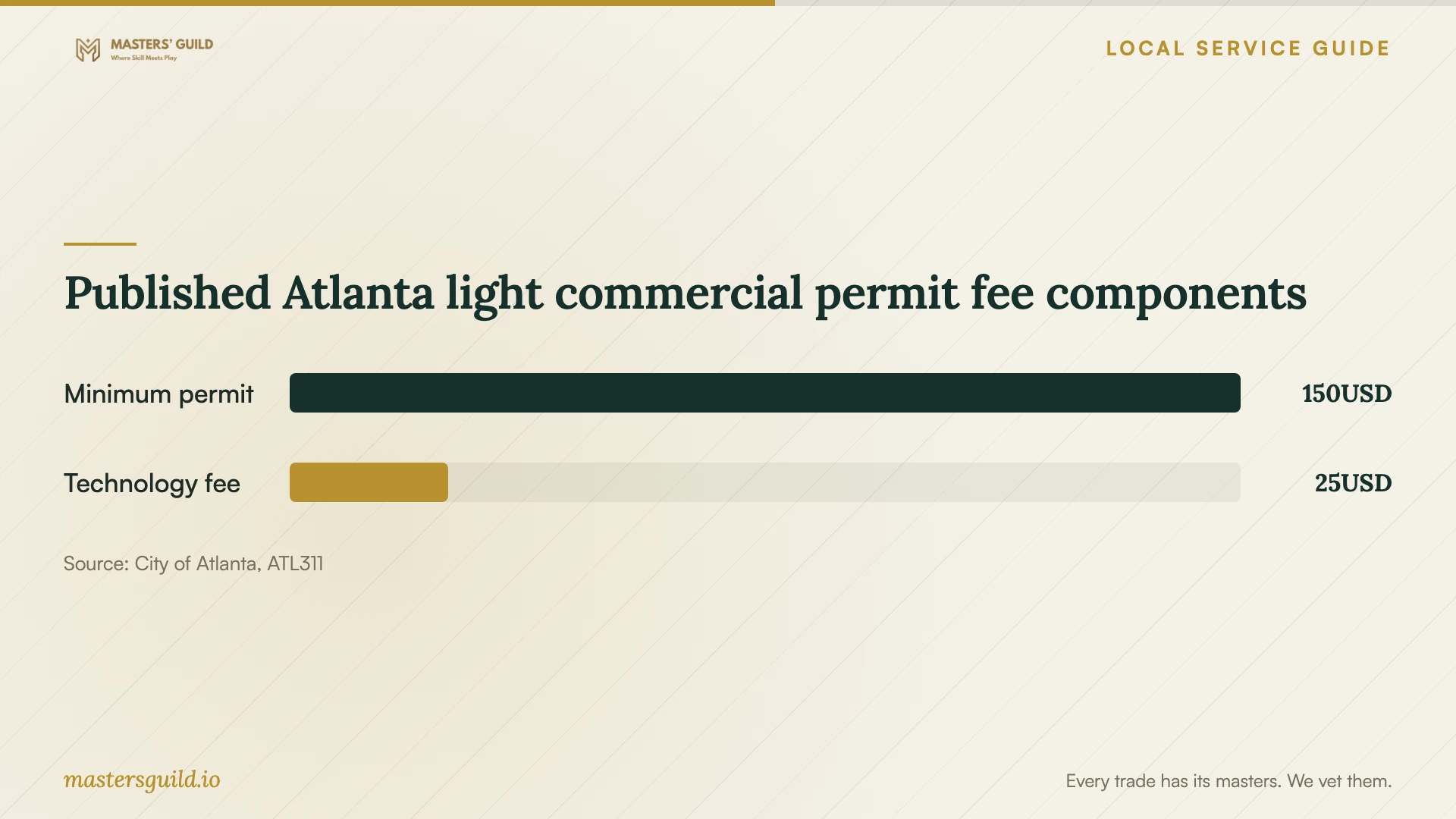
Published Atlanta light commercial permit fee components
Local details that affect your job
Use Atlanta’s application route for construction
For premises within Atlanta’s jurisdiction, the city directs permit applicants to submit online through Accela, except Express permits, which it accepts in person. If the reset includes construction, confirm the category and submission route with the Light Commercial Permits Division at 404-330-6920 before scheduling that portion. [1]
Protect customer information during archive clearance
Georgia requires businesses to take every reasonable action to prevent unauthorized access to customers’ personal information. For an Atlanta warehouse holding customer archives, include access and custody arrangements in the clearance scope, alongside the destruction method for covered records. [2]
Check Georgia waste notification requirements by activity
Georgia requires notification for specified hazardous waste activities and exempts Very Small Quantity Generators from that notification provision. Have your waste specialist determine which requirements apply before approving removal. The notification exception does not establish a general exemption from the waste rules. [3]
Match the proposed work to the right arrangement
| Proposed work | Arrangement to consider | Key question |
|---|---|---|
| Sorting and location labeling | An organizing crew with a defined commercial scope | How will staff find stock during and after the reset? |
| Interior alterations | Construction review with Atlanta’s Office of Buildings | Which permit category and documents apply to this address? |
| Destruction of covered customer records | A defined shredding, erasure, or information-obscuring process | Who will control access between collection and destruction? |
| Suspect waste removal | Material assessment and specialist review | Which Georgia generator and transporter requirements apply? |
Your hiring checklist
- Photograph the work areas and prepare approximate stock quantities for bidders.
- Identify valuable, fragile, or customer-owned stock that needs special instructions.
- Confirm who supplies labels, bins, handling equipment, and operators.
- Give the crew receiving hours, access instructions, and an on-site contact.
- Reserve staging space without displacing active packing or dispatch work.
- Provide a sample inventory export and agree on access permissions.
- Schedule a staff briefing on the revised storage locations after completion.
Frequently Asked Questions
How much should I budget for an organizing crew?
Ask providers for itemized quotes for your warehouse. Include stock quantities, access, equipment needs, and working hours in the brief. Compare the total proposed cost and exclusions, and ask how the provider will charge for additional work.
Can my staff keep filling orders during the work?
Ask the provider to propose a sequence around your order schedule. Identify active pick locations and reserve temporary staging space. Agree on how staff will locate items while a zone is being reset, including who will answer location questions.
Does a warehouse reset need an Atlanta permit?
Ask the Office of Buildings about physical alterations at your premises. Atlanta’s guidance addresses commercial construction and lists interior alterations among light commercial projects. Confirm the applicable review for the proposed work rather than deciding from the service name alone. [1]
Should I buy storage products before the crew arrives?
Ask for a proposed layout and product list first. Check dimensions against your stock and available space, then approve a sample label or bin before placing the full order. Ask who handles returns if the agreed products do not fit.
Sources and scope
This guide combines the sources below with practical planning guidance. Figures apply to the stated geography and period; request a written quote for your property.