
Local service guide
Warehouse Organization in Anchorage: Plan Your Reset
Arrange Warehouse Organization in Anchorage by hiring for a defined stock reset: identify the bays to sort, approve what the crew can discard, and require a location map and inventory handoff. Request separate quote items for sorting, labeling, equipment work, hauling, and disposal. Confirm the cleanout destination before booking; Anchorage Solid Waste Services accepts commercial waste at the Anchorage Regional Landfill and Central Transfer Station. [1]
Define the stock reset before requesting quotes
Give each bidder the same brief: photographs, the bays included, your inventory list, and the hours when staff can release stock for movement. Name the person who can approve disposal. Create separate areas for stock to keep, returns, damaged goods, and items awaiting a decision. Ask the crew to leave uncertain items in the review area.
Specify the finished result. Request a bay map, readable location labels, and a record of moved stock. Have the provider demonstrate how staff will find an item from its inventory entry. Include receiving and dispatch staging in the plan, and agree where operations can continue while the crew works.
Choose a crew for the work you authorize
Ask bidders to describe their commercial stock-handling experience and the equipment they propose to use. Request proof of insurance and ask whether their coverage includes handling your goods. Identify who will operate lifting equipment. For proposed racking moves, alterations, or repairs, request a separate scope and a qualified specialist's assessment before authorizing the work.
Request a site-specific labor quote with separate materials, equipment, hauling, and disposal charges. Compare estimates that state crew size and billing basis. Ask whether quoted hours mean elapsed crew time or total worker-hours. Agree how the provider will seek approval for extra work, who pays disposal charges, and what records you will receive at completion.
Plan commercial hauling around the destination
SWS accepts commercial waste at the Anchorage Regional Landfill in Eagle River and the Central Transfer Station in Anchorage. Its Girdwood Transfer Station serves residential users. For the Central Transfer Station, SWS identifies the commercial entrance as 1050 E. 56th Avenue and encourages commercial haulers to approach from Old Seward Highway. [1]
Ask the hauler to name the facility and confirm acceptance of each waste stream. SWS requires covered and secured loads, plus safety vests on the commercial side of the Central Transfer Station and the landfill's working face. It treats lumber and pallets as chargeable refuse, including during the landfill wood lot's free wood-waste periods. [1]
Keep chemicals and unknown containers outside the ordinary trash scope. The municipal code limits municipal hazardous-waste acceptance by generator category and permits facility operators to reject unlabeled or improperly labeled containers of unknown content. Ask SWS to confirm your business's eligibility and delivery arrangements before the provider includes these items in a haul. [3]
Coordinate collection access with the property owner
SWS provides commercial trash collection within a designated Anchorage service area and offers commercial commingled recycling collection. It sets up and bills services through the property owner. If you lease the warehouse, involve your landlord before requesting a container or collection change, and confirm whether SWS serves the address. [2]
Keep the dumpster approach outside your temporary stock and waste staging areas. SWS identifies blocked access, overloaded dumpsters, refuse in front of containers, snow berms, and icy access among reasons commercial collection can fail. Assign someone to check access before the scheduled pickup, including during a reset that moves goods outdoors. [2]
Approve the handoff before closing the job
Walk the completed bays with the crew lead and a staff member who picks orders. Test several item locations against the updated stock record. Check the review area together and record what still needs your decision. Collect the location map, label convention, approved disposal list, and hauling receipts before signing off.
Give one staff member responsibility for maintaining the layout. Agree where new arrivals, returns, and damaged goods go, and show the receiving team how to create a location label. If you want follow-up help, describe the inspection and correction work in the quote rather than leaving it as an open-ended maintenance visit.
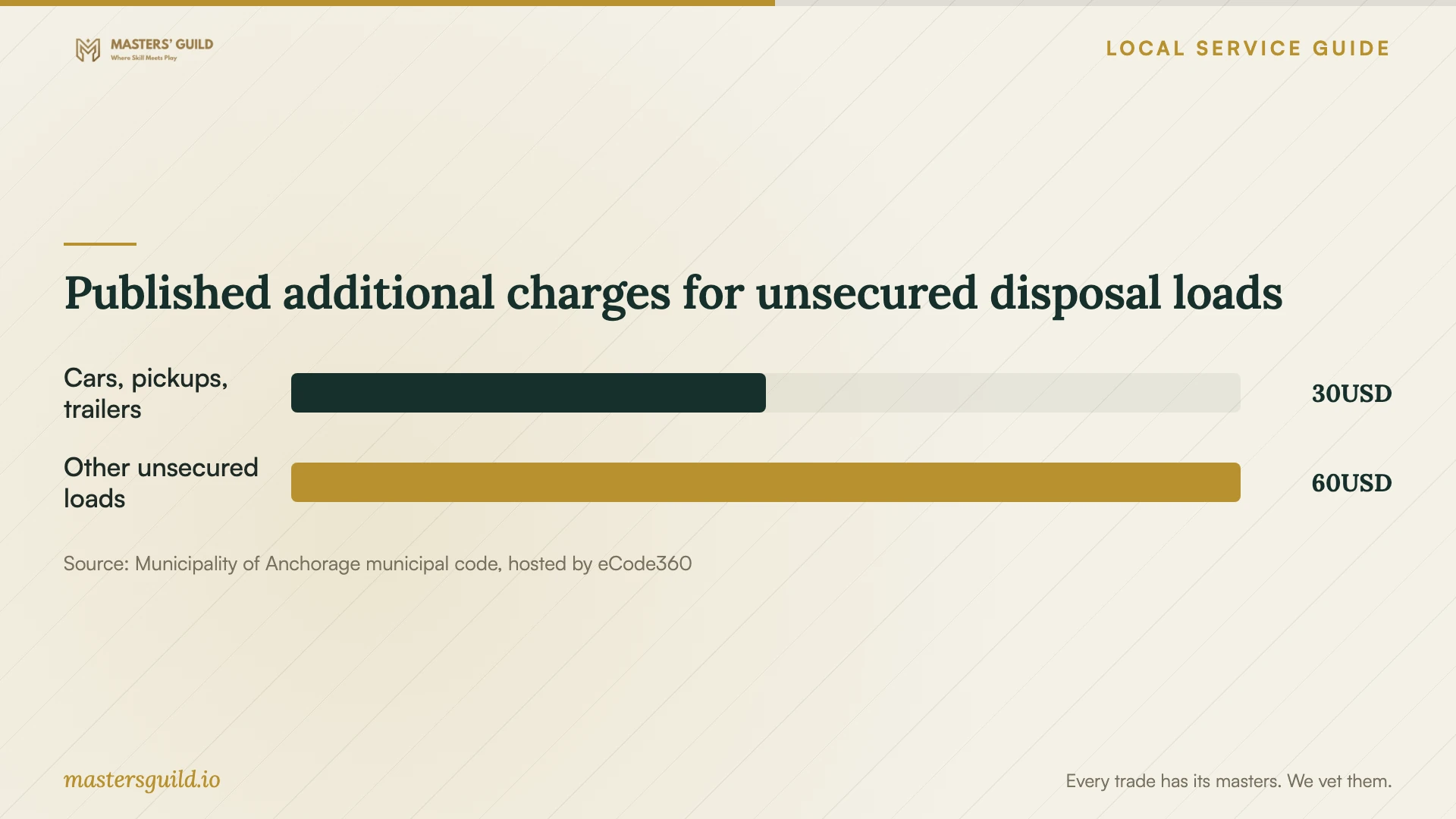
Published additional charges for unsecured disposal loads
Local details that affect your job
Commercial cleanouts have specific municipal destinations
Choose the Anchorage Regional Landfill or Central Transfer Station for commercial waste handled through SWS. The Girdwood Transfer Station accepts residential waste only. Ask your hauler to confirm the route and accepted materials before loading; the Central Transfer Station excludes certain materials, including liquid waste and commercially collected refrigerators. [1]
Tenants need owner coordination for collection changes
SWS sets up and bills collection through the property owner and directs tenants to work with their landlord before contacting the utility. Obtain that coordination before adding collection changes to the reset plan, and confirm the warehouse address falls within the designated service area. [2]
Business hazardous waste needs an eligibility check
The municipal code excludes hazardous waste generated by small and large quantity generators from municipal hazardous-waste facilities. It provides a fee schedule for eligible very small quantity generators delivering hazardous waste to the Anchorage Regional Landfill. Ask SWS to confirm your category and arrangements; residential household allowances do not establish your business's eligibility. [3]
Match the job scope to the help you need
| Your situation | Help to request | Confirm before booking |
|---|---|---|
| Light stock sorting and labels | Organization crew or a staff-led reset | Bay boundaries, label convention, and inventory handoff |
| Heavy stock or proposed rack changes | Provider with a separate equipment or specialist scope | Operators, insurance coverage, and assessment of proposed rack work |
| Pallets and ordinary commercial refuse | Hauling as a separate quote item | SWS commercial destination, covered and secured loads, and chargeable pallet disposal |
| Chemicals or unknown containers | Waste assessment before loading | Generator eligibility and acceptance arrangements with SWS |
| A leased warehouse needs collection changes | Property-owner coordination | SWS service-area coverage and owner-arranged billing |
Your hiring checklist
- Send bidders matching photographs, bay boundaries, and a stock list.
- Name your disposal approver and mark items awaiting review.
- Request separate prices for labor, labels, equipment, hauling, and disposal.
- Ask for insurance documentation and identify equipment operators.
- Agree work windows and keep receiving and dispatch areas available.
- Confirm collection changes with the property owner and waste acceptance with the destination.
- Require a location map, updated stock records, and disposal receipts at handoff.
Frequently Asked Questions
How much should I budget for organization labor?
Request a site-specific labor quote with separate equipment, hauling, and disposal charges. Ask bidders to state the crew size, worker-hours, materials allowance, and what triggers an extra charge. Give each bidder the same bay boundaries and handoff requirements before comparing totals.
Can the crew take unwanted pallets to a free wood lot?
SWS treats pallets and lumber as refuse and charges for them. Ask the hauler to include their disposal in the estimate and confirm the destination before loading. [1]
Can my business use the household hazardous-waste allowance?
Ask SWS to assess your business's generator category before arranging delivery. The code assigns household allowances to residential users, provides terms for eligible very small quantity generators, and excludes hazardous waste from small and large quantity generators from municipal facilities. [3]
What should I ask my landlord before the reset?
Ask who will authorize collection changes and coordinate access to shared waste areas. SWS sets up and bills collection through the property owner and directs tenants to work with their landlord before contacting it. [2]
Sources and scope
This guide combines the sources below with practical planning guidance. Figures apply to the stated geography and period; request a written quote for your property.