
Local service guide
Long-Distance Moving in Anchorage, AK
Arrange Long-Distance Moving in Anchorage by asking each mover for a written route, pickup and delivery windows, an inventory-based quote, and named responsibility for transport bookings and paperwork. For a road shipment through Canada, ask who handles commercial transit authorization. For a ferry-assisted move through Whittier, confirm vehicle space and tunnel timing before committing to your household travel dates. [2] [5]
Get a route-specific written quote
Give each mover the same room-by-room inventory, destination address, preferred pickup window and delivery constraints. Include photographs of bulky items, stairs, the driveway and the space available for loading. Ask the estimator to identify the transport method and the company handling each stage before you compare totals.
Request separate entries for packing, loading, transport, unloading, storage and any smaller-truck shuttle. Ask whether the quoted amount includes route expenses and what changes could trigger an additional charge. Keep the accepted inventory with the quote so you can discuss additions before pickup.
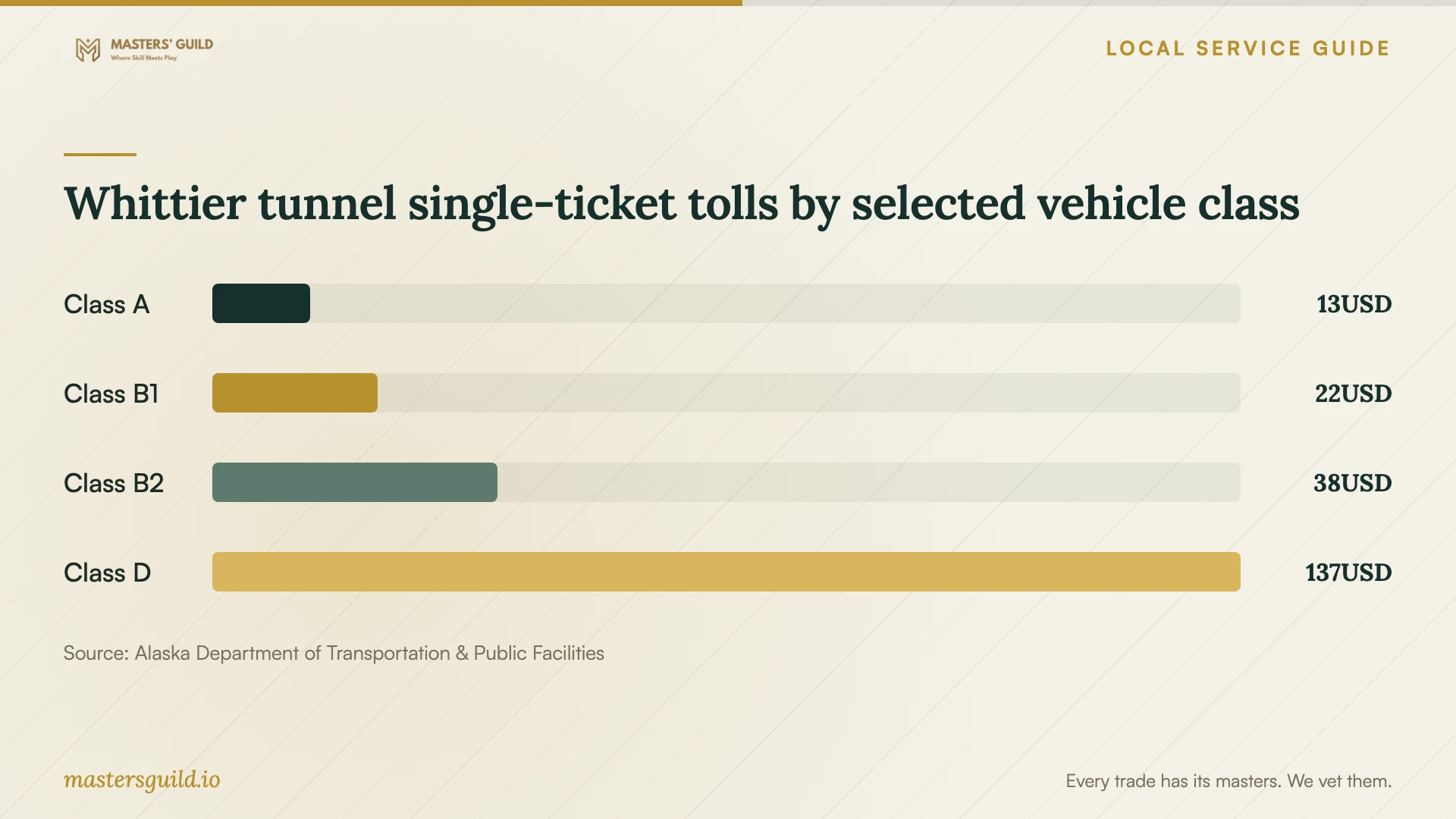
The published figures below cover one Whittier route expense. Use an inventory-based quote to budget the household move; the tunnel toll alone cannot establish your transport price. Ask the mover to explain its vehicle class if it includes a tunnel charge. [4]
Check loaded-truck access before pickup
The Municipality of Anchorage says seasonal axle-load restrictions may apply to vehicles over 10,000 pounds gross vehicle weight. It describes March or April through May as the usual restriction period, with duration depending on weather and temperature. Treat that as planning guidance and have your mover check the notice applicable to the move date. [1]
Alaska DOT&PF directs readers to its most current notices and says its map serves informational purposes. For roads outside DOT&PF maintenance, it directs readers to the responsible management agency. Ask the mover which authority manages the final approach to your home and whether the loaded equipment can use it. [3]
If the mover proposes a shuttle or split load, ask for the added price, equipment plan and handling arrangements in writing. Arrange building access and a loading location with your property manager before pickup. Keep a contact available to resolve access questions while the crew loads.
Assign Canadian transit paperwork to the carrier
For commercial highway transport from one U.S. point to another through Canada, CBSA requires the carrier to hold bonded status or obtain single-trip authorization before transit. Ask the mover to name the carrier crossing the border and explain who prepares the shipment documents. [2]
CBSA describes an A8B transit-manifest procedure and an alternative using ACI/eManifest cargo and conveyance reports. Under the electronic alternative, CBSA says an A8B or seal is not required unless the border officer requires sealing. Ask the carrier which procedure it will use rather than insisting that every shipment needs the same paper form. [2]
This guidance concerns commercial highway carriers. If you plan to drive your own belongings, ask border authorities about your personal trip and contents before renting equipment. Give the mover an accurate inventory and ask it to flag items it will exclude from the shipment. [2]
Confirm a ferry-assisted route before booking travel
For an Alaska Marine Highway System route, commercial vehicles must go through the Commercial Services Desk. AMHS says it can accommodate commercial cargo vans or trailers up to 48 feet and cannot accommodate longer ones because of restricted turning radius. Ask the mover to confirm equipment acceptance and the sailing reservation. [5]
For a DIY vehicle-and-trailer booking, measure the overall connected length, width and height, including extensions. AMHS uses those dimensions for fares and warns that insufficient reserved space can lead to additional charges or a later sailing. Vehicle fares exclude the driver, so request the full passenger-and-vehicle total. [5]
AMHS assigns a three-hour vehicle check-in for Whittier Cross Gulf departures. It also warns that arriving when the Whittier tunnel is closed to vehicle traffic can prevent you from making your sailing. Check the tunnel opening that gets you to the terminal before your assigned check-in time. [5]
If you ship an unaccompanied vehicle, arrange loading and unloading: AMHS assigns those tasks to the shipper. Ask who will receive the vehicle and what happens after a schedule change. AMHS reserves the right to change or cancel schedules and rates, so agree on your mover's delay, storage and rebooking arrangements before paying. [5]
Prepare for delivery and inspect the inventory
Ask for a delivery window and a contact who can update you during transit. Arrange a backup place to stay if your household travel and furniture delivery do not align. Keep medication, identification, essential documents and enough clothing with you rather than in the shipment.
Before signing, ask the mover to explain its loss and damage coverage, exclusions, deductible and claim process. Photograph valuable items and record existing damage. At delivery, compare the received items with the inventory, document discrepancies and keep copies of the paperwork.
Whittier tunnel single-ticket tolls by selected vehicle class
Local details that affect your job
Spring access requires a street-and-date check
Anchorage's seasonal restrictions can affect vehicles over 10,000 pounds gross vehicle weight. DOT&PF also distinguishes state-maintained roads from roads managed by other agencies. Before accepting a pickup plan, ask the mover to check both the route and the final street, then price any required shuttle separately. [1] [3]
Whittier departures require tunnel and terminal coordination
AMHS requires three-hour vehicle check-in for Whittier Cross Gulf departures and warns that tunnel opening times can affect whether you reach a sailing. Ask whoever drives the loaded vehicle to confirm a tunnel passage that meets terminal check-in, and put responsibility for a missed connection in the moving agreement. [5]
Commercial ferry equipment has a length limit
AMHS limits commercial cargo vans or trailers to 48 feet and requires commercial bookings through its Commercial Services Desk. If your mover proposes an AMHS leg, ask it to confirm the actual equipment and booking before you accept the route. [5]
Questions to resolve before accepting a route
| Proposed plan | Relevant condition | Ask before booking |
|---|---|---|
| Commercial road shipment through Canada | CBSA requires bonded-carrier status or single-trip authorization for U.S.-to-U.S. transit. | Which carrier crosses the border, and who handles its transit documents? |
| AMHS commercial shipment | Commercial cargo vans or trailers cannot exceed 48 feet. | Has the Commercial Services Desk accepted the equipment and confirmed space? |
| DIY vehicle and trailer on AMHS | AMHS uses overall connected dimensions; vehicle fares exclude the driver. | What is the full fare for the measured vehicle, trailer and passengers? |
| Spring pickup in Anchorage | Seasonal restrictions may affect vehicles over 10,000 pounds gross vehicle weight. | Can the loaded truck reach the address, and what would a shuttle cost? |
| Unaccompanied vehicle on AMHS | The shipper must arrange loading and unloading. | Who performs each handoff and receives the vehicle? |
Your hiring checklist
- Send the same inventory and access photographs to each estimator.
- Request the route, equipment and transport companies in writing.
- Ask the mover to confirm loaded-truck access for your actual pickup date.
- Assign border paperwork, ferry reservations and vehicle handoffs to named parties.
- Separate included charges from packing, storage, shuttle and delay charges.
- Review coverage and claim instructions before signing.
- Keep travel essentials with you and inspect the delivery against your inventory.
Frequently Asked Questions
How much should I budget for the whole move?
Request written quotes using the same inventory, addresses and route. Ask each mover to separate packing, storage, access handling and transport expenses. The Whittier toll figures cover tunnel passage only and do not establish a household moving price. [4]
Does a commercial shipment through Canada need an A8B?
CBSA describes an A8B paper procedure and an electronic ACI/eManifest alternative for domestic transit. Ask your carrier which procedure it uses. CBSA says the electronic alternative does not require an A8B or seal unless a border officer requires sealing. [2]
Can I send loose boxes on the ferry without traveling?
AMHS does not allow unaccompanied baggage aboard its vessels and says it must go through a commercial carrier as freight. Ask your mover how it will transport the boxes and who receives them. [5]
Should I assume spring restrictions end in May?
Check the notice for your move date. Anchorage describes March or April through May as the usual period but says weather and temperature affect its duration. DOT&PF directs readers to current notices and the appropriate agency for roads it does not maintain. [1] [3]
Sources and scope
This guide combines the sources below with practical planning guidance. Figures apply to the stated geography and period; request a written quote for your property.