
Local service guide
HVAC Services in Allentown, PA: Hiring and Permits
To arrange HVAC Services in Allentown, ask contractors to separate diagnosis, repair and replacement in their quotes, identify any ductwork changes, and name who will handle permits and inspections. Confirm the permit scope with the Bureau of Building Standards and Safety before installation. For a PPL rebate, check the proposed equipment’s eligibility before signing. [1] [3]
Book the right visit and prepare a useful job description
Tell the contractor whether you need help with a fault, routine maintenance or a planned replacement. Describe the symptom: no heat, uneven room temperatures, a leak, an unusual sound or a thermostat problem. Include when it started and any work someone has attempted. Ask whether the appointment covers diagnosis alone or allows a repair after you approve the price.
Gather photographs of the equipment labels, thermostat and accessible installation area. Share your service records and note which rooms need attention. For a replacement visit, point out access constraints and ask the contractor to explain the proposed capacity and any changes to ducts, controls or electrical connections. Request an explanation that addresses your home rather than accepting equipment size alone as the proposal.
Compare complete repair and replacement quotes
For a repair, request the diagnosis, proposed part or task, labor charge and warranty in writing. Ask whether the contractor credits the diagnostic charge toward the repair. Set an approval limit so the technician contacts you before adding work. If someone recommends replacement, ask for the reason and a separate repair option where the contractor considers one appropriate.
For installation, compare the equipment model numbers, removal of old equipment, ductwork, controls, electrical work, startup checks and cleanup. Ask who coordinates each trade and who returns if a problem appears after installation. Keep labor and equipment warranties separate in your comparison, and ask who handles warranty registration.
Keep the municipal charges separate from the contractor’s project price. Under Allentown’s residential fee schedule, the city charges $50 for the application and the greater of $50 or 1% of total work cost for plan review and inspection. The code also lists a $4.50 UCC charge, or the amount determined by Pennsylvania. Ask the Bureau to confirm the charges for your application. [1]
Resolve permit responsibility before installation
Ask the contractor to describe the proposed mechanical work to the Bureau of Building Standards and Safety and confirm which permits apply. Allentown’s building fee provisions cover mechanical systems, but a fee schedule alone does not establish whether your particular service visit needs a permit. Put the permit applicant, payment responsibility and inspection arrangements into the written scope. [1]
Use the current building fee provisions when reviewing a permit allowance. The city repealed its former separate mechanical-fee section on April 16, 2025. The code also states that approval for issuance does not make an application a valid permit until the applicant pays the required fee. [1]
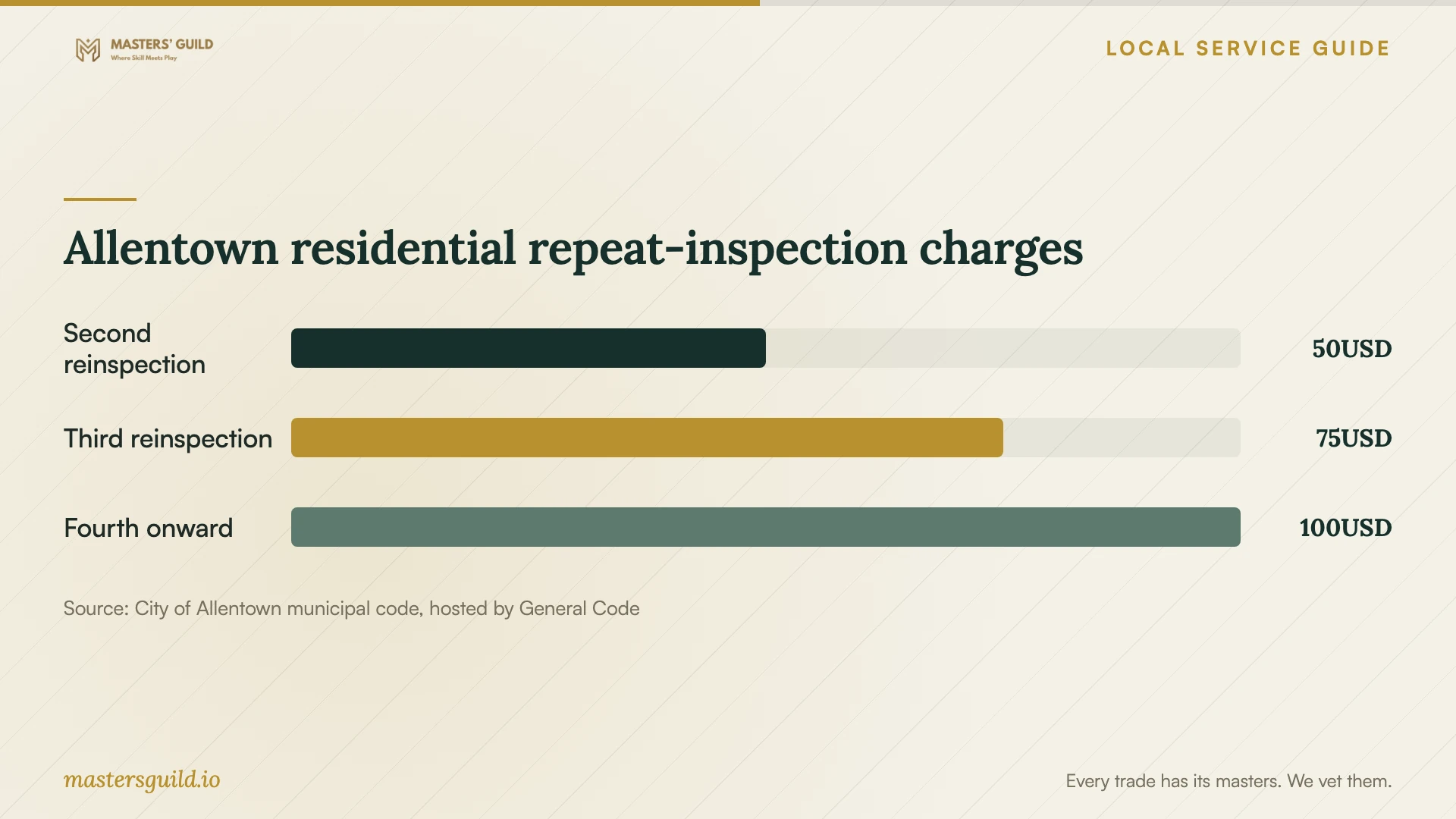
Before work starts, request the permit documentation when the city requires a permit. Allentown doubles the permit fee for starting permit-required work without securing the permit. Ask who pays for corrections and repeat inspections, then retain the final inspection documentation with your installation invoice. [1]
Check ductwork credentials and rebate eligibility
Allentown’s sheet metal chapter defines sheet metal systems as ductwork used for heating, ventilation, air conditioning and exhaust. For covered work, the city requires a valid technician license or an apprentice permit. An apprentice must work under a licensed sheet metal systems technician’s supervision in accordance with the requirements of a registered sheet metal technician apprenticeship program. The city exempts residential properties with three units or fewer and certain minor work limited to disconnecting and reconnecting transition pieces, curbs and flexible tie-ins during existing equipment service or replacement. [2]
Describe the building and ductwork scope before requesting a credential. For covered work, identify the worker and verify their authorization with the Bureau. If an apprentice will perform the work, identify the supervising licensed technician and confirm the registered-program arrangements. The code directs the Bureau to maintain a public registry. Ask for proof of insurance as a separate hiring check, and identify any subcontractors in the agreement. [2]
If you are a PPL customer considering replacement equipment, check the home rebate program before accepting the quote. PPL lists air-source heat pumps, mini-split heat pumps, central air conditioning and smart thermostats among its heating and cooling categories. It advertises up to $500 each on heating and cooling upgrades and directs customers to equipment-specific requirements and program details. [3]
Ask the contractor to identify the exact offer for the proposed model and explain who submits the application. Keep the full installation price and any anticipated rebate separate in your budget. PPL also offers income-based pathways to enhanced rebates and no-cost assessments or improvements, subject to eligibility. Check those offers before settling on equipment. [3]
Allentown residential repeat-inspection charges
Local details that affect your job
Three-unit properties need two separate checks
Allentown’s fee code classifies buildings with three or more dwelling units as commercial, while its sheet metal licensing chapter exempts residential properties with three units or fewer. If you own a three-unit residential property, ask the Bureau to confirm the permit fee classification and the ductwork licensing treatment separately. Do not use one chapter’s exemption to decide the other chapter’s requirements. [1] [2]
Confirm the current mechanical permit allowance
The city repealed the separate mechanical-fee section in April 2025 and includes mechanical projects in its building fee provisions. Ask the contractor which current provision supports the permit allowance and whether the quote includes application, review and inspection charges. Resolve any discrepancy with the Bureau before accepting the installation agreement. [1]
Check PPL offers before choosing equipment
PPL’s residential program lists several HVAC rebate categories and an income-based offer check. If PPL supplies your electricity, review the applicable equipment offer and income-based options before signing. Ask the contractor to document the proposed model’s eligibility rather than applying the advertised maximum to the quote. [3]
Choose the next step for your HVAC project
| Your situation | Arrange next | Confirm before approval |
|---|---|---|
| A fault with no diagnosis | A diagnostic visit | Visit charge, findings and repair approval limit |
| A proposed equipment replacement | A written installation assessment | Model numbers, capacity explanation, included trades and permit responsibility |
| Ductwork at a three-unit residential property | Separate city checks for fees and licensing | Commercial fee classification and the residential exemption under Chapter 499 |
| A replacement with an anticipated PPL rebate | An equipment-specific offer check | Customer and model eligibility, program terms and application responsibility |
Your hiring checklist
- Describe the symptom, affected rooms and whether you want diagnosis, maintenance or a replacement proposal.
- Gather equipment-label photographs, service records and access information.
- Confirm the diagnostic charge and your repair approval limit.
- Compare written scopes with model numbers, included work, exclusions and warranty responsibilities.
- Ask the Bureau to confirm permit scope, building classification and applicable ductwork credentials; for covered apprentice work, confirm licensed-technician supervision and registered-program arrangements.
- Identify who obtains permits, books inspections and pays for corrections.
- Check any proposed rebate against the exact equipment offer before signing.
- Retain invoices, permits, inspection documentation and warranty records.
Frequently Asked Questions
Does every HVAC visit require an Allentown permit?
Allentown’s fee code covers mechanical projects but does not establish a permit requirement for every service visit. Describe the exact repair or installation to the Bureau of Building Standards and Safety and confirm requirements before work begins. [1]
Does Allentown require a sheet metal license for home ductwork?
Chapter 499 exempts work in residential properties with three units or fewer and specified minor disconnection and reconnection work associated with existing equipment service or replacement. For covered ductwork, verify the worker’s technician license or apprentice permit. An apprentice must work under a licensed sheet metal systems technician’s supervision in accordance with the requirements of a registered sheet metal technician apprenticeship program. [2]
What municipal fees should I ask about?
For residential applications, ask about the $50 application charge, plan review and inspection at the greater of $50 or 1% of total work cost, and the applicable UCC charge. Have the Bureau confirm your project’s classification and total. These are municipal charges, not HVAC installation prices. [1]
Can I assume my new HVAC equipment earns a $500 PPL rebate?
Check the exact offer first. PPL advertises up to $500 each for heating and cooling upgrades and directs customers to product-specific rebate amounts, eligibility requirements and terms. Ask the contractor to identify the applicable offer before including it in your budget. [3]
Sources and scope
This guide combines the sources below with practical planning guidance. Figures apply to the stated geography and period; request a written quote for your property.