
Local service guide
Akron warehouse organization: scope and hiring
Arrange warehouse organization in Akron with a site walkthrough and a written scope covering stock movement, location labels, inventory records, equipment, disposal, and delivery access. Choose a provider that assigns responsibility for heavy handling and gives your manager control over inventory changes. Separate building alterations and hazardous-material disposal from the sorting work before comparing quotes.
Define the result before choosing a crew
Walk the warehouse with the employee who manages receiving or picking. Identify the problem in each work zone: mixed returns, unidentified cartons, overflow stock, or supplies staff struggle to locate. Show bidders the inventory records they must preserve. Name the person who can authorize relocation, write-offs, and disposal.
Describe the finished result in the scope. Include location labels, a storage map, an updated inventory-location record, and a list of items awaiting your decision. Decide whether the crew will count stock or move it using your existing records. Keep those tasks separate so you can compare bids for the same work.
Test the proposed labels with your staff before buying materials for the whole space. Have someone locate an item from the record and someone else return it to the assigned location. Agree on who will maintain the system after the provider leaves.
Compare quotes and handling responsibilities
Give each bidder the same zones, inventory information, access restrictions, and deliverables. For hourly work, establish whether the rate covers one person or the crew, which activities count as billable time, and how you will approve spending beyond the estimate. For a fixed quote, list exclusions and the conditions that trigger an added charge.
Separate labor, equipment, labels, bins, hauling, and disposal in the estimate. Identify who supplies and operates lifting equipment. Request evidence of insurance suitable for the proposed work, and discuss responsibility for damaged stock. Have the bidder explain the handling plan for heavy items and upper-level storage.
Keep a review area for unidentified stock or damaged packaging. Give the crew a named contact who can resolve questions without authorizing unrelated work. Document any scope change and its price before the provider proceeds.
Set disposal destinations before loading
ReWorks limits its household hazardous-waste collection to material originating from Summit County households. Business-origin hazardous material therefore needs another arrangement. Have the provider identify a suitable receiving facility and confirm acceptance conditions before including transport in the job. [2]
Separate reusable inventory, packaging for recycling, ordinary waste, and containers needing specialist assessment. Leave unidentified material for review rather than adding it to a hauling pile. Put your manager’s removal approval and the requested recycling or disposal receipts in the scope.
Route building changes to the responsible authority
Describe any proposed rack installation or relocation, electrical changes, and changes in space use to the building authority responsible for your address. Ask which parts of the project need review and who must submit the application. Obtain that answer before scheduling the affected work.
Where Summit County handles the project, its contractor registration operates on a permit basis. The county asks applicants to include a certificate of insurance, Federal ID number, and state license where applicable. Have the contractor identify who will prepare these documents and handle inspections. [1]
Keep receiving and picking usable during the reset
Choose work windows with your receiving team. Mark the access routes and urgent stock locations you need throughout the project. Establish a temporary receiving area and decide how staff will record stock arriving while the crew works. For outdoor staging, agree on covered storage and a weather-related rescheduling plan.
For a phased project, define a stopping point for each zone. Before reopening it, have staff test the location records and inspect the agreed deliverables. At handover, review unresolved inventory, approved removals, and any follow-up work together.
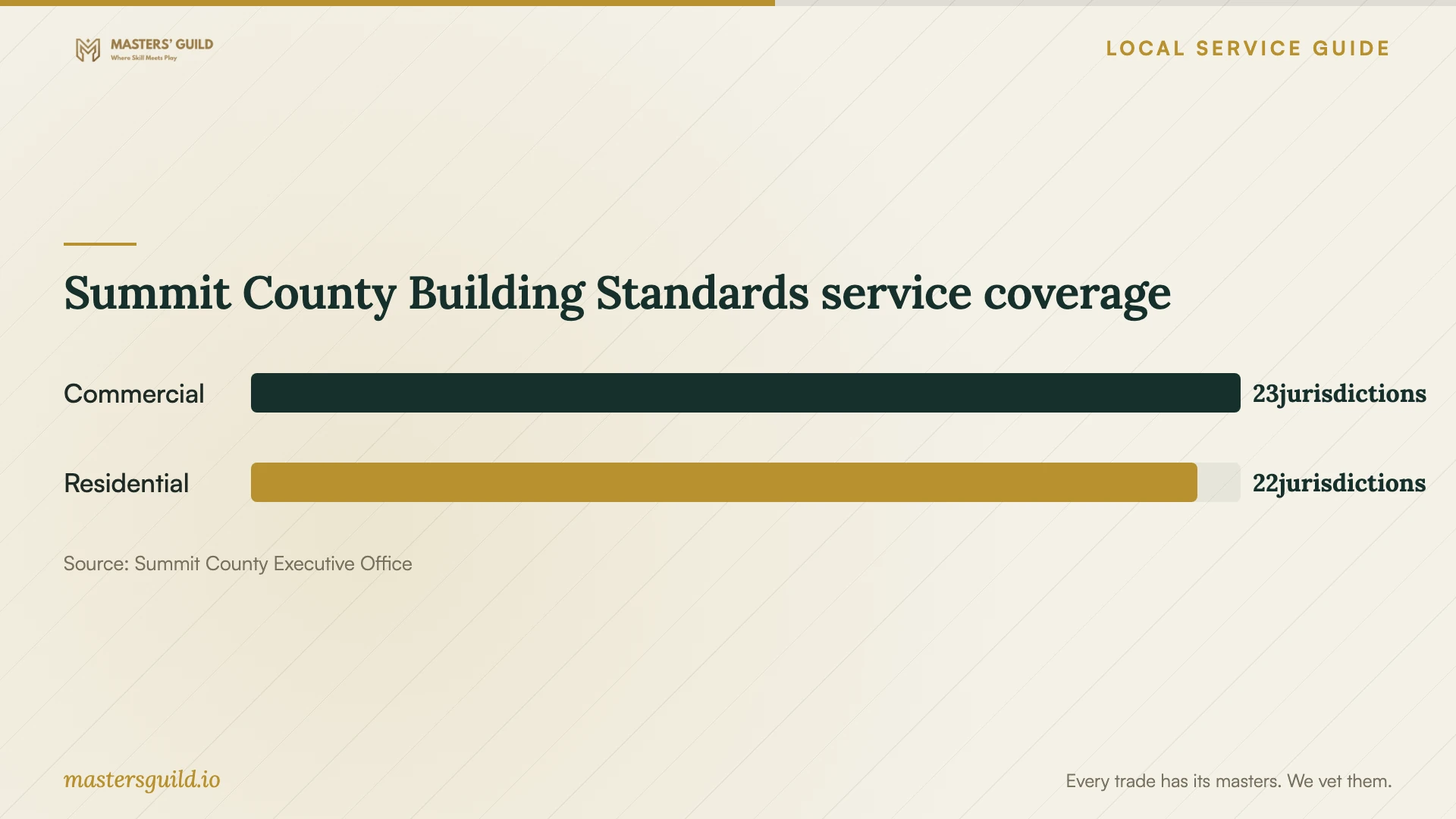
Summit County Building Standards service coverage
Local details that affect your job
Get local waste guidance before pricing removal
Summit County ReWorks offers free waste and materials-management consultations to county businesses, nonprofits, and institutions. Complete its Consultation Interest Form to discuss recycling practices and alternatives for materials you put in the trash. Use the discussion to select removal streams before bidders price hauling; the offer covers consultation, not a promise of free collection. [3]
Confirm jurisdiction, then use the correct portal
Summit County Building Standards lists commercial plan review and inspections for 23 jurisdictions. Its office is at 1030 East Tallmadge Avenue in Akron, and its phone number is 330-630-7280. Confirm whether it serves your property. For projects it handles, the county directs all new permit and inspection requests to GovWell; it retains CityWorks for existing requests. [1]
Choose the scope that fits your warehouse
| Situation | Scope to request | Decision before booking |
|---|---|---|
| Mixed cartons and unclear locations | Sorting, location labels, and record updates | Decide whether the provider must count stock or use existing counts. |
| Heavy stock or upper-level storage | A handling plan with equipment and operators | Review the proposed methods and insurance for the work. |
| Unwanted stock and packaging | Itemized removal streams and destinations | Assign approval for removals and specify the receipts you want. |
| Rack, electrical, or space-use changes | A separate description of building work | Consult the responsible building authority before scheduling that work. |
Your hiring checklist
- Photograph the work zones and identify inventory records the crew must preserve.
- Name the manager who can approve movement, disposal, and additional charges.
- Test the location-label format with receiving and picking staff.
- Record equipment, operator, and heavy-stock handling responsibilities.
- Confirm removal destinations and acceptance before loading.
- Set work windows, temporary receiving space, and phase stopping points.
- Agree on the location map, unresolved-item list, receipts, and staff handover.
Frequently Asked Questions
How much should I budget?
Use a walkthrough-based estimate for your scope. Ask bidders to separate labor, handling equipment, storage products, and removal costs. Compare the crew size and deliverables behind each total. For hourly work, set an approval threshold before the crew exceeds your budget.
Can my staff do part of the work?
Assign your staff tasks you judge suitable for their training and equipment, such as reviewing obsolete inventory or testing labels. Describe that division in the quote. Agree on where staff responsibilities end and provider responsibilities begin, including inventory records and handling.
How do I decide whether to reorganize everything at once?
Start with the delivery and picking access you must preserve. Ask the bidder to compare a complete shutdown with phased work, including temporary storage and repeated setup charges. Choose a schedule with clear handover points and a process for locating stock during each phase.
Sources and scope
This guide combines the sources below with practical planning guidance. Figures apply to the stated geography and period; request a written quote for your property.