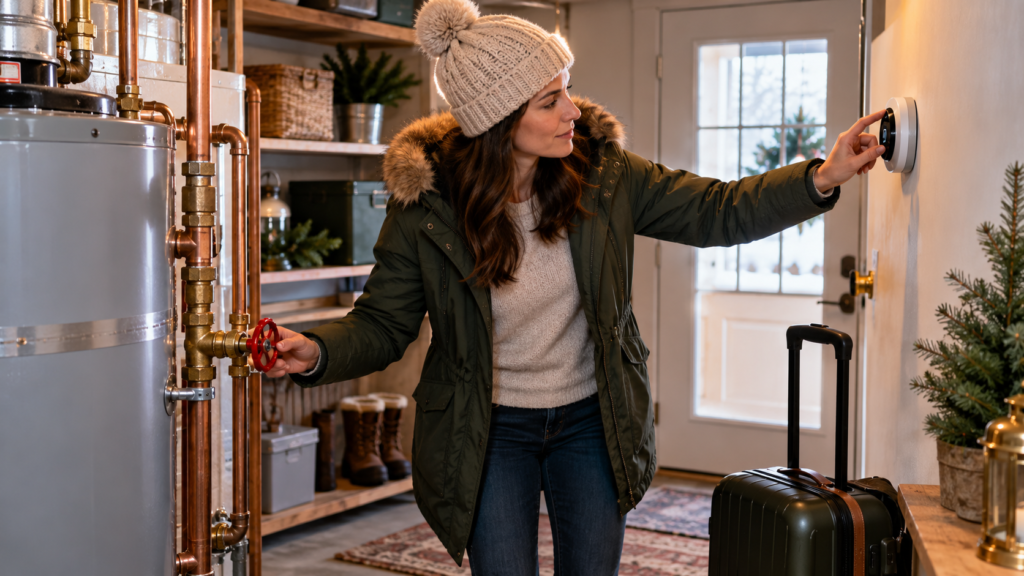
A winter travel water checklist protects your home by identifying the main shutoff, checking for leaks, keeping indoor heat at a safe setting, and giving one trusted contact clear instructions before you leave.
Key takeaways
- Find and label the main water shutoff before travel, then make sure each adult in the household knows how to use it.
- Look for active leaks at toilets, faucets, appliance hoses, and visible valves before a cold spell adds pressure to the system.
- Leave heat on when the home is vacant in cold weather and protect pipes in unheated areas.
- Give a trusted contact your itinerary, an entry method, and the plumber or building manager to call if a problem appears.
A short pre-trip inspection catches ordinary leaks
Start the winter travel water checklist two days before departure. Check under sinks, around toilets, behind the washer, and at visible supply valves for moisture, corrosion, or a slow drip. Read the water meter after a period when no one uses water if you know how to do so safely. A changing reading can justify a closer inspection.
The U.S. Environmental Protection Agency says average household leaks can waste more than 10,000 gallons each year, and 10 percent of homes have leaks that waste at least 90 gallons a day. Its WaterSense leak facts also identify worn toilet flappers, dripping faucets, and valves as common sources. Repair an active leak before the trip or arrange a plumber’s visit. A leak that waits for an empty house can spread before anyone sees it.
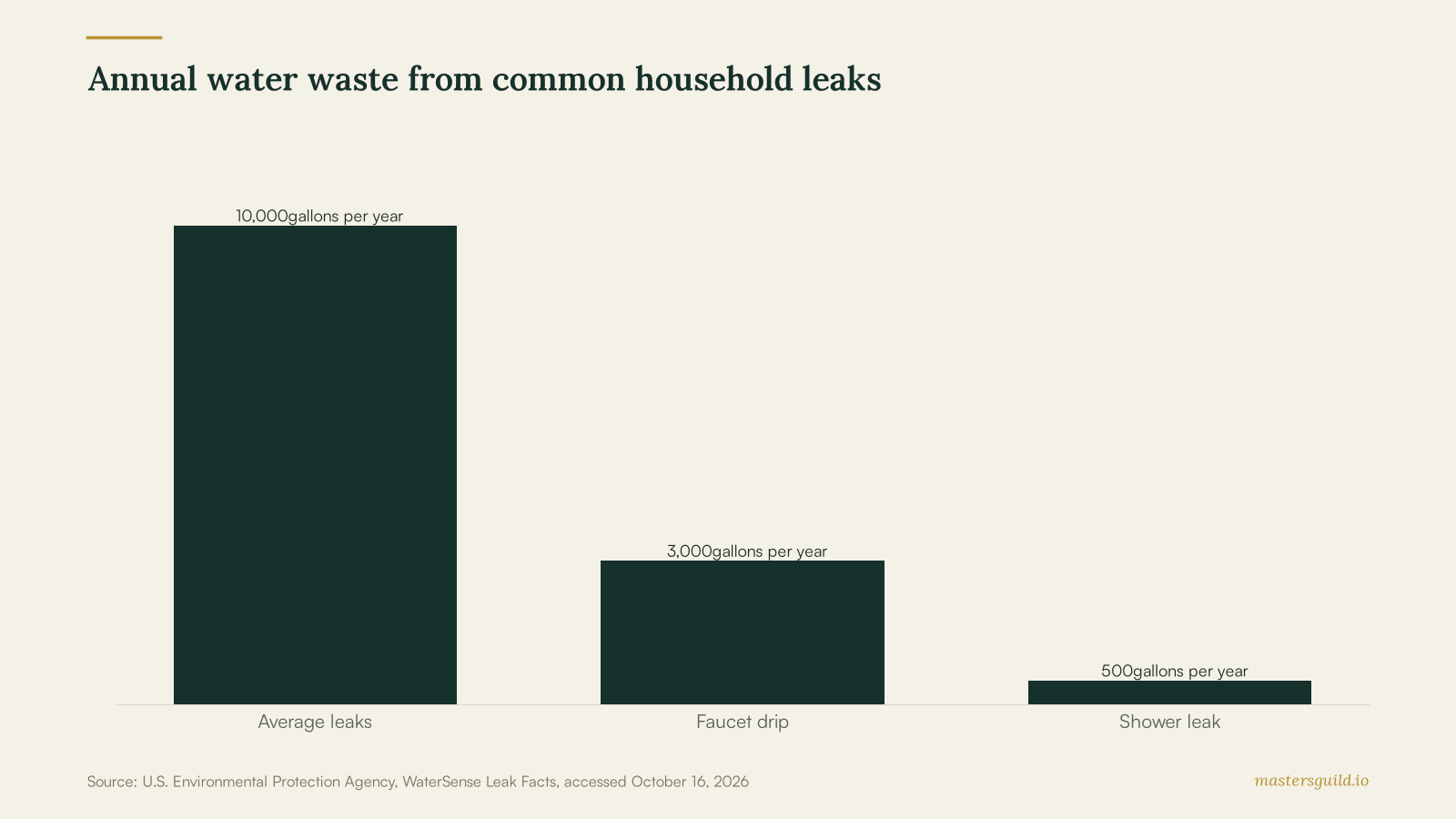
The chart does not predict damage at one house. It shows the scale of ordinary leaks, which gives you a reason to correct a small fault before a vacant-home problem grows.
The shutoff plan needs a decision before you leave
Find the main shutoff valve and test only the access and labeling if you do not know the condition of the plumbing. A homeowner who needs to close a valve for a trip should confirm that plan with a qualified plumber or building manager, especially in a condo, rental, or home with a fire-sprinkler system. Do not close a valve that serves a shared system without authorization.
Choose one of these written plans:
| Home situation | Travel plan | Person to call if a leak appears |
|---|---|---|
| Detached home with a known private main shutoff | Confirm the valve location and decide whether to shut off water for the trip. | Your plumber or a trusted local contact. |
| Condo, apartment, or shared building | Ask the building manager which valve serves your unit and what the after-hours procedure is. | Building emergency contact, then a qualified plumber. |
| Home with an active leak or uncertain plumbing | Repair or inspect the issue before departure. | Qualified plumber before you travel. |
Photograph the shutoff location, the water meter, and any area with a past leak. Share the photos with your contact only if they agree to help. A clear record beats a hurried phone description at night.
Heat and exposed pipes need attention during cold weather
The American Red Cross advises people leaving during cold weather to leave heat on at no lower than 55°F. It also identifies outdoor hose bibs, sprinkler lines, garages, crawl spaces, attics, and pipes along poorly insulated exterior walls as common freezing locations. Read its frozen-pipe guidance before choosing settings for your home.
Remove and drain outdoor hoses, close the inside valve that supplies an outdoor hose bib if your system has one, and open the outside bib so remaining water can drain. Keep garage doors closed when water lines run through the garage. A qualified plumber should assess pipe insulation, heat cable, a leaking valve, inaccessible pipe, or any work that changes plumbing.
The National Weather Service notes that pipes along exterior walls and in cold spaces such as basements, attics, and under kitchen cabinets freeze most often. Its winter weather safety guidance explains that water expands as it freezes and can burst pipes. If you return to a trickle of water, avoid open flames. Open the faucet and call a plumber if you cannot safely locate or thaw the affected pipe.
A trusted contact needs a simple entry and escalation plan
Ask one reliable person to check the home after a severe cold snap, power outage, or water alert. Give that person the address, entry method, alarm instructions, the main shutoff location, your building contact if applicable, and the number for a qualified plumber. Confirm that they can reach you while you travel.
Set alerts for a smart leak sensor or security system if you use one, then test the notification before the trip. Keep the instructions short: enter safely, look for water or a loss of heat, close the authorized shutoff if needed, and call the named pro. Do not ask a neighbor to handle electrical panels, gas appliances, or frozen pipe repairs.
For help with a leak, frozen pipe, or a pre-trip plumbing inspection, compare the scope with our winter water-bill leak guide and request local plumbing services. Describe the home type, shutoff access, visible symptoms, travel dates, and any areas that freeze first. You can also post your plumbing job on Masters’ Guild to receive offers from identity-verified local pros; payment is released when the job is complete.
Frequently Asked Questions
Should I turn off the water when I travel in winter?
Some detached homes can use a private main shutoff, but the right plan depends on the plumbing layout, heating system, occupancy, and building rules. Confirm the valve and its effects with a qualified plumber or building manager before travel.
What temperature should I leave my house at while away in winter?
The American Red Cross advises leaving heat on at no lower than 55°F during cold-weather travel. A home with vulnerable plumbing or unusual cold exposure may need a different plan from a qualified professional.
What should I do if I come home to a frozen pipe?
Open the affected faucet, then use only safe warming methods described by the National Weather Service. Do not use an open flame. Call a plumber if you cannot locate the frozen section, if it is inaccessible, or if water has leaked.
Can a neighbor check my house during a winter trip?
Yes, if that person agrees and has clear instructions. Provide a safe entry method, your contact details, the authorized shutoff location, and the number for the building manager or plumber.