
Local service guide
Yard cleanup in Yonkers: hiring and disposal
Arrange yard cleanup in Yonkers by agreeing on the areas to clear, the materials to remove, and who will handle disposal before accepting a quote. Ask for separate prices for collection and hauling, plus the contractor’s disposal destination. City rules require professional landscapers to obtain permits to use designated municipal organic-waste disposal sites, so include that question when comparing crews. [1] [2]
Choose collection, hauling, or work on the beds
Describe the job by area and material. Send photos of the lawn, beds, paths, and existing piles. Mark what you want the crew to collect, what you want to keep, and where you expect them to finish. Specify whether the visit includes pulling weeds, cutting back plants, or collecting loose leaves alone.
Choose between hauling everything away and leaving separated yard waste ready for collection. Yonkers defines residential yard waste as leaves, small branches, twigs, and brush, and requires residents to separate residential recyclable material from household waste. Keep litter and other unwanted objects out of the yard-waste portion of the job. [3]
Walk through the beds with the crew before they begin. Identify plants to preserve and areas to leave untouched. Treat tree cutting, stump removal, chemical treatments, and repairs as separate requests rather than assuming the cleanup quote covers them.
Compare quotes with the same disposal plan
Request a written total for the same areas and tasks from each bidder. Ask them to list labor, bags or containers, loading, hauling, disposal charges, and any proposed add-ons. For an hourly offer, request a spending limit and require your approval before the crew exceeds it.
Ask how the contractor will handle additional debris discovered during the visit. Agree whether you will approve an extra load, leave some material for another visit, or stop at the original scope. Specify whether the crew will remove filled bags or leave them at an agreed staging point.
Ask for proof of insurance and the business name that will appear on the agreement. Discuss access through gates, steps, and narrow passages; show the route between the yard and the loading area. Request a quote based on those conditions rather than asking bidders to assume easy vehicle access.
Check the contractor’s hauling arrangements
Yonkers’ organic-refuse ordinance requires an access permit for professional gardeners and landscapers using the designated city disposal site, plus a decal on each commercial vehicle used to carry the material. The person carrying waste to the site must possess the permit or a signed photocopy. Ask the contractor which site they will use and how they will meet its access requirements. [1]
Ask for separate handling instructions for woody debris. The organic-refuse ordinance addresses tree limbs, while the leaves-and-clippings ordinance prohibits landscapers from disposing of logs, limbs, branches, or stumps at public places. Have the contractor confirm acceptance at the intended destination instead of treating all outdoor debris as one load. [1] [2]
Prepare the yard and agree on completion
Move furniture, toys, hoses, and loose ornaments out of the work areas. Mark irrigation heads and anything hidden beneath leaves. Keep pets indoors during the visit, arrange gate access, and show the crew where they can stage material while loading.
Agree on how you will handle weather changes before the appointment. Ask the crew to contact you before starting if you want to postpone work on wet ground. For a leaf-focused job, choose whether you want one visit or a return visit after additional leaves fall, and price each visit in the agreement.
Inspect the agreed areas before settling the final balance. Check paths, corners, bed edges, and the loading area. Compare the result with the written scope and photographs. Confirm where the crew left any retained material and whether they completed the promised hauling.
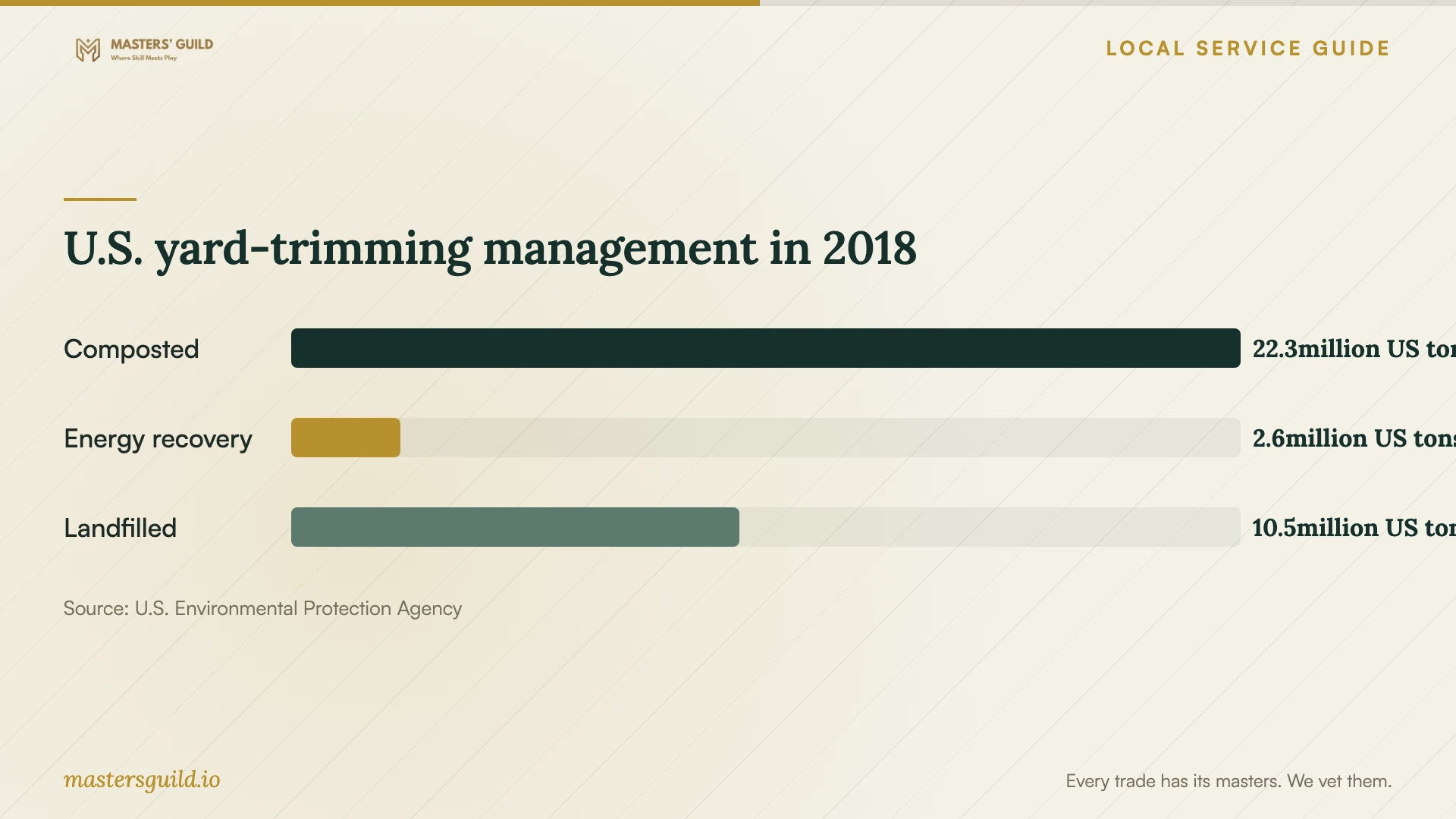
U.S. yard-trimming management in 2018
Local details that affect your job
Specify equipment for summer appointments
City code prohibits gasoline-powered leaf and garden blowers from June 1 through September 30. It also allows a storm-emergency suspension and temporary special permits for specified circumstances. For a visit in that period, request rakes or electric equipment unless the contractor confirms an applicable exception. Do not assume a neglected yard qualifies for an exception without the required city action. [2]
Match hauling to municipal access limits
Under the organic-refuse ordinance, Yonkers excludes landscaper vehicles with capacity greater than five cubic yards from its designated disposal site. Annual access permits run from April 1 through January 15 of the following year; vehicles cannot enter between January 16 and March 31 unless the Public Works Commissioner opens the site for dumping. For winter work or a large cleanup, ask the bidder to confirm another authorized destination or explain the planned loads. [1]
Confirm collection before leaving bags behind
The recycling code directs residents to put yard waste in an open refuse container or brown paper bag and permits private composting on their own property. It also allows the Public Works Commissioner to change collection schedules and procedures. Before booking collection-only work, confirm the current arrangements with Public Works and choose a staging point that follows its instructions. [3]
Choose the cleanup scope before requesting offers
| Your situation | Scope to request | Question before booking |
|---|---|---|
| Loose leaves with an agreed collection plan | Collect and prepare yard waste in open containers or brown paper bags, as city code specifies | Have you confirmed the current municipal collection arrangements? |
| You want the debris removed during the visit | Collection, loading, and hauling to a confirmed destination | Which destination will you use, and do you have the required access? |
| Branches, logs, or stumps mixed with leaves | Separate material handling and destination confirmation | Will the destination accept each type of woody debris? |
| Work between June 1 and September 30 | Raking or electric equipment unless an applicable city exception permits gasoline blowers | Which equipment will the crew bring? |
| Beds contain plants you want to keep | A walkthrough and marked work boundaries | Which plants and areas will the crew leave untouched? |
Your hiring checklist
- Photograph each work area and identify plants or objects the crew should preserve.
- Choose hauling, prepared containers for collection, or a retained composting area.
- Request an itemized quote and approval terms for additional work or loads.
- Ask the contractor to identify the disposal destination and confirm accepted materials.
- Agree on equipment, arrival arrangements, and weather rescheduling.
- Clear the access route and mark irrigation heads or concealed obstacles.
- Inspect the finished areas and confirm removal of the agreed debris.
Frequently Asked Questions
How much should I budget for a cleanup?
Request a property-specific written quote. Compare the same work areas, tasks, and disposal plan, and ask for separate hauling charges. The cited sources do not establish a current local cleanup price, so use contractor offers to set your budget.
Can the crew leave yard waste for city collection?
City code specifies open refuse containers or brown paper bags for residential yard waste. Confirm current collection procedures with Public Works before agreeing to leave material behind, and identify the staging location in the quote. [3]
Can I compost the collected material at home?
Yonkers’ recycling code permits residents to compost garden and yard waste on their own property. If you choose that approach, mark the retained material and composting location before the crew starts, and arrange separate handling for litter. [3]
Does a city disposal permit cover every load?
Ask the contractor to confirm the material, vehicle, destination, and access period. The organic-refuse ordinance excludes inorganic material and vehicles with capacity greater than five cubic yards from the designated site. Its seasonal access provisions also affect winter hauling. [1]
Sources and scope
This guide combines the sources below with practical planning guidance. Figures apply to the stated geography and period; request a written quote for your property.