
Local service guide
Personal Shopping in Yonkers, NY: Hiring Guide
Arrange Personal Shopping in Yonkers, NY by choosing the help you need, then agreeing on the shopper’s fee, merchandise budget, payment method, substitutions, and return responsibilities before anyone buys. For clothing, request item-level spending limits and approval before purchases. For groceries or errands, give the shopper an exact list and delivery instructions. Keep the service fee separate from the money you authorize for goods.
Choose the shopping help you need
Describe the result you want: groceries delivered to your door, an errand completed, clothing selected for you to try, or help choosing an outfit in a store. Ask the provider to explain which tasks they will accept. For wardrobe help, request examples of their approach to your sizes, preferences, and budget, and ask whether they will shop with you or purchase on your behalf.
For groceries, list brands, pack sizes, dietary restrictions, and acceptable replacements. Tell the shopper which unavailable items to skip and which require a message. For clothing, share measurements and items you already own, then describe the fit and occasion you want. Send a list or product photo instead of private account credentials.
Get a quote with separate spending limits
Request a written fee and identify what it includes. Ask whether the shopper charges for list preparation, consultation, travel, waiting, delivery, and returns. If they quote an hourly rate, ask when billing starts and stops, whether they require a minimum booking, and what happens if you add another store. Compare offers using the same list and destination.
Set a merchandise limit that includes checkout tax, and keep it separate from the service fee and approved expenses. Require permission before the shopper exceeds either limit. For clothing, set a maximum for each item as well as the whole purchase. New York’s clothing exemption applies to qualifying items below $110 each, regardless of the combined cost of those qualifying items. Jewelry and rented formalwear do not qualify for that exemption. [1]
Ask the shopper to disclose any store commission or referral payment and explain how they choose retailers. Request approval for final-sale purchases and purchases outside your preferred stores. Review proposed purchases against your budget before authorizing payment.
Agree on payment and purchase records
Choose how you will fund purchases: a documented advance, an agreed reimbursement process, or a checkout you complete yourself. Record the amount, approved uses, and how the shopper will return unused money. Ask for itemized receipts and a separate record of the service fee. Keep your card PIN and banking password private.
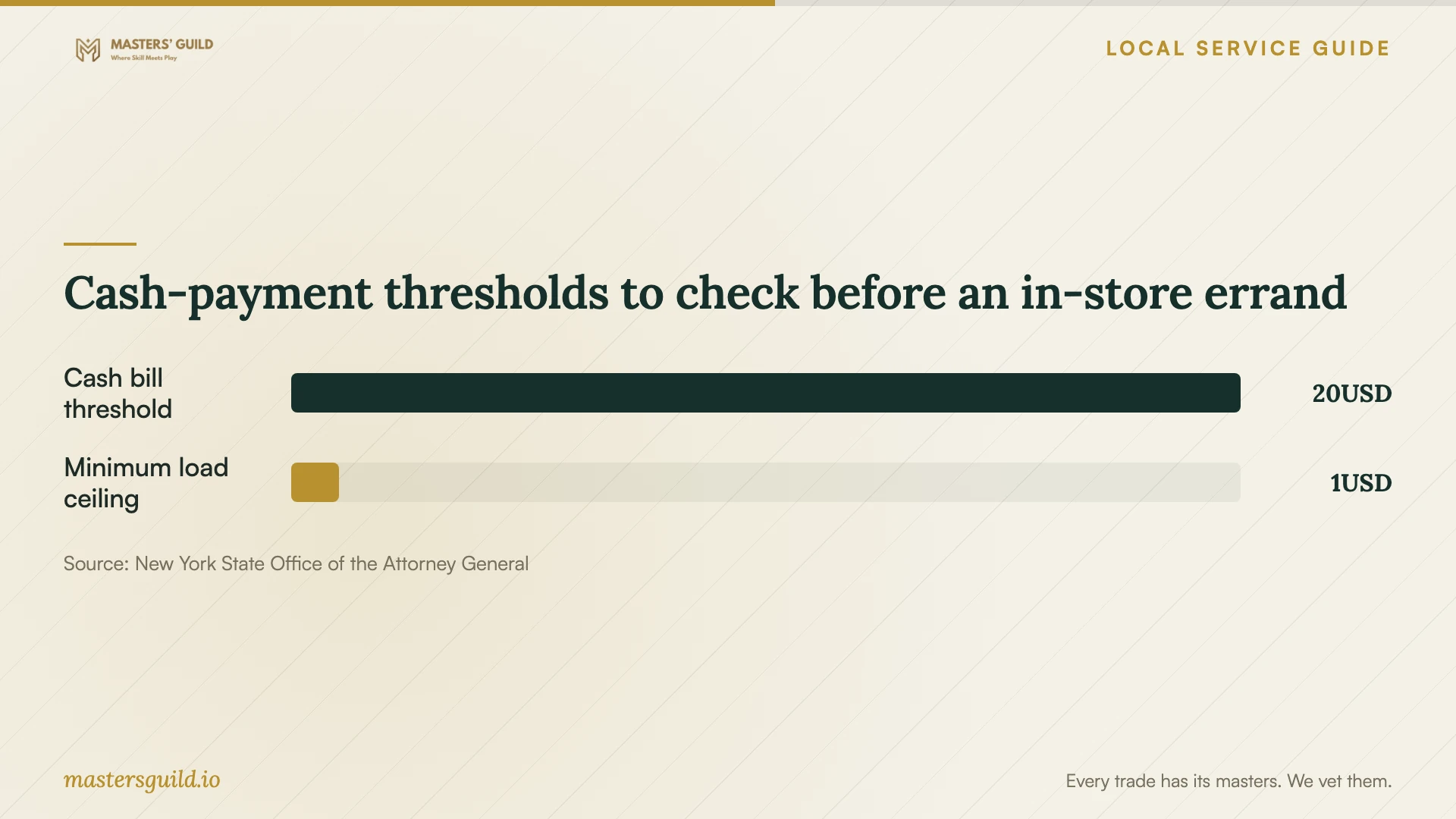
For an in-store cash purchase, New York’s Attorney General says food stores and retail establishments must accept cash under the law effective March 21, 2026, subject to exceptions. Stores need not accept bills above $20. The law also allows a qualifying on-premises cash-to-prepaid-card device. It does not require cash acceptance for telephone, mail, or internet orders unless the transaction takes place at the store. Confirm the checkout arrangement for any order placed before arrival. [3]
Assign delivery and return responsibilities
Give the shopper your delivery address, entry instructions, handoff preference, and a contact method for delays. Ask them to confirm the delivery window they can commit to. If you want help putting purchases away, trying on clothing, or taking items back, include those tasks in the quote. Decide who will keep receipts, packaging, and tags until you accept the purchases.
Westchester County’s consumer guidance requires retail merchants to display their refund or exchange policy at the point of sale. Ask the shopper to record the deadline, final-sale restrictions, and refund method before purchasing. The county also requires merchants to provide a clear receipt with their business name and address. Retain that receipt alongside your agreement with the shopper. [2]
If a retailer will deliver goods, ask for its delivery date in writing and name the person responsible for following up. Westchester’s guidance says a consumer may cancel a delivered-goods contract with a full refund if the merchant fails to disclose a delivery date in writing or fails to deliver within 30 days of the specified date. This guidance concerns the merchant’s goods contract. Agree on the independent shopper’s cancellation terms in your service agreement. [2]
Cash-payment thresholds to check before an in-store errand
Local details that affect your job
Apply the state clothing threshold to your item budget
For a clothing trip in Yonkers, tell the shopper whether you want qualifying items priced below $110 each. New York exempts those items from the 4% state tax, but counties and cities choose whether to provide the local exemption. The state bulletin does not establish Yonkers’ current local clothing rate. Ask the retailer to confirm the checkout tax before approving purchases near your budget limit. [1]
Use Westchester’s purchase and delivery protections
For purchases from a Westchester retailer, have the shopper check the displayed refund policy and retain the merchant’s receipt. If the retailer will deliver a bulky or special-order purchase, request a written delivery date. The county describes cancellation and full-refund rights when the merchant omits a written delivery date or fails to deliver within 30 days of the specified date. Name who will contact the merchant and retain the contract. [2]
Plan cash-funded errands under the statewide rule
New York’s cash-acceptance guidance applies statewide, including Yonkers. If you fund an in-store errand with cash, use bills of $20 or less because stores need not accept larger denominations. For orders placed online or by telephone, confirm payment arrangements because the guidance describes exceptions for remote transactions. Have the shopper reconcile receipts and unused cash at handoff. [3]
Choose a shopping arrangement
| Your need | Arrangement to request | Confirm before booking |
|---|---|---|
| Grocery or household errand | Shopping from your written list | Substitutions, purchase limit, payment, and doorstep handoff |
| Clothing choices | Shopping together or selections for approval | Fit preferences, item limits, and permission before purchase |
| Outfit for an occasion | Selections with a return plan | Try-on deadline, retailer refund policy, and return-trip fee |
| Retailer-delivered goods | Purchase help with delivery follow-up | Written retailer delivery date, contract holder, and responsibility for contacting the merchant |
Your hiring checklist
- Write the shopping list, preferred stores, sizes or pack quantities, and delivery destination.
- Specify acceptable substitutions and purchases that require your approval.
- Agree on the service fee, billing boundaries, travel expenses, and return-trip charges.
- Set separate limits for merchandise including checkout tax, the service fee, and approved expenses.
- Document the payment arrangement and how the shopper will return unused purchase funds.
- Ask the shopper to check refund terms before buying and retain itemized receipts.
- Confirm the handoff window, entry instructions, and who will manage retailer deliveries or returns.
Frequently Asked Questions
How much should I budget for the shopper’s service?
Request a quote for your exact list and delivery arrangement. Ask providers to separate their fee from merchandise, tax, travel, and return expenses so you can compare offers. For an hourly booking, agree on a spending cap and require approval before extending the work.
Is clothing below $110 tax-free?
Qualifying clothing and footwear below $110 per item or pair qualify for New York’s 4% state exemption. Local exemptions depend on the locality. Jewelry and rented formalwear do not qualify. Confirm the retailer’s checkout tax before approving the purchase. [1]
Can I give the shopper cash for an errand?
Agree with the shopper on a documented advance and return of unused money. New York requires covered food stores and retail establishments to accept cash, with exceptions that include bills above $20 and certain remote orders. Confirm how the shopper will complete checkout. [3]
Who should handle returns?
Name that person before shopping and agree on any additional fee. Westchester requires retail merchants to display their refund or exchange policy at the point of sale. Ask the shopper to check it before purchase and keep the receipt, tags, and packaging needed for your planned return. [2]
Sources and scope
This guide combines the sources below with practical planning guidance. Figures apply to the stated geography and period; request a written quote for your property.