
Local service guide
Duct cleaning in Yonkers, NY: hiring and planning
Arrange duct cleaning in Yonkers by asking the contractor to show the contamination, then compare written estimates for the same heating and cooling system scope. EPA recommends cleaning as needed for substantial mold, pests, or excessive debris, rather than routine cleaning. If the proposed work includes mold remediation, check New York's licensing and independent-assessment requirements before approving that work. [1] [2]
Establish whether your home needs cleaning
Ask for an inspection before buying a cleaning package. EPA identifies substantial visible mold in hard-surface ducts or HVAC components, vermin infestation, and excessive dust or debris as reasons to consider cleaning. Ask the contractor to show you the affected location and explain what caused the contamination. [1]
A dusty return register is a different finding from heavy deposits inside the system. EPA says return registers collect dust as air passes through them and that this alone does not indicate contaminated ducts. For unexplained symptoms, discuss your concerns with a health professional; EPA says duct cleaning has not been shown to prevent health problems. [1]
Tell the inspector about recent renovation work, water leaks, and any particles you have seen coming from supply registers. Ask for photographs that identify the component and location. Keep those photographs with the estimate so you can compare the proposed work with the original finding.
Compare complete scopes before comparing totals
EPA describes duct cleaning as work on a forced-air system that can include supply and return ducts, registers, coils, drain pans, fans, and the air-handling housing. Ask the contractor to list the components they will clean and any equipment work they exclude. A vent count alone does not describe that scope. [1]
Send each bidder the same information: the number of systems you want inspected, equipment locations, access constraints, and your contamination photographs. Ask for a total price, the expected work period, optional services, and the process for approving extra charges. Request separate scope and pricing for dryer exhaust cleaning if you also want that service.
These sources do not establish a current Yonkers market price. EPA's duct-cleaning page includes a national price discussion in guidance originally published in 1997. Use written estimates for your actual system rather than treating that discussion as a local quote or applying a city price multiplier. [1]
Choose methods that suit the duct material
Ask the contractor to identify sheet metal, flexible duct, and any fiberglass lining before describing the cleaning method. EPA calls for controlled brushing with vacuum collection, soft-bristled brushes for fiberglass materials, and vacuum equipment that exhausts outdoors or uses HEPA filtration when exhausting indoors. [1]
EPA says wet or moldy duct insulation cannot be effectively cleaned and should be replaced. The contractor should also inspect for asbestos-containing materials before cleaning and leave suspected asbestos work to specially trained and equipped contractors. Ask how they will handle either finding before you authorize the job. [1]
Review any proposed chemical treatment as a separate decision. Ask to see the product label, the intended application, and the reason physical cleaning and moisture correction would not suffice. EPA's guidance says biocides require appropriate labeled uses and identifies limitations for internally insulated ducts. Do not accept an unexplained sanitizing surcharge. [1]
Prepare access and inspect the finished work
Before the visit, clear a route to the equipment and registers. Agree on furniture protection, pet arrangements, equipment placement, and access to rooms. If your system serves space outside your control, ask the owner or building manager to approve the scope and arrange access before booking.
EPA recommends a visual inspection to verify the result. Ask the contractor to show the cleaned components and selected supply and return locations. Check that they have reattached registers, sealed and reinsulated access openings, and demonstrated system operation. Compare the finished work with the written agreement before signing off. [1]
Plan filtration and moisture maintenance
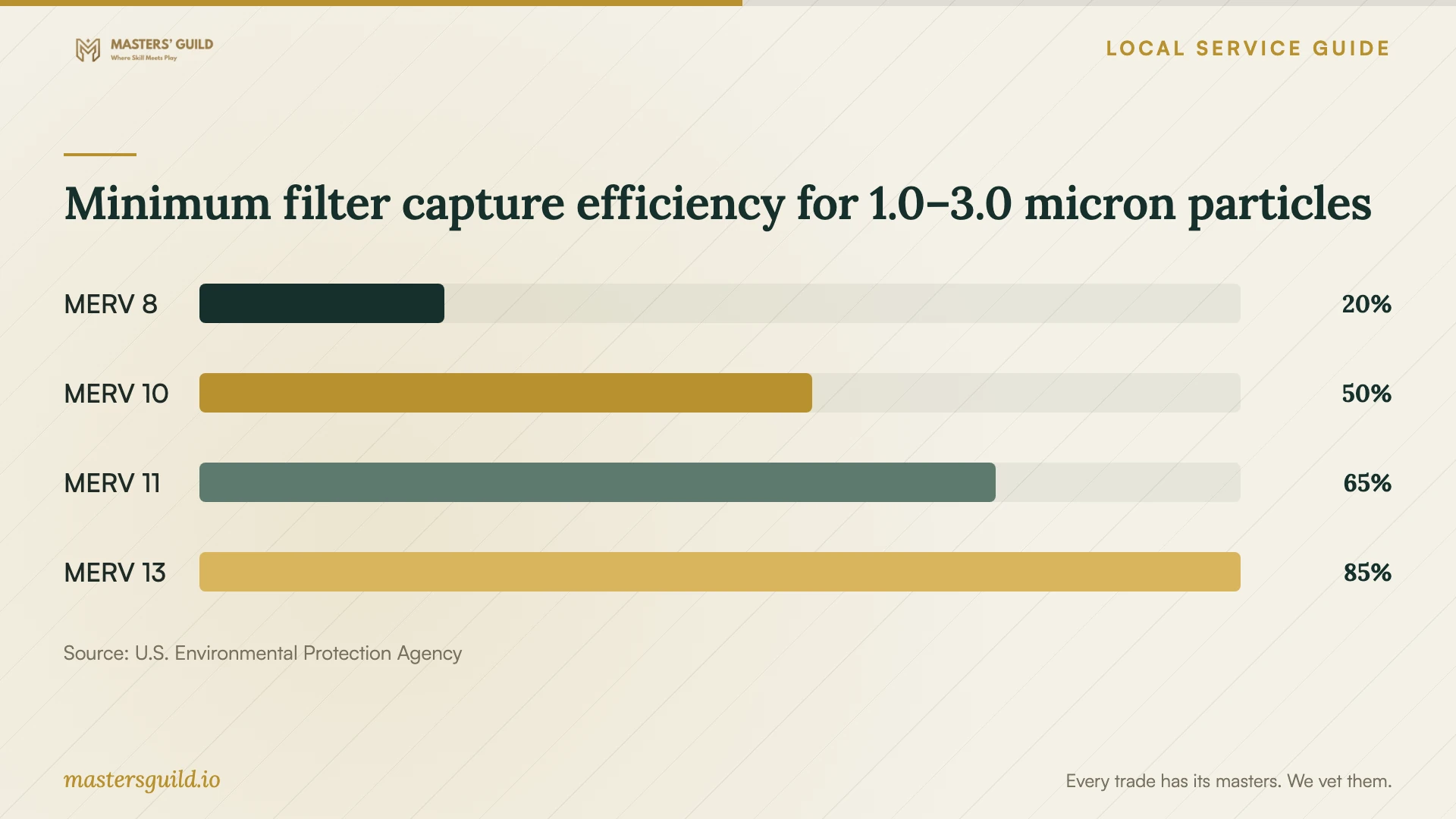
Ask your HVAC technician which filter your fan and filter slot can accommodate. EPA recommends MERV 13 or the highest rating the system can support when upgrading filtration, and advises following the manufacturer's replacement instructions. Do not choose a higher rating without checking compatibility. [3]
The chart compares published filter test thresholds for particles measuring 1.0 to 3.0 microns. Use it to discuss filtration with your technician. These values do not measure how much dust a cleaning contractor removes or predict the air quality in your home. [3]
EPA advises correcting leaks, keeping condensate pans draining, and preventing dirt and moisture from entering the system. Ask who will repair any moisture problem found during the inspection. Cleaning without correcting the cause can allow contamination to recur. [1]
Minimum filter capture efficiency for 1.0–3.0 micron particles
Local details that affect your job
New York licensing changes a mold-cleaning decision
New York's Department of Labor defines a Mold Project as assessment, remediation, or abatement of areas greater than ten square feet undertaken for that purpose. It excludes routine cleaning and work undertaken for other purposes. For a Yonkers job, ask whether a mold-related proposal falls within that definition and verify the relevant licenses through the department's contractor and individual search tools. Do not treat an ordinary duct-cleaning credential as proof of a New York mold license. [2]
Require the assessment plan before a covered remediation quote
For covered mold remediation in New York, the Department of Labor says a licensed remediator needs an assessment from a licensed assessor and cannot perform both roles on the same project. The assessor prepares a remediation plan, which the client gives to the remediator to develop a work plan and quote. If a duct cleaner proposes mold remediation during your Yonkers visit, pause approval and ask for this process. The department says an owner waiver does not remove the assessment requirement. [2]
Choose the next step from the inspection finding
| Finding | Next step | Before approving work |
|---|---|---|
| Dust on a return grille | Vacuum or remove and clean the grille | Ask for evidence of contamination deeper in the system |
| Excessive duct debris or particles from supply registers | Consider cleaning after identifying the cause | Compare written estimates for the same system scope |
| Apparent mold on hard-surface ducts | Ask for confirmation and a moisture investigation | Determine whether New York's covered mold-project process applies |
| Wet or moldy duct insulation | Arrange qualified evaluation for replacement | Include correction of the moisture source |
| Suspected asbestos-containing system material | Leave disturbance to specially trained and equipped contractors | Resolve the material concern before cleaning proceeds |
Your hiring checklist
- Describe the problem and ask the inspector to document the affected locations.
- Send the same system information and photographs to each bidder.
- Request a written list of included components, exclusions, and optional services.
- Ask the contractor to identify duct materials and explain the collection method.
- Verify the assessment process and credentials for any proposed mold remediation.
- Agree on access, furniture protection, and approval of additional charges.
- Compare completion photographs and the walkthrough with the agreed scope.
- Ask your HVAC technician about compatible filters and moisture repairs.
Frequently Asked Questions
Should I book duct cleaning every year?
EPA recommends duct cleaning as needed rather than on a routine schedule. It distinguishes cleaning ducts from regular filter changes and heating-equipment inspections. Ask the inspector to show the condition that warrants cleaning before booking. [1]
Can the duct cleaner assess and remove mold in one visit?
For a covered New York mold project, a licensee cannot perform both assessment and remediation. A licensed remediator must obtain the licensed assessor's plan and prepare a work plan before remediation. Routine cleaning falls outside the department's Mold Project definition. [2]
How should I compare a low per-vent offer with a system quote?
Ask both bidders to name the components they will clean, then compare total prices for matching work. EPA advises a written agreement covering total cost and scope. Ask each bidder to itemize equipment cleaning, access work, and optional treatments before you choose. [1]
Should I install a MERV 13 filter after cleaning?
Check system compatibility first. EPA recommends MERV 13 or the highest rating the fan and filter slot can accommodate when upgrading. Ask an HVAC technician to confirm the appropriate filter and follow the manufacturer's maintenance instructions. [3]
Sources and scope
This guide combines the sources below with practical planning guidance. Figures apply to the stated geography and period; request a written quote for your property.