
Local service guide
Commercial cleaning in Yonkers: scope and hiring
Commercial cleaning in Yonkers starts with a walkthrough and a written scope covering rooms, tasks, visit frequency, access and waste handling. Give bidders the same requirements, separate floor-care extras from recurring work, and identify who handles off-site rubbish collection. For visitor-accessible premises, include Westchester County's separate waste and recycling receptacles in the walkthrough and agree how cleaners will preserve that separation. [2]
Prepare a scope bidders can price
Walk through the premises with each bidder. List tenant rooms, shared corridors, restrooms, break rooms and entrances that you want cleaned. Record floor materials, mark excluded rooms and identify surfaces that need special handling. Decide whether the crew may move desk items or clean only cleared surfaces.
Assign a frequency to each task. Specify bin emptying, restroom cleaning, vacuuming, hard-floor care and supply replenishment instead of requesting a general nightly clean. Ask for separate prices for an initial deep clean, carpet extraction, floor stripping and interior glass. Identify who buys liners, soap and paper products.
Explain the service window and access arrangements before accepting a price. Show bidders the equipment-storage area and route through the building. Agree on keys, badges, alarms, restricted records and lockup. Ask who will cover an absent cleaner and whom your staff should contact if the crew cannot enter.
Keep recycling separate through collection
Westchester County's nonresidential source-separation provisions require premises with public or visitor areas to provide identifiable, separate waste and recycling receptacles close together. The county specifies each visitor-accessible floor and area, including food-service areas. It allows single-stream or dual-stream recycling according to the premises' source-separation plan. [2]
During the walkthrough, trace the route from reception and break-room bins to the building's collection containers. Identify which containers receive paper and which receive bottles, cans and cartons under your plan. Assign responsibility for labels, liners and reporting mixed contents. Ask the crew to preserve the chosen separation when emptying indoor bins.
Verify hauling separately from indoor cleaning
Westchester states that all haulers operating in the county must hold a license. Its licensed-hauler directory distinguishes activity classes: Class A covers municipal waste hauling, while other classes cover narrower activities such as construction debris or food waste. For ordinary commercial rubbish, check for Class A and ask the county to confirm authorization for the proposed waste. [2] [3]
If a cleaner offers off-site rubbish removal, request the hauling company's exact business name and proposed waste types. Check its current directory entry and license class before including hauling in the agreement. If the cleaner will only transfer bags to building containers, name those containers and assign responsibility for missed pickups or overflow to your building contact.
The displayed Yonkers Code section 91-20 describes private collection through a collector licensed under the city code, entrance-window signage and notification to Public Works. However, the same page flags Ordinance No. 7-2026, adopted June 24, 2026, amending Article II without supplying its amendment text. This page therefore cannot establish the current wording or effective date of those duties. Confirm them with Public Works before changing collection arrangements; the county lookup does not independently verify the city licensing requirement described in section 91-20. [1] [3]
Compare the complete recurring bill
Request a recurring price that states the included visits, tasks, supplies and exclusions. Ask bidders to list initial cleaning, periodic floor care and hauling apart from the base service. For monthly offers, agree how the provider will handle holidays, closures, missed visits and changes to the service schedule.
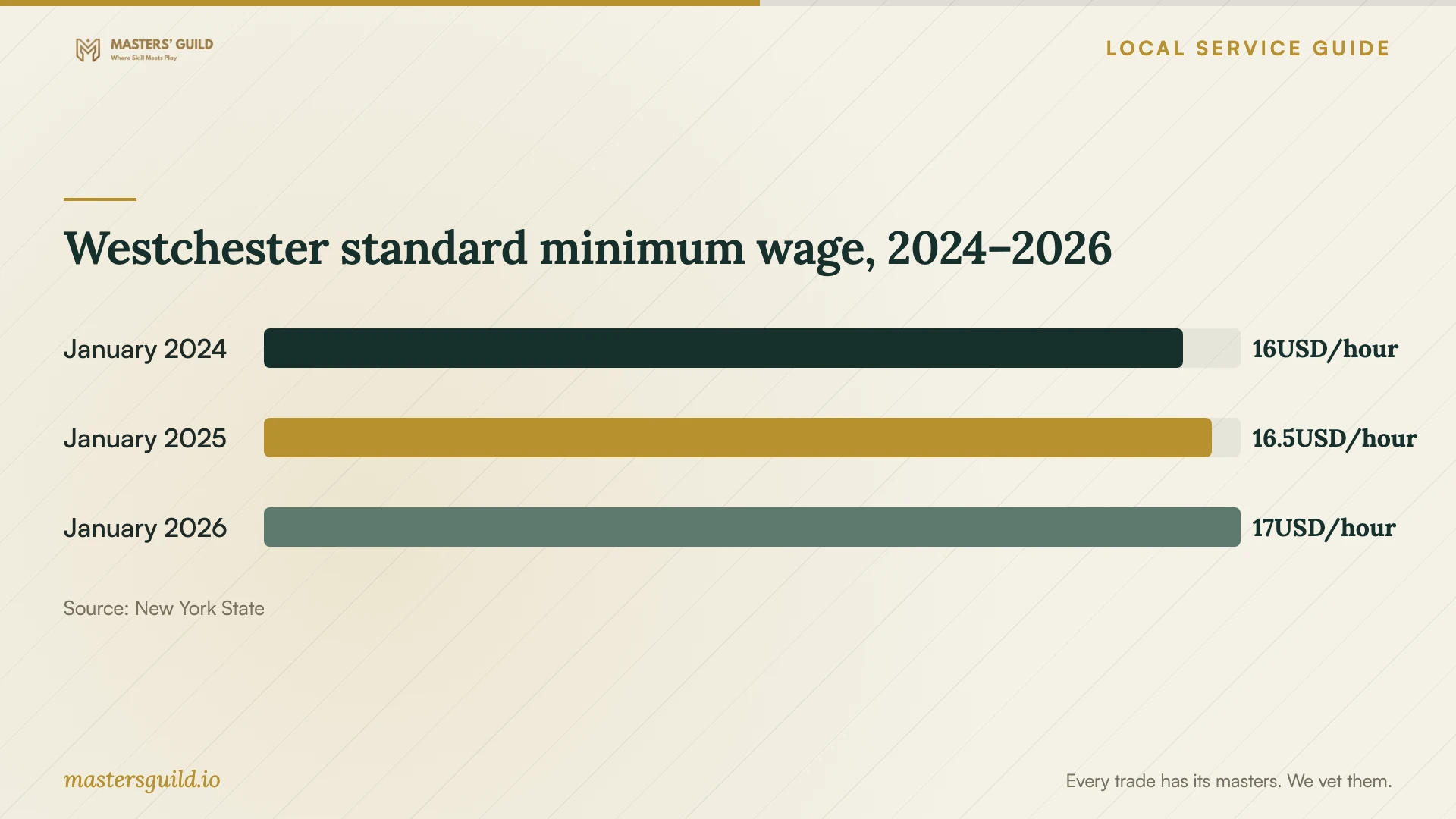
New York's standard minimum wage schedule lists Westchester at $16.00 per hour from January 2024, $16.50 from January 2025 and $17.00 from January 2026. Use the chart as employee-wage context when asking bidders about staffing. These statutory rates do not establish a cleaning company's charge, its productivity or a verified local contract-price range. [5]
New York's tax guide lists maintaining, servicing and repairing real property as taxable. It lists carpet, rug, drapery and upholstery cleaning among generally exempt services. Ask the provider to describe and itemize each service, explain its tax treatment and show the final amount you will pay. [4]
Set inspection and correction terms
Request evidence of liability coverage and ask how the provider covers workers and subcontractors. Ask for references from premises with a similar use and access arrangement. Identify the supervisor, damage-reporting contact and person who can resolve an after-hours access problem.
Agree on an initial inspection with your building contact. Check the written tasks by room, including restroom fixtures, floor edges, bins and replenished supplies. Record missed work with its location, then agree on a correction deadline. Include a review date and termination terms before committing to a longer agreement.
Westchester standard minimum wage, 2024–2026
Local details that affect your job
Plan the visitor-area bin layout
Westchester County's provisions introduced in 2024 require separate, identifiable waste and recycling receptacles close together on each public or visitor-accessible floor and in each accessible area, including food-service areas. Apply this county requirement to your premises by checking reception, visitor meeting spaces and food-service areas during the walkthrough. Assign bin placement and labeling before asking cleaners to price collection duties. [2]
Check the hauler's activity class
The county's official search distinguishes Class A municipal waste haulers from recyclables brokers, construction-debris operators and other narrower classes. A directory listing alone does not establish authorization for the waste you want removed. For ordinary commercial rubbish, check Class A; for other waste, confirm the appropriate class with the county and name the hauling company in the agreement. [3]
Resolve the city-code amendment before changing collection
The Yonkers code page flags a June 24, 2026 amendment to Article II but does not include its text. Ask Public Works to confirm the amendment's effective date and current collection, city licensing, entrance-sign, notification and receptacle requirements. Until that confirmation, treat the displayed provisions as a checklist of matters to verify rather than a definitive statement of current duties. [1]
Choose the scope and verification steps
| Your situation | Scope to request | Check before signing |
|---|---|---|
| Office using shared building collection | Indoor bin emptying and transfer to named containers | Confirm the landlord's collection arrangement and each party's duties. |
| Premises open to visitors | Separate waste and recycling collection | Review nearby, identifiable receptacles against Westchester's visitor-area provisions. |
| Bid includes off-site ordinary rubbish removal | Name the hauler and waste types | Check Class A in the county directory and confirm city authorization separately. |
| Collection arrangements will change | Define indoor transfer and off-site collection responsibilities | Ask Public Works to resolve the flagged 2026 amendment and confirm current city duties. |
| Carpet work plus building maintenance | Itemized services and total invoice amount | Ask the provider to explain taxable maintenance and generally exempt fabric-cleaning treatment. |
Your hiring checklist
- Prepare a room list, floor-material list and plan of excluded areas.
- Give bidders the same task frequencies, supplies list and access window.
- Trace indoor waste and recycling routes to designated building containers.
- Confirm the existing carter and assign responsibility for missed pickups.
- For proposed hauling, record the company's name and confirm its license class and city authorization.
- Request itemized recurring work, initial cleaning, extras and tax treatment.
- Confirm insurance evidence, credential custody, lockup and backup staffing.
- Set an inspection date, correction deadline and contract review date.
Frequently Asked Questions
How much should I budget for recurring cleaning?
Get a walkthrough quote; this guide does not provide a verified Yonkers cleaning-price range. Compare offers for the same rooms, tasks and visit frequency. Ask bidders to separate supplies, periodic extras and taxes from the recurring service price.
Can the cleaner take our rubbish away?
Identify the actual hauler and verify the class appropriate to your waste, including Class A for ordinary municipal waste. Westchester requires hauler licensing. Its lookup does not independently verify the city licensing requirement described in Yonkers section 91-20. Ask Public Works to confirm current city requirements because the code page flags an unresolved 2026 amendment. [1] [2] [3]
Do we need recycling bins in reception?
Westchester requires separate, identifiable waste and recycling receptacles near each other in nonresidential areas accessible to the public or visitors. Include reception in your layout review and show cleaners how your single-stream or dual-stream plan works. [2]
Should all cleaning services receive the same tax treatment?
Ask for an itemized explanation. New York lists real-property maintenance as taxable and carpet, rug, drapery and upholstery cleaning among generally exempt services. Have the provider explain the treatment of the services in your agreement before approving the total. [4]
Sources and scope
This guide combines the sources below with practical planning guidance. Figures apply to the stated geography and period; request a written quote for your property.