
Local service guide
Mold Removal in Winston-Salem, NC: Hiring Guide
Arrange Mold Removal in Winston-Salem by asking a contractor to assess affected materials and identify the moisture source before you approve cleanup. Request a written scope covering occupant protection, cleaning or removal, drying, debris hauling and rebuilding. Forsyth County identifies leaks, drainage problems and damp crawl spaces as moisture sources. EPA's schools and commercial buildings remediation guide provides material and protection planning principles you can use to question a residential contractor. [3] [4]
Start with the moisture source and affected materials
Tell the contractor where you see growth, when you first noticed it and whether you have had a leak or water intrusion. Forsyth County lists roof and plumbing leaks, drainage problems, damp basements and crawl spaces, and heating or air-conditioning condensation as moisture sources. Have the contractor explain which source they suspect and how they will investigate it. [3]
Request separate descriptions of moisture repair and mold cleanup. Identify who will perform each task and coordinate the work. If you have arranged a plumbing or roof repair, share that scope with the remediator. Keep photos and a record of previous repairs for the assessment.
Have the contractor identify which materials they propose to clean and which they propose to remove. EPA's schools and commercial buildings guide varies its recommendations by material and affected area, including wallboard, carpet, wood and hard surfaces. Use that distinction to request a reason for each proposed removal and an approval process for discoveries behind finishes. [4]
Compare protection plans alongside the price
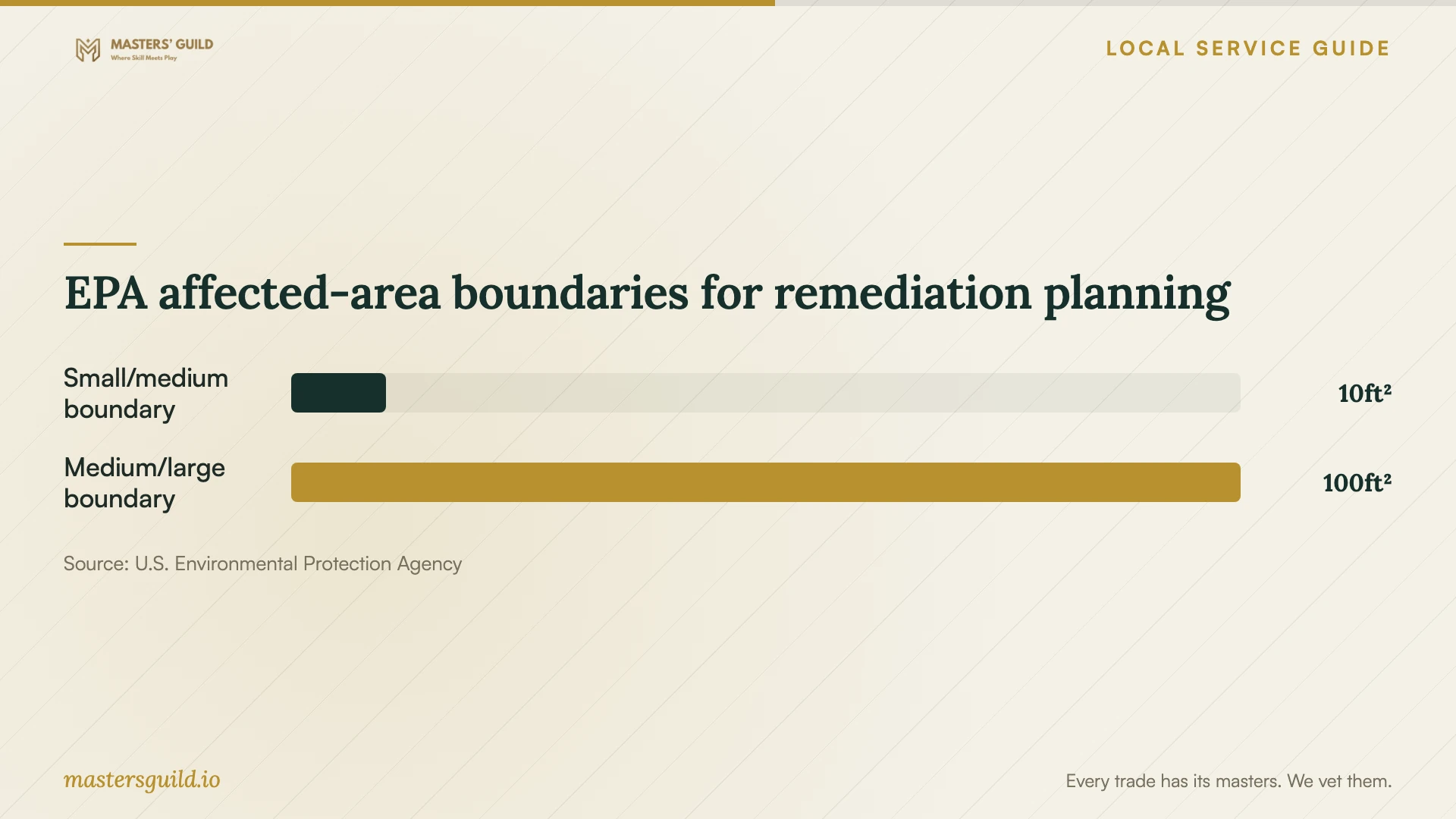
Each bidder should describe the total affected surface area and their plan to protect the rest of the home. EPA's schools and commercial buildings planning table separates areas below 10 square feet, areas between 10 and 100 square feet, and areas above 100 square feet or with significant exposure potential. EPA explains that these categories support planning rather than define health-effect thresholds. [4]
Tell the contractor about suspected hidden growth, possible HVAC involvement and household members with severe allergies or asthma. EPA calls for a more cautious approach when extensive hidden mold is expected, including in HVAC systems, or when sensitive individuals such as people with severe allergies or asthma are present. Have the contractor explain whether those conditions apply and how they affect the protection plan. [4]
For suspected sewage or other contaminated-water damage, consult a professional experienced with those situations. EPA limits the table's cleanup guidance to clean-water damage and advises professional consultation when the people doing the work lack contaminated-water remediation expertise. [4]
Agree on a room-by-room access plan: where workers will enter, which rooms you should avoid, where equipment will sit and how workers will carry removed material out. Identify the person who will answer questions during the job. Compare bids against the same scope, including exclusions and approval for additional work.
Arrange rebuilding and debris hauling before work starts
If the proposal includes interior remodeling, identify who will confirm permit requirements and submit any application. Winston-Salem directs single-family alteration applications through GeoCivix and asks for the square footage being remodeled. The city's single-family permit page does not establish that surface mold cleaning itself requires an alteration permit. [1]
Have the bidder identify the debris destination and include loading, transport and disposal charges. Winston-Salem/Forsyth County Utilities accepts construction debris at Hanes Mill Road Solid Waste Facility and identifies Old Salisbury Road Landfill as another destination. Confirm acceptance for your actual materials before arranging disposal, including any materials the contractor flags for additional hazard assessment. [2]
Before workers disturb older finishes, discuss whether the removal plan needs an asbestos or lead assessment. Forsyth County notes that asbestos can occur in buildings built before and after 1980 and often cannot be identified by sight. The county also advises considering lead paint during renovation and remodeling. Ask the contractor to explain how they will address suspected materials before demolition. [3]
Agree on completion evidence and follow-up
Before signing, agree on what the contractor will provide at completion. Request photos before workers close walls, a record of moisture-source repairs, drying documentation and an explanation of remaining work. Decide how you will review the cleaned areas and who will respond if moisture or visible growth returns.
Include prevention in the handover. Forsyth County recommends keeping indoor humidity below 60 percent if possible, maintaining unobstructed air-conditioning drain lines and directing ground drainage away from the foundation. Have the contractor identify which measures address the source in your home, then assign responsibility for each repair or maintenance task. [3]
EPA affected-area boundaries for remediation planning
Local details that affect your job
Confirm alteration applications with city Inspections
For a cleanup proposal that includes interior remodeling, contact the Inspections Division at 336-727-2624 with the proposed scope. The city requires electronic applications through GeoCivix for single-family alterations and lists remodeled square footage and a worker's compensation coverage affidavit among alteration submittal items. Identify who will handle applicable submissions before scheduling reconstruction. [1]
Check homeowner disposal eligibility before assigning hauling
The free landfill permit applies to City of Winston-Salem single-family property owners, non-commercial use and waste from the listed household. It allows up to two free trips during its one-year validity. Vehicle limits include unaltered half-ton or smaller vehicles, cars and single-axle trailers no longer than eight feet. Have the contractor quote hauling without assuming your homeowner permit covers their load. [2]
Choose the next step for your situation
| Situation | Planning consideration | Next step |
|---|---|---|
| Visible growth with an ongoing leak | County guidance identifies moisture control as essential. | Arrange source repair alongside the cleanup assessment. |
| Expected extensive hidden mold, including in HVAC systems | EPA's schools and commercial buildings guide advises greater caution. | Have an experienced remediator assess extent and protection needs. |
| Possible sewage-contaminated water | EPA's planning table covers clean-water damage. | Consult a professional experienced with contaminated-water remediation. |
| Cleanup followed by interior remodeling | The city handles single-family alterations through GeoCivix. | Confirm applicable permits and responsibility before rebuilding. |
| Contractor removing debris | The homeowner landfill permit restricts use to non-commercial disposal. | Request a hauling and disposal line item in the quote. |
Your hiring checklist
- Photograph visible growth and record leaks, odors and previous repairs.
- Request an assessment of the moisture source and affected materials.
- Discuss suspected hidden growth, HVAC involvement and sensitive occupants.
- Compare cleaning, removal, drying and rebuilding as separate scope items.
- Confirm who will check permit requirements for reconstruction.
- Include the debris destination, hauling charges and disposal responsibility.
- Agree on written approval for additional work and completion documentation.
Frequently Asked Questions
Can I choose the cleanup approach from the affected area alone?
Use area as one planning factor. EPA's schools and commercial buildings guide also considers materials, exposure potential and professional judgment. It calls for greater caution when extensive hidden mold is expected or sensitive individuals are present. Have your residential contractor explain how these considerations affect the scope. [4]
Does surface mold cleaning require a city alteration permit?
The city's single-family permit page does not establish a permit requirement for surface cleaning. It covers single-family alterations, additions and construction through GeoCivix. If your job includes interior remodeling, confirm the requirements for that scope with Inspections. [1]
Can I use my free landfill permit for removed materials?
Check eligibility and material acceptance before hauling. The city restricts the permit to qualifying single-family property owners, non-commercial waste from the listed household and specified vehicles. Have the contractor price their disposal separately and confirm the destination for your materials. [2]
How should I compare mold-removal quotes?
Give bidders the same description and request itemized scopes. Compare moisture-source work, occupant protection, cleaning versus removal, drying, disposal, rebuilding and completion evidence. Have each bidder state exclusions and explain how they will seek approval if workers find additional damage.
Sources and scope
This guide combines the sources below with practical planning guidance. Figures apply to the stated geography and period; request a written quote for your property.