
Local service guide
Kitchen Remodeling in Winston-Salem, NC
Arrange Kitchen Remodeling in Winston-Salem by giving contractors the same written scope and assigning permit responsibility before demolition. The city lists kitchen remodels under home alterations submitted through GeoCivix. Check historic restrictions before choosing exterior changes, then compare itemized quotes, material selections, and a schedule for losing access to your kitchen. [1] [2]
Define the kitchen you want contractors to quote
Start with the problems you want to solve: insufficient storage, an awkward preparation area, worn finishes, or poor appliance placement. Describe what you want to keep and replace. Give each bidder photographs, room measurements, and a sketch showing proposed sink, range, refrigerator, and dishwasher locations.
Request separate quotes for keeping the current layout and changing it if you have not decided. Ask the contractor to describe the plumbing, wiring, ventilation, and wall work included in each option. For a proposed wall removal, ask who will assess the structure before demolition.
Assign permit preparation before demolition
The City of Winston-Salem requires single-family alteration permit submissions through its electronic plan review system, GeoCivix. Its checklist names a kitchen remodel as an alteration and requests the remodeled area's square footage, a completed workers' compensation coverage affidavit, and Health Department approval if the property uses a septic tank. [1]
Put the permit applicant's name in the contract. The city says the person listed as contractor on the permit must complete the coverage affidavit. Ask that person to confirm the application documents and inspection requirements for your scope with the Inspections Division before setting a demolition date. Describe sink relocation, new circuits, wall removal, and exterior vent work when asking for guidance. [1]
Resolve historic-property questions during design
The Historic Resources Commission reviews exterior changes within Old Salem Historic District, Bethabara Historic District, and West End Historic Overlay District. For a kitchen design with a changed window, door, or exterior exhaust opening, ask Historic Resources staff whether you need a Certificate of Appropriateness before ordering components. [2]
For major work, the city requires COA applications 28 days before the Commission's monthly meeting. Some building permits depend on a required COA. The city requires COA submissions through GeoCivix and application attachments in PDF format. Ask your contractor to account for that review before proposing a start date; treat the submission deadline as a planning requirement rather than a promised approval date. [2]
Check an individually designated Local Historic Landmark separately. The city requires a COA for alterations to designated portions of the property, including interiors when the designation covers them. Ask staff which parts of your home the designation protects before authorizing removal of kitchen features. [3]
Compare complete quotes and a workable schedule
Ask each contractor to identify cabinet construction and finish, countertop material, appliance models, flooring, and installation responsibilities. Request a written list of exclusions. Clarify who buys fixtures, handles deliveries, and pays for return visits if an owner-supplied item does not fit.
Review allowances before signing. Ask what product and quantity each allowance covers and how the contractor will price a selection above that amount. Agree on written change approval, payment milestones, cleanup, and a process for correcting damage or unfinished work. Request evidence of insurance, relevant credentials, and references for comparable kitchen projects.
Ask for a sequence covering approvals, material delivery, demolition, trade work, inspections, installation, and final corrections. Confirm which materials the contractor wants on site before removing cabinets. Plan where you will wash dishes, store food, and prepare meals. Agree on working hours, house access, and who you should contact about delays.
Choose the dishwasher before ordering cabinets
Give the cabinet installer your selected dishwasher's installation instructions and dimensions. Check capacity against your household's needs before choosing a compact model. ENERGY STAR defines its standard category as at least eight place settings plus six serving pieces and its compact category as fewer than that capacity. [4]
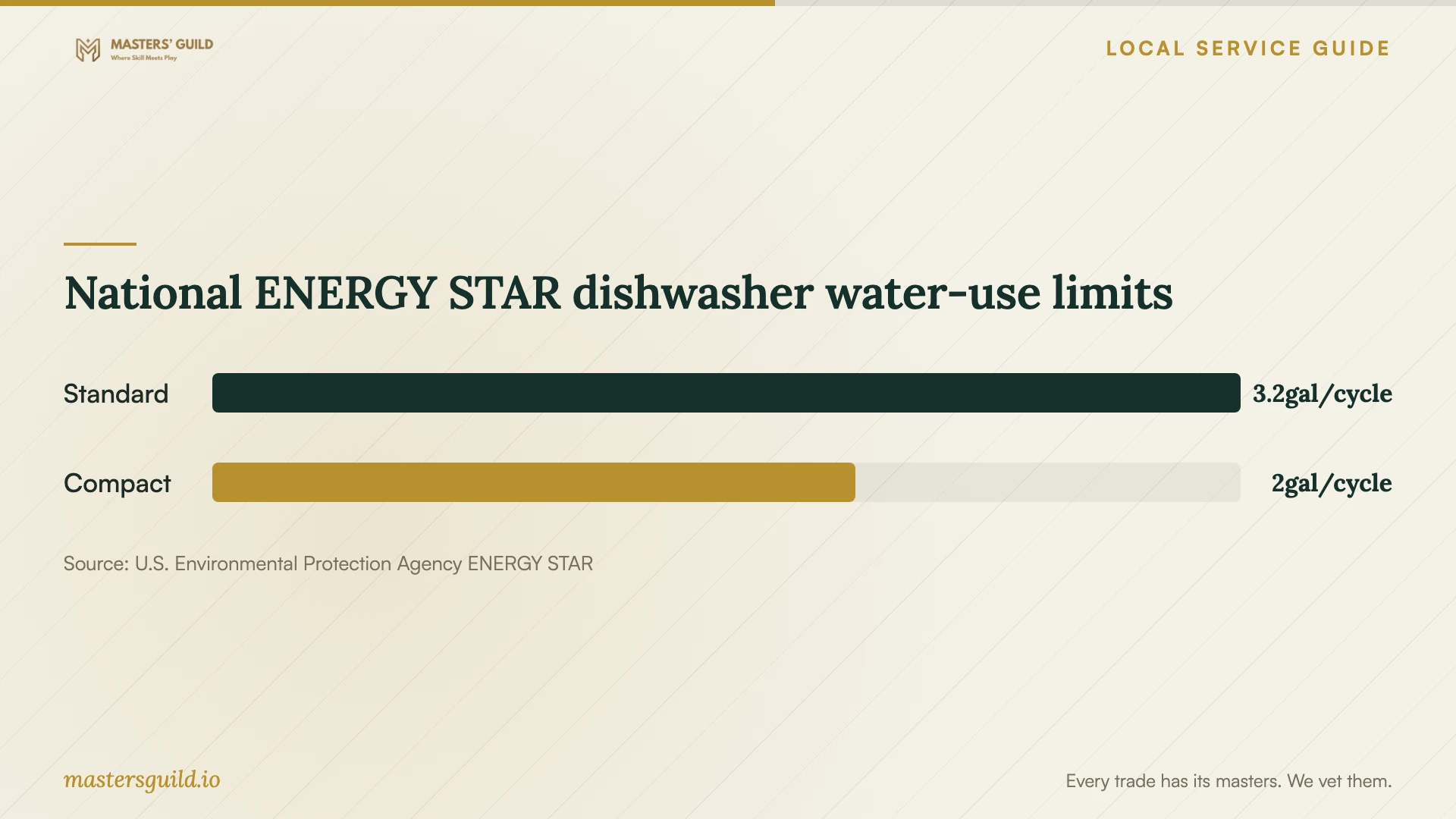
The national ENERGY STAR criteria cap water consumption at 3.2 gallons per cycle for standard dishwashers and 2.0 for compact models. Compare these limits alongside capacity and installation requirements. The figures describe certification thresholds, rather than measured water use in your home or local remodeling prices. [4]
National ENERGY STAR dishwasher water-use limits
Local details that affect your job
Prepare a GeoCivix alteration submission
Gather the remodeled square footage and identify the contractor who will complete the workers' compensation coverage affidavit. For a home served by a septic tank, contact Forsyth County Health Department about the approval on the city's alteration checklist at 336-703-3225. Direct scope-specific permit questions to the Inspections Division at 336-727-2624. [1]
Check an exterior vent route against historic review
Before accepting exterior changes within the Old Salem, Bethabara, or West End local district boundaries, ask Historic Resources staff about a COA. For major work, account for the application deadline 28 days before the monthly meeting. Ask whether staff can review your proposal under the minor-work process, which the city provides for qualifying work. [2]
Check landmark protection inside the home
For an individually designated Local Historic Landmark, establish whether the designation includes the kitchen interior. The city requires a COA for changes to designated portions, including protected interiors. Resolve that question before authorizing removal of interior features, even if your project leaves the exterior untouched. [3]
Match your kitchen plan to the next step
| Your situation | Next step | Ask before committing |
|---|---|---|
| Keep the layout and replace finishes | Request a detailed scope and confirm permit requirements | Which existing components will you retain? |
| Move fixtures or remove a wall | Request a site assessment and a description of trade and structural work | Who will assess the wall and coordinate the work? |
| Submit a single-family kitchen alteration | Prepare square footage and the coverage affidavit; check septic approval | Who will submit the GeoCivix application? |
| Change the exterior in a local historic district | Ask Historic Resources staff about a COA | Does the vent, window, or door change need review? |
| Remodel an individually designated landmark | Check which interior portions the designation protects | Does the kitchen alteration require a COA? |
Your hiring checklist
- Write a shared scope and mark which cabinets, appliances, and fixtures you will keep.
- Request itemized quotes with matching specifications, allowances, and exclusions.
- Assign permit preparation and confirm application documents for your scope.
- Check historic district boundaries and individual landmark protection before finalizing alterations.
- Confirm appliance dimensions and installation requirements before ordering cabinets.
- Agree on payment milestones and written approval for changes.
- Confirm deliveries, kitchen downtime, household access, and cleanup arrangements.
Frequently Asked Questions
How do I start the permit process for a kitchen remodel?
Use the city's GeoCivix alteration process. Its kitchen-remodel checklist requests remodeled square footage, a workers' compensation coverage affidavit, and Health Department approval for a property served by a septic tank. Ask Inspections to confirm requirements for your scope. [1]
Does an interior remodel need historic approval?
Check the property's designation. The local district program covers exterior changes, while an individual Local Historic Landmark designation can protect interiors. The city requires a COA for alterations to designated interior portions of a landmark. [2] [3]
How much should I budget?
Request quotes after a site visit and material selections. Ask bidders to separate demolition, cabinets, countertops, appliances, trade work, and permit responsibilities. Choose a reserve you can afford and require written approval before the contractor performs additional work.
When should I agree to a demolition date?
Agree after the contractor confirms approval steps, material deliveries, and the trade schedule. Ask which items must arrive before demolition and how you will handle cooking and dishwashing during the work.
Sources and scope
This guide combines the sources below with practical planning guidance. Figures apply to the stated geography and period; request a written quote for your property.