
Local service guide
Interior Design in Winston-Salem: Hiring and Planning
Arrange Interior Design in Winston-Salem by defining the help you need: furniture and finish selections, a measured room plan, or design support for a renovation. Ask each designer to quote the same deliverables and separate design fees from purchases and construction. For a remodel, establish who will check permit requirements and prepare application materials before you approve the design; the city handles single-family alteration applications through GeoCivix. [1]
Choose the service around the room's problems
Write down what you want to fix before collecting inspiration images. You might need seating that leaves a clear route through the living room, storage near an entrance, or a kitchen layout that accommodates how you cook. Identify furniture you intend to keep and decisions you want the designer to make. Ask candidates to describe the service they would propose for those needs.
For advice alone, request a consultation with written recommendations. For a room plan, ask for measured layouts, a selection list, and a clear purchasing handoff. If you want someone to manage orders and installation, ask the designer to include those tasks in the agreement. Request a sample deliverable so you can judge whether you could use it to buy furnishings or instruct a contractor.
Separate the design agreement from the renovation
Name the person responsible for each construction decision. Ask who measures the existing space, prepares drawings, answers contractor questions, and checks whether the proposed work needs permits. The city's single-family permit page includes alterations such as kitchen remodels and changes to existing interior space. It directs applicants to GeoCivix and lists remodeled square footage and a worker's compensation coverage affidavit among the alteration submission materials. [1]
Discuss the proposed scope with Inspections before setting a construction start date. The city lists 336-727-2624 as the division's phone number and requires electronic permit applications. Give the designer and contractor the same description of proposed wall, fixture, and layout changes. Ask them to record who will submit the application and respond to requests for additional information. [1]
For a designer offering registered interior design services, use the North Carolina board's confirmation process for individuals and firms. You can search an individual by name or registration number. The board distinguishes a registered designer working as a sole proprietor under their own name from one offering registered services through a corporation or limited liability company; its listed corporation and LLC scenarios require firm registration. Ask the candidate which arrangement applies to your contract. [4]
Resolve historic-property restrictions before ordering
Check the property's designation if your design includes exterior changes or changes to protected interior features. The Historic Resources Commission reviews exterior changes within Old Salem Historic District, Bethabara Historic District, and West End Historic Overlay District. A kitchen redesign that includes an exterior window or door change warrants a district-status check before you order that component. [2]
Ask Historic Resources staff whether the proposed work needs a Certificate of Appropriateness and whether staff can review it as minor work. The city requires major-work applications 28 days before the commission's monthly meeting and requires COA submissions through GeoCivix. Some building permits depend on a required COA. Include that review sequence in your project schedule instead of treating approval as a task to settle after purchasing. [2]
Check individual landmark status even if you plan no exterior work. The city's landmark guidance requires owners to obtain a COA before changing designated portions of a landmark, including interiors when designated. Ask staff which rooms or features the designation covers, then give that information to prospective designers. Request a plan that identifies what you will retain, repair, or change. [3]
Compare the total commitment before signing
Request a proposal that separates the design fee, furnishings allowance, purchasing charges, delivery, installation, and construction. Ask how the designer charges for revisions beyond the agreed allowance and for meetings with trades. Get written terms for deposits, cancellation, returns, damaged goods, and substitutions. Choose a proposal you can track against your total spending limit.
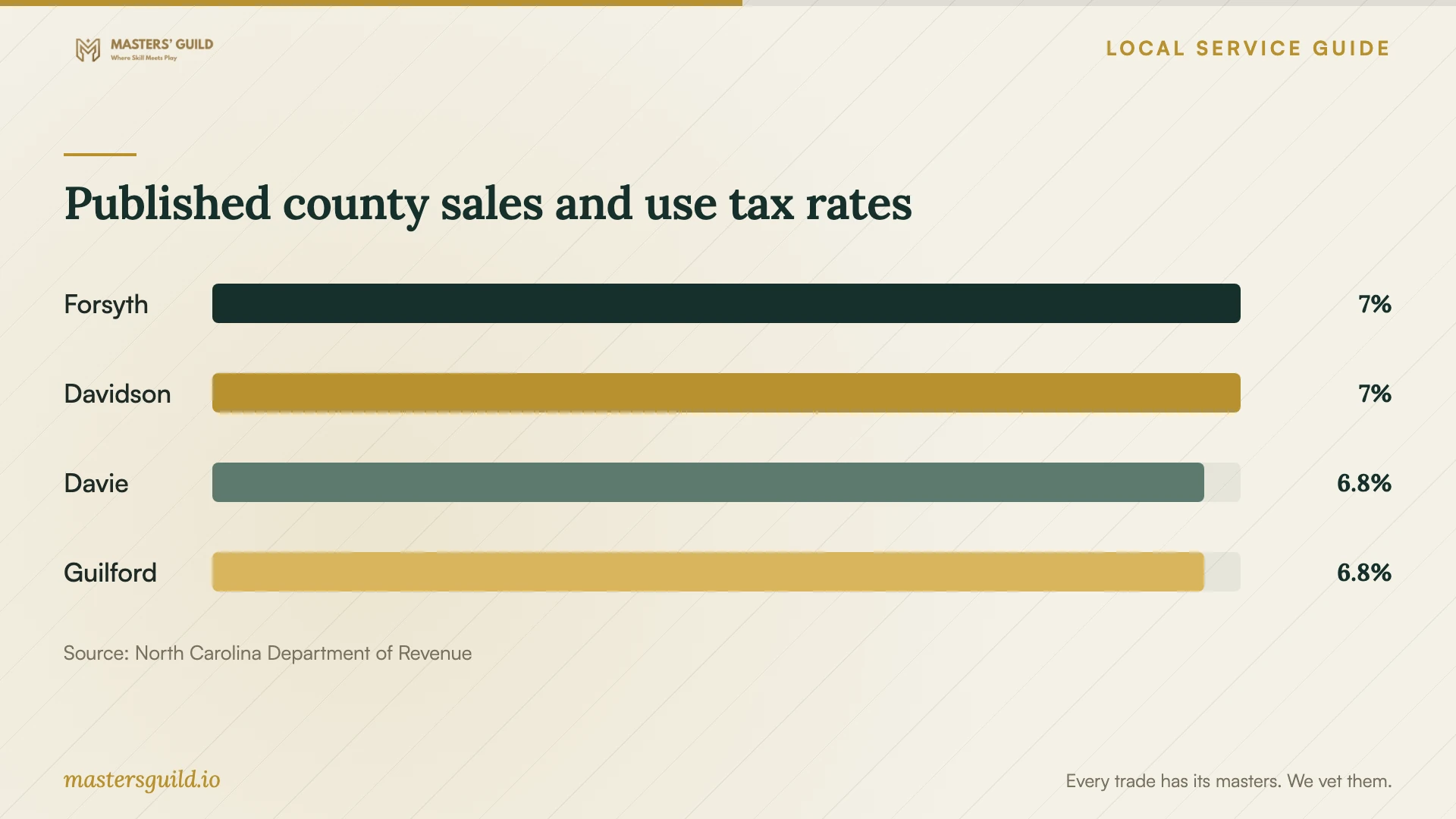
Ask the seller or designer to identify taxable charges and show tax as a separate line. The North Carolina Department of Revenue lists Forsyth County's combined sales and use tax rate as 7%. Its county table lists Davidson at 7% and Davie and Guilford at 6.75%. These published rates provide a budgeting reference for applicable taxable purchases; ask the seller which rate and tax treatment apply to your transaction. [5]
Before approving an order, review dimensions, finish samples, access for delivery, and the person responsible for checking the item on arrival. Ask for a schedule that distinguishes design approval, ordering, delivery, and installation. If you need to keep using the room during construction, agree with the contractor on access and the sequence of work before you commit to a start date.
Published county sales and use tax rates
Local details that affect your job
Single-family alteration applications use GeoCivix
The city includes kitchen remodels and existing interior-space remodels under alteration submissions. Applicants must use GeoCivix. Ask Inspections to confirm the materials for your scope, and name the applicant in your designer-contractor agreement before work begins. [1]
Historic review can affect the order of work
For exterior changes in the city's listed local historic districts, check COA requirements before ordering windows or doors. Major-work COA applications must reach the city 28 days before the monthly commission meeting. Ask staff to confirm the review category and meeting deadline for your project. [2]
Landmark designation can protect interiors
An individual local landmark can have designated interior features. Owners need a COA before changing designated portions of the property. Confirm the protected areas with Historic Resources staff before asking a designer to remove or replace interior finishes or features. [3]
Match your project to the help you request
| Your project | Request from the designer | Confirm before committing |
|---|---|---|
| Furniture or finish advice | A consultation and written recommendations | Preparation requirements, fee, and follow-up questions |
| A room you will furnish yourself | Measured layout, selection list, and purchasing handoff | Revision allowance and who checks final product dimensions |
| Orders and installation support | Purchasing, delivery, and installation responsibilities | Charges, returns, damage handling, and substitution approval |
| Kitchen or interior-space renovation | Defined drawings and contractor coordination | Permit scope and who handles the city's GeoCivix submission |
| Historic exterior or designated landmark interior changes | A design informed by the property's protected features | Applicable COA review before purchasing or changing protected work |
Your hiring checklist
- Describe the room's problems, intended uses, furniture to retain, and total spending limit.
- Prepare photographs, available plans, rough measurements, and a short selection of reference images.
- Ask candidates for sample deliverables and examples relevant to your proposed scope.
- Compare written proposals with matching revision, purchasing, and site-visit responsibilities.
- Verify claimed registered interior designer credentials and applicable firm registration.
- Confirm permit and historic-review responsibilities before approving renovation drawings.
- Approve item specifications, purchasing terms, and the delivery schedule before releasing order funds.
Frequently Asked Questions
How should I compare interior design fees?
Ask each designer to quote the same tasks and deliverables. Separate design fees from furnishings, purchasing charges, delivery, installation, and construction. Confirm how the designer charges for extra revisions and changes to the scope.
How can I check a registered interior designer?
Use the North Carolina board's registration confirmation process. Search an individual by name or registration number, and check the firm when applicable. Ask who will perform the registered services under your agreement. [4]
Does an interior renovation need a city application?
Ask Inspections about your exact scope. The city lists kitchen and existing interior-space remodels as alteration examples and requires single-family permit applications through GeoCivix. Assign application responsibility before construction starts. [1]
Can historic approval apply to interior work?
Yes, when an individual local landmark's designation includes interiors. The city requires a COA before changes to designated portions. Its local historic district guidance addresses exterior changes, so confirm both district and landmark status for your property. [2] [3]
Sources and scope
This guide combines the sources below with practical planning guidance. Figures apply to the stated geography and period; request a written quote for your property.