
Local service guide
Mold Removal in Winnipeg: Plan Repairs and Hire
Arrange Mold Removal in Winnipeg by asking a contractor to assess the affected rooms, investigate the moisture source and separate cleanup from repairs in a written quote. For a flooded basement, explain whether water came through drains or exterior walls. The City distinguishes sewer backup from overland flooding. Ask who will investigate the water-entry problem and handle repairs before you approve reconstruction. [1]
Match the cleanup scope to the water-entry problem
Tell the assessor which room you noticed first, when you noticed the damage and whether the problem followed rain, snowmelt or a plumbing incident. Share photographs and previous repair records. Have the assessor distinguish visible damage from areas they propose to investigate behind finishes. Require your approval before exploratory work.
Winnipeg describes basement flooding as wastewater backing up through house sewer lines when heavy rainfall overwhelms the sewer system. It describes overland flooding as excess water around a home seeping through exterior walls because of poor drainage, snowmelt, a water main break or heavy rain. Use that distinction when explaining the incident; ask the contractor to investigate the cause at the property. [1]
For basement or overland flooding, the City tells residents to report the incident to 311 and contact their home insurer. Ask your insurer what documentation it needs and which proposed work requires its review. Name the person responsible for coordinating cleanup and moisture repairs in the agreements. [1]
Compare written quotes for the same work
Request a room-by-room scope. Have each contractor identify the materials they propose to clean or remove, how they will protect unaffected rooms, how they will handle debris and which completion checks they include. Find out who will do the work and request evidence of relevant remediation training and liability insurance. Review those documents as part of your hiring decision.
Have each bidder separate assessment, cleanup, drying, moisture-source repairs and replacement finishes. Settle whether equipment charges depend on the number of days on site, who pays for additional investigation and how the contractor prices newly discovered damage. Agree on written authorization for changes before work starts.
Set completion terms before paying a deposit. Discuss what photographs, moisture readings or other records the contractor will provide, who decides that rebuilding can begin and whether you want an independent assessment included in the agreement. Request a schedule that distinguishes access dates, cleanup work and reconstruction. Use a site-specific quote to set your budget.
Check repair permits before opening or rebuilding
Review the proposed repair work with Winnipeg's permit office before signing the reconstruction scope. The City lists foundation repairs, home renovations, basement or lower-level development, electrical installations and plumbing installations among projects needing permits. It lists interior painting, patching and decorating among work that does not need a building permit. The page does not identify a mold-removal-specific exemption. [3]
Homeowners must obtain required permits before starting a project; if you hire a contractor, the City says to make sure the contractor obtains them before work begins. Confirm who will apply, which inspections apply and whether the quote includes permit fees. For scope questions, call the City's Permits Direct Line at 204-986-5140. The City also provides a permit search by address. [3]
Prepare the home and agree on follow-up
Before the crew arrives, agree on access, the route for removing materials and where equipment will stand. Discuss which rooms you can use during work and whether you need another place to stay. Describe household access needs before scheduling. Get instructions for belongings in affected rooms before moving them through the home.
Include a prevention discussion in the handover. Winnipeg advises homeowners to maintain backwater valves and sump systems, improve drainage around the house and clear snow away from foundations. It prohibits discharging sump-pump water into a floor drain and says discharge must not flow onto streets, lanes, boulevards, sidewalks or neighbouring property. Have a plumber review the arrangement if you are unsure. [1]
Keep the signed scope, approved changes, photographs and repair records together. Get the contractor's contact details for reporting new staining or moisture after completion. Agree on a follow-up visit or reporting process in writing, including what the contractor's warranty covers.
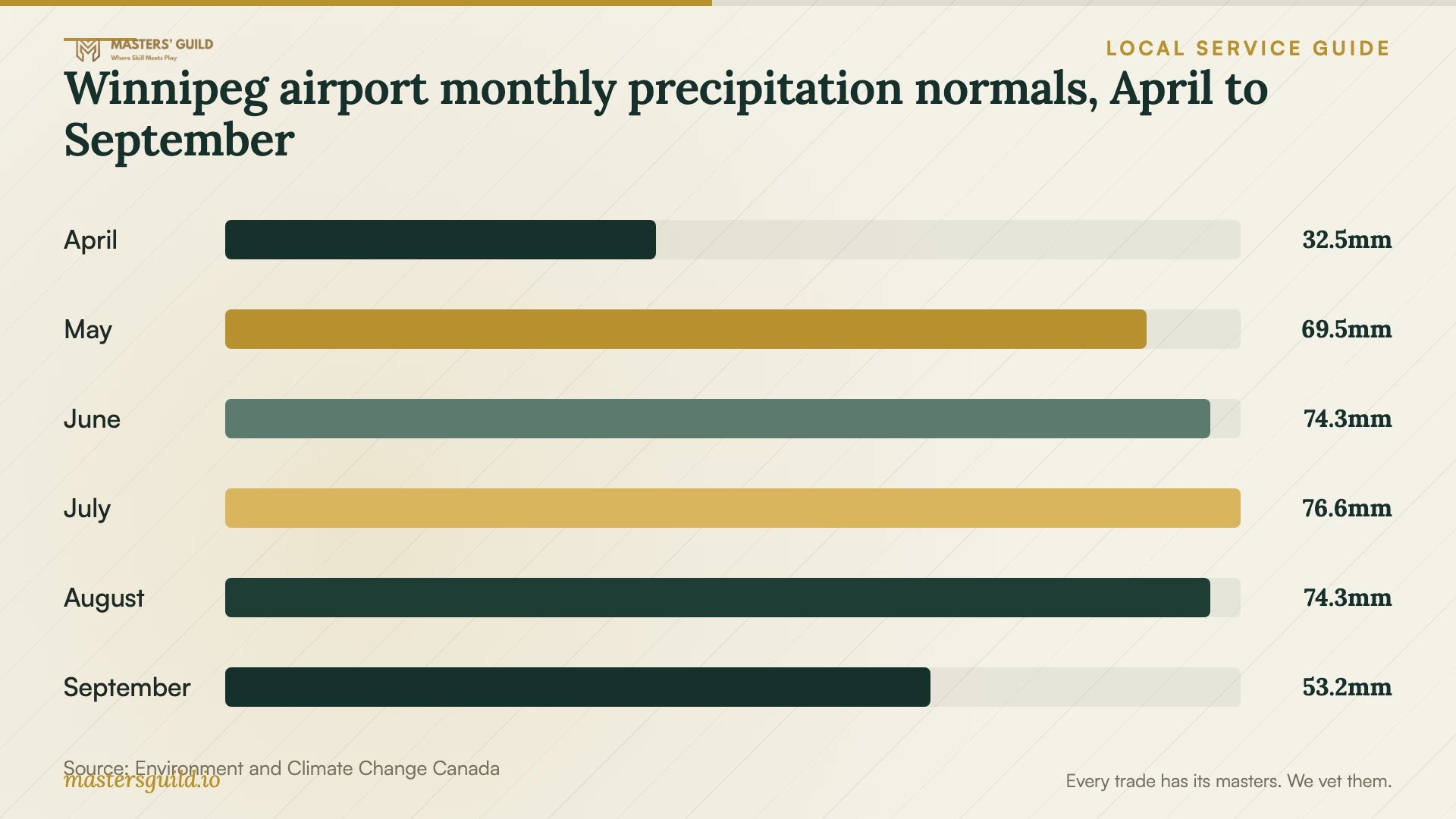
Winnipeg airport monthly precipitation normals, April to September
Local details that affect your job
Use the home's age to prompt a plumbing check
Winnipeg says homes built after 1979 had to include a backwater valve, and homes built since 1990 had to include a sump pit drainage system. Some older homes received these systems later. Before approving flood-related repairs, ask a licensed plumber to identify the installed systems and review their condition. Use the construction year to guide that investigation, then confirm the equipment and its condition on site. [1]
Follow Manitoba's rental-housing repair process
If you rent the affected home, document the conditions and send the owner a written repair request with a reasonable completion date. Manitoba Health recommends the Residential Tenancies Branch Request for Repairs form. If the owner refuses or fails to repair the problem, contact your local Public Health Inspector to request an inspection. The provincial Safe Housing Program addresses rental-housing conditions and includes mould among its indoor-air concerns. [2]
Choose the next step from the problem you observe
| Situation | Next step | Question to settle |
|---|---|---|
| Water backed up through basement drains | Report flooding to 311, contact your insurer and arrange a plumbing assessment alongside cleanup. | Who will investigate the sewer backup and check the backwater valve? |
| Water entered through exterior basement walls | Request an assessment of water entry and drainage as part of the repair plan. | Does the quote include investigation and repair of the entry point? |
| The scope includes foundation repairs or basement redevelopment | Check the scope with the City's permit office before work begins. | Who obtains the required permits and arranges inspections? |
| You rent and the owner has not addressed the problem | Document concerns, send a written repair request and seek a Public Health Inspector inspection if repairs are refused or neglected. | Have you kept the request and the owner's response? |
Your hiring checklist
- Photograph visible damage and write down when and where you noticed water or staining.
- Share previous leaks, flood incidents and repair records with the assessor.
- Request a written scope naming affected rooms, proposed removal and investigation limits.
- Ask for evidence of remediation training and liability insurance.
- Separate cleanup, equipment, moisture repairs and rebuilding in the quote.
- Confirm permit responsibilities and inspection arrangements for proposed repairs.
- Agree on access, room-use restrictions and authorization for additional work.
- Collect completion records and written follow-up terms before closing the job.
Frequently Asked Questions
How should I budget for mold removal?
Get a site-specific written quote after assessment. Request separate amounts for cleanup, equipment, moisture repairs and rebuilding, plus the process for pricing hidden damage. Compare the proposed work and exclusions before choosing a contractor.
Do I need a permit for mold removal?
Check the accompanying repair scope with the City. Winnipeg lists foundation repairs, basement development, home renovations and plumbing or electrical installations among projects needing permits. Its page does not give a mold-removal-specific exemption. Call Permits Direct Line at 204-986-5140 to describe the proposed work. [3]
Who should I contact after basement flooding?
Winnipeg directs residents to report basement or overland flooding to 311 and contact their home insurance company. Ask the cleanup contractor and plumber to identify their responsibilities for cleanup and investigating the water source. [1]
What can I do about mould in a rental home?
Manitoba Health expects tenants to document concerns and send the owner a written repair request with a reasonable completion date. If the owner refuses or fails to repair the problem, contact your local Public Health Inspector to request an inspection. [2]
Sources and scope
This guide combines the sources below with practical planning guidance. Figures apply to the stated geography and period; request a written quote for your property.