
Local service guide
Commercial Building Cleaning in Wilmington, DE
Arrange Commercial Building Cleaning in Wilmington, DE by giving bidders the same room-by-room task list, scheduling a walkthrough, and requesting separate prices for recurring visits and occasional floor care. Include Delaware recycling procedures in the agreement and specify which surfaces need cleaning or disinfection. Review access arrangements, supplies, insurance documentation and correction terms before signing. [1] [2] [3]
Give bidders a scope they can price
Prepare a room list covering the entrance, work areas, restrooms, break room, storage and shared corridors. Specify tasks for each area, such as emptying bins, wiping accessible surfaces, vacuuming, mopping or cleaning interior glass. Mark desks and equipment that cleaners should leave untouched. Ask your landlord which shared areas fall under your agreement.
During the walkthrough, show bidders the flooring, furniture layout, supply storage and waste collection point. State your opening hours and access window. Request separate line items for recurring visits, the first deep clean, carpet extraction and requested floor treatments. Require written approval before the cleaner adds work or charges.
Compare the total charge for the agreed schedule, included tasks and exclusions. Ask who supplies paper products, soap, bin liners and cleaning chemicals. Have each bidder explain how they handle missed visits, unsatisfactory work and temporary changes in occupancy. Record cancellation terms and any minimum commitment before selecting a proposal.
Specify cleaning and disinfection
EPA distinguishes three surface treatments. Cleaning removes dirt and organic matter with soap or detergents. Sanitizing uses chemicals to kill bacteria and does not target viruses. Disinfecting uses chemicals to kill viruses and bacteria. Ask the bidder to identify the treatment they propose for each area. [3]
For requested disinfection, ask for the product name, intended surfaces and label directions. EPA instructs users to follow the label and keep surfaces wet for the specified contact time. Have the cleaner explain how workers will meet that requirement within your access window and when staff can resume using the area. [3]
EPA advises limiting disinfectants to places where people may contact contaminated surfaces, including bathroom fixtures and doorknobs. Its guidance says many general cleaning tasks, including walls and floors with minimal hand contact, do not typically require disinfectants. For medical or dental premises, give bidders your facility's procedures and ask them to confirm which tasks they can undertake. [4]
Check the products behind the proposal
Ask bidders to name the products behind a green-cleaning proposal. EPA cautions purchasers about vague environmental claims. Its Safer Choice program certifies products containing safer ingredients for human health and the environment. Its Design for the Environment label covers antimicrobial products, including disinfectants and sanitizers. [4]
If fragrance matters to your staff or customers, request fragrance-free products and agree on substitutions before service starts. Ask how the cleaner stores concentrates and trains workers to handle them. EPA identifies training and chemical-management procedures as ways to reduce exposure during handling and use. [4]
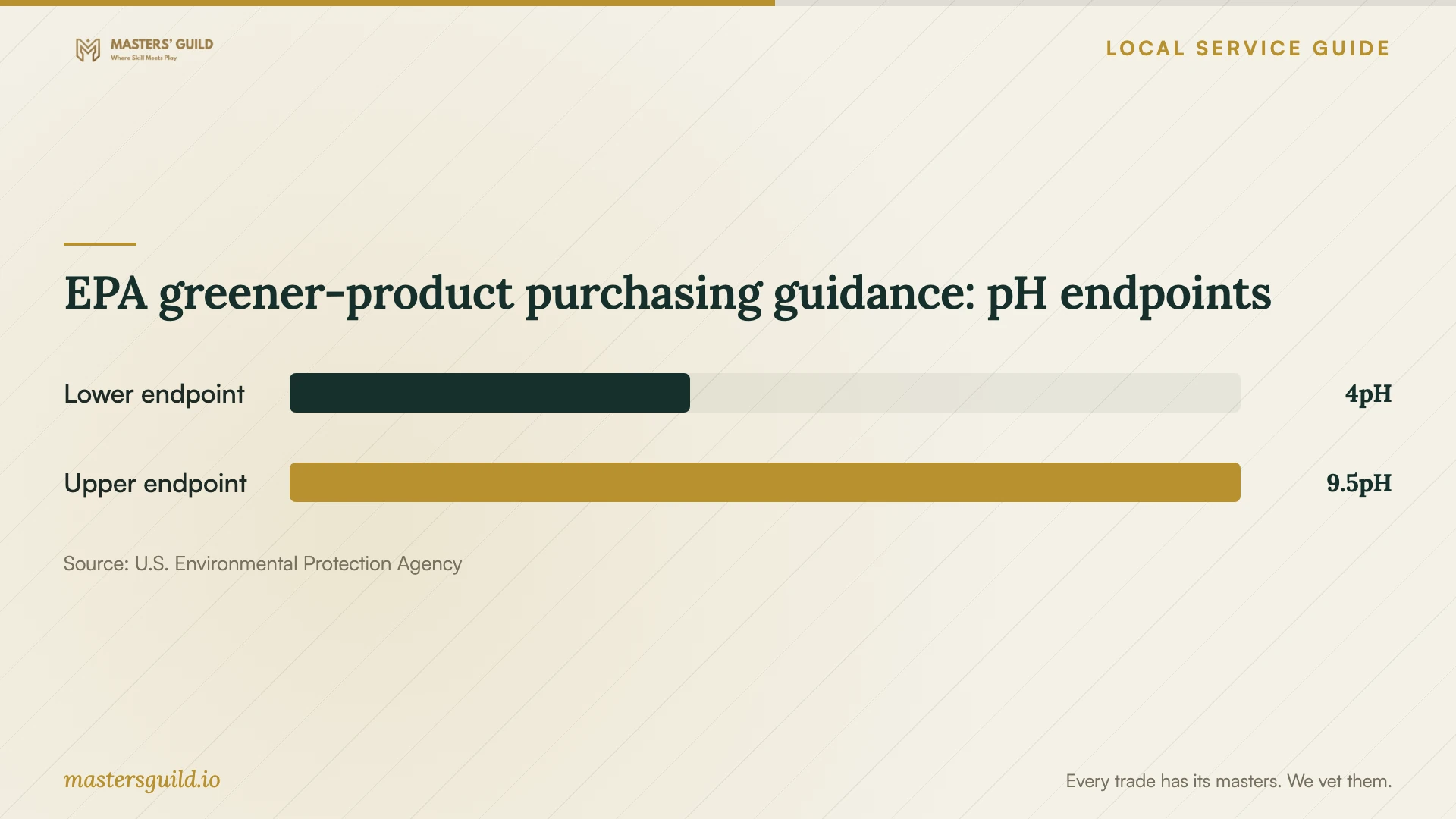
The chart presents the endpoints of EPA's pH purchasing consideration for greener cleaning products. Ask bidders how they consider that guidance alongside your surface-care instructions and the intended task. Request confirmation of product compatibility before approving a floor treatment. [4]
Agree on access and inspect the work
Request insurance documentation and ask whether the provider uses employees or subcontractors. Name the person who will supervise your account. Record key and access-code handling, alarm instructions, restricted rooms and the contact for a lockout. Ask who reports damage and how you should submit a service complaint.
Arrange a first-visit inspection with the cleaner. Check the tasks you purchased: bins emptied to the agreed collection point, restroom fixtures cleaned, specified surfaces wiped and floors treated as instructed. Record missed tasks and a correction deadline. Put private papers and valuables away, and tell staff which tasks remain their responsibility.
EPA greener-product purchasing guidance: pH endpoints
Local details that affect your job
Connect indoor recycling to Delaware collection
Delaware's commercial recycling requirements apply to businesses in Wilmington. The law requires commercial waste collectors to provide an adequately sized recycling container and collect recyclables at least once every other week. Confirm the pickup schedule with your hauler and specify who transfers material from indoor bins to the collection container. DNREC instructs users to place accepted recyclables loose in carts or dumpsters, without plastic bags, and to empty containers of food waste. Ask the cleaner to demonstrate the transfer procedure before accepting a proposal that includes emptying bins. [1] [2]
Get state help with unusual waste streams
DNREC offers free, non-regulatory assessments of commercial waste streams and waste-management practices. Request an assessment if you need help planning collection beyond ordinary office recycling. Delaware law requires businesses to assess wastes outside the Delaware Solid Waste Authority's recycling program and identify commercially available recycling options. Businesses must recycle those wastes unless they determine that recycling costs exceed disposal costs, and they must retain records documenting that evaluation for Department review. Assign the evaluation to a named person and give the cleaner the resulting handling instructions. [1] [2]
Match the agreement to your premises
| Your need | What to request | What to clarify |
|---|---|---|
| Routine office upkeep | A room-by-room cleaning schedule | Included surfaces, exclusions and supply costs |
| Disinfection of selected surfaces | Named products and label procedures | How workers maintain the required wet contact time |
| Indoor trash and recycling collection | Separate handling and transfer instructions | Who transfers loose accepted recyclables to the collection container |
| Unclear commercial waste streams | DNREC's free, non-regulatory assessment | Who evaluates recycling options and retains required records |
| A greener product preference | Named products and relevant Safer Choice or DfE certification | Which products serve each task and how you approve substitutions |
Your hiring checklist
- List rooms, requested tasks, exclusions and the proposed visit schedule.
- Show bidders the premises and ask them to quote the same written scope.
- Separate recurring charges, occasional floor work and consumable supplies.
- Name the person responsible for transferring indoor recycling to the collection container.
- Request product names and label procedures for purchased disinfection.
- Review insurance documentation, supervision and subcontracting arrangements.
- Record access instructions, complaint handling and a first-visit inspection.
Frequently Asked Questions
How should I compare cleaning quotes?
Give bidders the same task list and access schedule. Compare the total charge, visit frequency, exclusions, supplies and correction terms. Request separate prices for occasional work so you can compare recurring agreements without mixing in a one-time deep clean.
Does the cleaner also haul recycling away?
Ask whether the quote includes indoor collection, transfer to the outdoor container or hauling. Delaware's commercial recycling collection requirement applies to waste collectors. Specify the cleaner's duties and confirm pickup arrangements with your hauler. [1]
Can the cleaner leave recyclables in garbage bags?
DNREC instructs users to place acceptable recyclables loose in recycling carts or dumpsters. It says bagged items will not be sorted and will go to landfill. Ask the cleaner to empty indoor recycling into the collection container without leaving it in plastic bags. [2]
Does a green-cleaning agreement include disinfection?
Ask the bidder to specify the treatments and products included. EPA distinguishes cleaning from disinfecting and describes DfE certification for antimicrobial products. For purchased disinfection, request the product name, intended surfaces and label's wet contact time. [3] [4]
Sources and scope
This guide combines the sources below with practical planning guidance. Figures apply to the stated geography and period; request a written quote for your property.