
Local service guide
Data Recovery and Backup in Wichita, KS
Arrange Data Recovery and Backup in Wichita by asking a provider to assess the problem before you authorize recovery, name the files your business needs first, and separate recovery charges from ongoing backup costs. For suspected ransomware, isolate affected systems and involve an incident-response specialist before restoring data. Ask for written access, retention and deletion terms for customer records, then require a demonstration that you can restore your essential files. [3]
Choose the scope before choosing a provider
Start your inquiry with the device type, the symptoms, the last time you could access the files, and any changes you made afterward. List the business records you need first, such as current invoices, appointment records or project files. Ask the provider to explain its proposed assessment and obtain your approval before repairs, resets or other changes to the original device.
For a device-only problem, ask whether the provider performs recovery itself or arranges specialist work elsewhere. Request the receiving facility's name, transport arrangements and a record of each handoff. For backup setup, ask for a separate proposal covering the accounts, computers and applications you want protected.
For suspected ransomware, CISA recommends isolating affected systems from the network. Its guidance reserves powering down for situations where disconnection is impossible because shutdown loses evidence in volatile memory. Contact your IT lead or incident-response provider using a separate communication channel, such as a phone call. [3]
Compare quotes by deliverables
Request an itemized quote for assessment, recovery work, transport, return storage and any priority service. Ask which charges remain payable if the provider cannot recover your priority files. Define success in writing: identify the folders, file types or application records you need, and ask how you will review the result before accepting it.
Ask for separate target dates for assessment, a recovery decision and delivery. If your business needs to reopen, request a staged plan that puts essential records first. Confirm whether the provider's proposed delivery includes usable application data or only extracted files.
For ongoing backup, compare the setup charge and recurring charges alongside the work included. Ask who checks failed jobs, who responds to alerts, how much restore assistance costs and how you retrieve your data when the contract ends. Keep business ownership of accounts and access credentials in the written agreement.
Set access and retention terms
Before handing over customer or employee information, ask who can view it, where the provider will store working copies and whether another company will receive them. Request a retention deadline for temporary copies and a written description of deletion procedures. Share credentials through an agreed secure process and limit access to the work you authorize.
Kansas law requires holders of personal information in the ordinary course of business to maintain reasonable protective procedures appropriate to the information. It also requires reasonable destruction steps for records they no longer intend to maintain or possess, unless federal law or regulation requires otherwise. Ask the provider to explain how its handling terms address those duties. [1]
Specify and test the backup plan
CISA recommends offline, encrypted backups of critical data and tests of backup availability and integrity in a disaster recovery scenario. Ask the provider to explain which copy stays offline, who holds the encryption keys and how you would restore data if your usual computer and account were unavailable. [3]
Set your own recovery targets before accepting the proposal. Tell the provider how much recent work you can afford to lose and how long each business function can remain unavailable. Ask it to include shared files and the business applications you name, then document exclusions rather than assuming the service covers them.
At handover, choose representative files and ask the provider to restore them to a separate destination. Open the restored files and check the application records you depend on. Record the test date, the steps and the person responsible for the next test. Request a paper or offline copy of recovery instructions and support contacts.
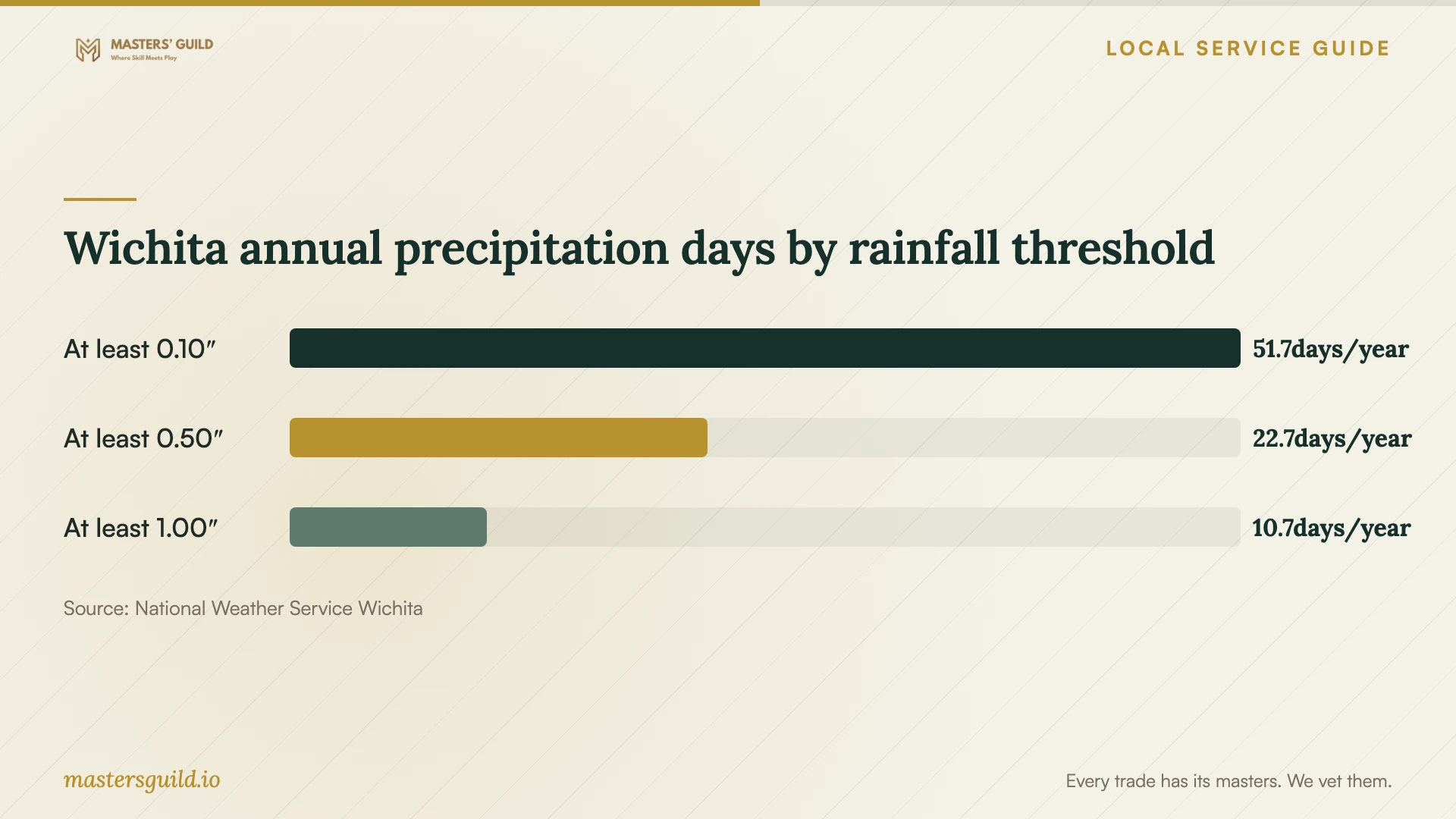
Wichita annual precipitation days by rainfall threshold
Local details that affect your job
Kansas retention duties affect your handover terms
For a Wichita business that holds personal information, Kansas protection and destruction requirements make temporary recovery copies a contract issue. Ask the provider to identify its working-copy locations, authorized viewers and deletion deadline. Agree on a procedure for confirming deletion after you accept the recovered data, while accounting for any applicable record-retention obligations. [1]
A suspected breach changes the service you need
Kansas requires covered businesses that own or license computerized personal information to conduct a reasonable, prompt investigation after becoming aware of a security breach. If they determine misuse occurred or is reasonably likely, they must notify affected Kansas residents without unreasonable delay, subject to statutory conditions. A company maintaining another party's data must notify the owner or licensee after discovering qualifying unauthorized access and acquisition. If you suspect intrusion, arrange incident-response help and legal advice alongside recovery; ask your provider to preserve evidence and define how it will notify you. [2] [3]
Use Wichita weather data to discuss backup location
The National Weather Service's Wichita normals report 22.7 days per year with at least half an inch of precipitation during the 1991–2020 period. Use the chart as context when asking where backup equipment sits and where an off-site copy lives. Request a recovery plan for losing access to your premises. These rainfall averages do not establish flood exposure or device-failure risk at your address. [4]
Match your problem to the scope you request
| Situation | Scope to request | Question before approval |
|---|---|---|
| Missing files with no suspected intrusion | Assessment focused on the named files | Which files count as success, and what do I owe if you cannot recover them? |
| Device damage or unreadable storage | Specialist assessment and documented device handling | Who handles the original, and do you need my approval before sending it elsewhere? |
| Suspected ransomware or unauthorized access | Incident response with isolation, evidence preservation and clean-system recovery | Who preserves evidence and coordinates investigation before restoration? |
| Backup setup or replacement | Documented coverage, offline encrypted critical-data backup and restore testing | Can you demonstrate restoration and give me the steps and required access? |
Your hiring checklist
- Write down symptoms, device details, previous repair attempts and the last accessible date.
- Name priority files and the business functions you need to restart.
- Approve assessment scope and charges before authorizing recovery work.
- Confirm the handling facility, transport process and handoff records.
- Agree on authorized access, temporary-copy retention and deletion procedures.
- Get separate recovery and ongoing-backup proposals with clear deliverables.
- Witness a restore test and keep recovery instructions under business control.
Frequently Asked Questions
Can I get a firm recovery price before assessment?
Ask for an assessment price and an approval ceiling first. Require a written recovery quote before further work, including charges for unsuccessful recovery, transport and return storage. Use your priority-file list to define the result you are buying.
Should I switch off a computer showing a ransom message?
CISA recommends disconnecting affected devices from the network first. It recommends powering down only when disconnection is impossible because shutdown loses evidence in volatile memory. Involve your incident-response contact and avoid starting a restore without a containment plan. [3]
What should I ask about customer information?
Ask who can access it, whether subcontractors receive it, how long working copies remain and how the provider deletes them. Kansas requires reasonable protection of personal information and reasonable destruction steps when covered holders no longer intend to retain those records, subject to federal requirements. [1]
How do I accept a new backup service?
Ask the provider to restore representative files and application records, then check that you can use them. CISA recommends testing backup availability and integrity. Keep the restore instructions, account ownership and support arrangements in your handover records. [3]
Sources and scope
This guide combines the sources below with practical planning guidance. Figures apply to the stated geography and period; request a written quote for your property.