
Local service guide
Vancouver junk removal: quotes and disposal rules
Arrange junk removal in Vancouver by sending the hauler an item list, photos and access details, then requesting a written total that covers loading, transport and disposal. Identify drywall, mattresses, electronics and chemicals before booking: Metro Vancouver bans several of these materials from garbage disposal and provides separate handling guidance. Ask the hauler to name the receiving facility and explain exclusions before you accept the quote. [1] [2] [4]
Give the hauler enough detail to quote the job
Photograph the whole pile and any items hidden behind it. List furniture, appliances, mattresses, boxes and renovation debris separately. Describe where each item sits, whether the crew must use stairs, and the route from your door to the proposed loading space. For a bulky item, include dimensions and a photo of the doorway.
Ask whether the hauler charges by truck space, weight, item or labour. If they quote a fraction of a truck, request the truck's usable capacity and an explanation of how they measure your load. Have them identify any minimum charge and confirm whether dismantling, carrying, parking costs and disposal fees sit within the total.
Request proof of insurance and a written list of excluded materials. Agree that the crew will confirm the price before loading and seek your approval for additions. If you have a firm move-out deadline, specify the pickup window and ask how the hauler handles a delay.
Sort the load before requesting pickup
Metro Vancouver inspects garbage loads for banned materials. Its disposal-ban list includes corrugated cardboard, clean wood, recyclable paper, food waste and yard trimmings. It also lists electronics, household and commercial metal appliances, batteries, paint and tires under product stewardship materials. Tell the hauler which of these you have and ask how they will separate and deliver them. [1]
Metro Vancouver applies a surcharge of 50% of the tipping fee to the entire load when it contains banned recyclable materials. For banned hazardous, operational-impact or product stewardship materials, it applies a CAD 80 minimum surcharge plus potential removal, cleanup or remediation costs. Ask who pays a surcharge if the crew mixes materials you identified in advance. [1]
Set aside items you want to keep and label them before the crew arrives. For anything you hope to donate, ask the hauler to confirm an accepting recipient before describing donation as part of the agreed service. Request disposal or recycling receipts when you need evidence of the destination.
Read disposal fees alongside the pickup quote
Metro Vancouver's fee schedule effective July 1, 2026 lists garbage loads under one tonne at CAD 182 per tonne, capped at CAD 167 per load. It lists a CAD 5 transaction fee and garbage minimums of CAD 25 during peak hours and CAD 15 outside peak hours. The published minimum and maximum fees include the transaction fee where applicable. [3]
Peak hours run from 10 am to 2 pm on weekdays, excluding statutory holidays. Metro Vancouver excludes Central Surrey, Langley and Maple Ridge recycling and waste centres and the Waste-to-Energy Facility from the peak-hour rule. If you plan to self-haul, confirm your destination's accepted materials and fee before setting out. [3]
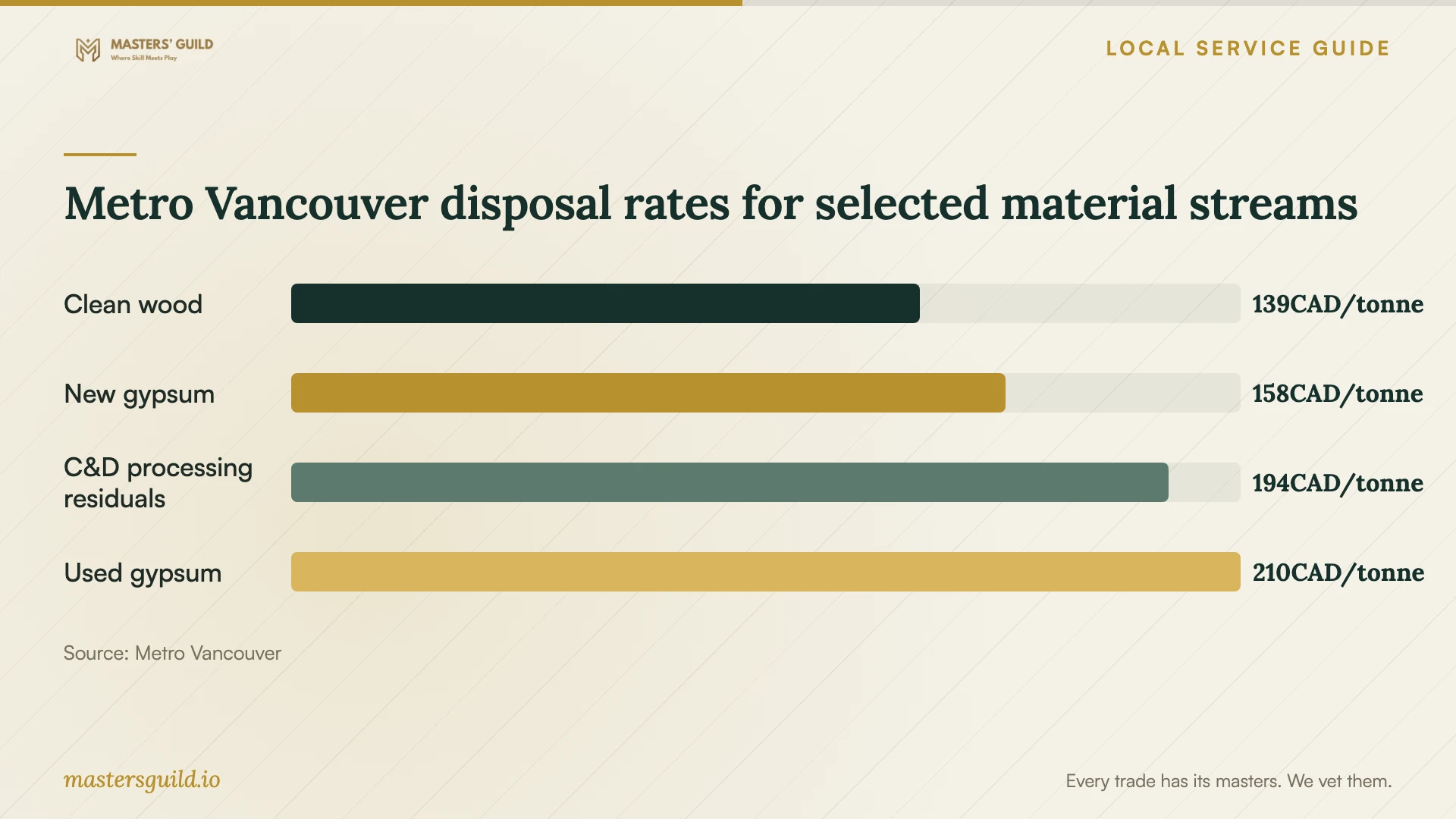
The chart compares published per-tonne rates for selected material streams. Use it to ask about the disposal portion of a quote. Request the hauler's price for carrying items, loading the vehicle and completing the trip. Have them explain any separate charges for dense debris or material that needs another destination. [3]
Resolve drywall and hazardous items before loading
Metro Vancouver defines used gypsum as drywall that someone has installed. Its guidance warns that gypsum installed before 1990 may contain asbestos in the tape and mud, and that separating tape or mud creates a high exposure risk. Leave suspect material undisturbed and seek an assessment and disposal plan before including it in a cleanout. [2]
For its resident used-gypsum program, Metro Vancouver requires designated clear bags and double-bagging. Residents may deliver material removed from their homes, with a limit of ten 10 kg bags per visit and five visits per year. The program excludes contractor and business loads. Ask a hired hauler to confirm its receiving facility rather than assuming it can use your resident allowance. [2]
Metro Vancouver identifies waste asbestos, waste oil and several chemical wastes as hazardous materials. Its guidance explains that some require special handling and disposal, while others have designated recycling depots. If your pile includes unidentified liquids, chemicals or suspected asbestos, describe them before requesting pickup. Ask whether the hauler accepts them and which specialist or receiving facility will handle them. [4]
Metro Vancouver disposal rates for selected material streams
Local details that affect your job
A hired drywall load needs a confirmed destination
The regional used-gypsum program serves residents disposing of drywall removed from their homes and excludes material from contractors and businesses. Before booking renovation-debris removal, ask the hauler to name a facility that accepts its load. For eligible self-delivery, follow the designated double-bagging requirements and the ten 10 kg bags per visit, five visits per year limits. [2]
Specify mattress handling in the quote
Metro Vancouver lists mattresses among materials banned from garbage disposal, while its current tipping-fee table lists a separate mattress and box-spring charge of CAD 20 each, with a maximum of four units. Tell the hauler your exact count and ask it to confirm the receiving facility, acceptance conditions and item charges. [1] [3]
Use the dated fee schedule for gypsum prices
The gypsum guidance page displays CAD 200 per tonne for used gypsum and CAD 150 for new gypsum. The fee schedule effective July 1, 2026 lists CAD 210 and CAD 158 respectively. Use the dated schedule for budgeting, retain the program page's handling and eligibility guidance, and confirm the charge with the receiving facility before delivery. [2] [3]
Choose a removal route for your items
| Your load | Route to consider | Confirm before proceeding |
|---|---|---|
| Furniture and general household clutter | Compare a crew pickup with self-hauling | Item list, access, complete price and receiving facility |
| Mattresses or box springs | Arrange separate mattress handling | Regional fee is CAD 20 each, maximum four units; confirm destination acceptance |
| Cardboard, clean wood or electronics | Arrange separated recycling streams | These materials appear on Metro Vancouver's garbage disposal-ban lists |
| Used drywall | Check resident-program eligibility or a hauler's separate disposal route | Resident program excludes contractor and business loads and requires designated double-bagging |
| Suspected asbestos or unidentified chemicals | Seek assessment and a confirmed specialist route | Identify the material and obtain acceptance before loading |
Your hiring checklist
- Send photos and an itemised list, including the number of mattresses and appliances.
- Describe stairs, doorways, carrying distance and the proposed loading space.
- Identify drywall, electronics, batteries, paint and any unknown chemicals before booking.
- Request a written total with the price basis, taxes, disposal charges and exclusions.
- Ask for proof of insurance and the destination for each separate material stream.
- Agree on approval for price changes before the crew starts loading.
- Label items to keep and arrange building access or a loading window if needed.
Frequently Asked Questions
How much should I budget for a complete pickup?
Regional disposal fees cover disposal. Request a complete pickup quote for your items and access conditions. Ask the hauler to include labour, transport, disposal, taxes and any item charges, then compare quotes on the same scope. [3]
Can a junk hauler use the resident drywall program?
Do not assume eligibility. Metro Vancouver excludes used gypsum from contractors and businesses from its resident program. Ask your hauler to confirm the receiving facility and its acceptance requirements before booking. [2]
Can I include paint, batteries and electronics in the garbage pile?
Keep them separate and disclose them when requesting a quote. Metro Vancouver lists paint, batteries and electronic products as banned product stewardship materials. Ask the hauler to confirm their recycling destinations and any separate charges. [1]
How should I describe new drywall offcuts?
Metro Vancouver's new-gypsum recycling guidance covers never-installed material date-stamped 1990 or newer, with no tape, paint or mud. It requires a signed declaration and limits loads to 500 kg. Describe the material's condition and confirm acceptance before arranging transport. [2]
Sources and scope
This guide combines the sources below with practical planning guidance. Figures apply to the stated geography and period; request a written quote for your property.