
Local service guide
Mold Removal in Tucson, AZ: Hiring and Planning
For Mold Removal in Tucson, choose a contractor with mold cleanup experience and get a written plan covering the moisture source, cleanup, and material removal. EPA says you can handle most patches smaller than about 10 square feet yourself, subject to its precautions. For sewage damage, EPA recommends calling a professional experienced with contaminated-water damage. Before approving demolition, confirm whether Pima County asbestos requirements apply to your building. [1] [2]
Choose the right cleanup scope
Measure the visible patch and describe the water event before requesting a quote. EPA says you can handle mold covering less than about 10 square feet yourself in most cases. For extensive water damage or growth exceeding that area, EPA directs readers to its broader remediation guidance. Use the measurement as a starting point for discussing the job. [2]
Tell the contractor if sewage or other contaminated water caused the damage. EPA recommends a professional with experience cleaning and repairing buildings affected by contaminated water. If you know or suspect that mold has contaminated the HVAC system, EPA says to stop running it because it could spread mold through the building. Consult a health professional before cleanup if you have health concerns. [2]
Photograph the visible damage and record when you noticed it, which rooms it affects, and previous repairs. Have the contractor explain what they can assess during the initial visit and what would require opening a wall or ceiling. Agree on approval for that investigative work before anyone begins.
Compare written proposals
Request references from mold cleanup jobs and check them. EPA recommends hiring someone with mold cleanup experience and asking them to follow guidance from EPA, IICRC, ACGIH, or another professional or government organization. Have the contractor identify the guidance they use and explain how they will apply it to your home. [2]
Request separate descriptions of investigation, cleanup, material removal, disposal, moisture repair, and rebuilding. Discuss how the crew will limit your exposure during work, which rooms you can use, and who will handle your belongings. Require written approval for additional work after the crew uncovers damage.
Ask for a site-specific quote and a schedule that separates cleanup, drying, and reconstruction. Compare exclusions alongside the total, including any separate charge for investigating concealed areas. Confirm who will coordinate a separate repair contractor and how you will approve changes to the price or schedule.
Resolve moisture and material decisions
EPA advises fixing plumbing leaks and other water problems and drying affected items. Its guidance calls for scrubbing hard surfaces with detergent and water and drying them. Porous materials such as carpet and ceiling tiles may need disposal because mold can be difficult or impossible to remove from their internal spaces. [2]
Have the contractor identify which materials they propose to clean and which they propose to remove. Request a reason for each removal before authorizing it. For expensive or sentimental belongings, EPA recommends considering a specialist and checking references. [2]
Schedule painting and caulking after cleanup and drying. EPA says to clean mold and dry surfaces before applying either. For recurring bathroom growth, EPA recommends increased ventilation and more frequent cleaning. Discuss whether the proposed repair addresses the damp conditions you have observed. [2]
Plan removal of building materials
Before a crew removes building materials, establish your building’s dwelling-unit count and discuss asbestos applicability. Pima County Department of Environmental Quality administers the local asbestos program. Its page describes demolition and renovation work practices with an exclusion for residential buildings containing four or fewer dwelling units. [1]
For work within the program’s scope, the county requires the owner or operator to notify PDEQ before demolition, or before renovations involving a threshold amount of asbestos or asbestos-containing material. Have PDEQ confirm whether your proposed work meets the applicable threshold. Agree with the contractor who will handle any required notification before setting a start date. [1]
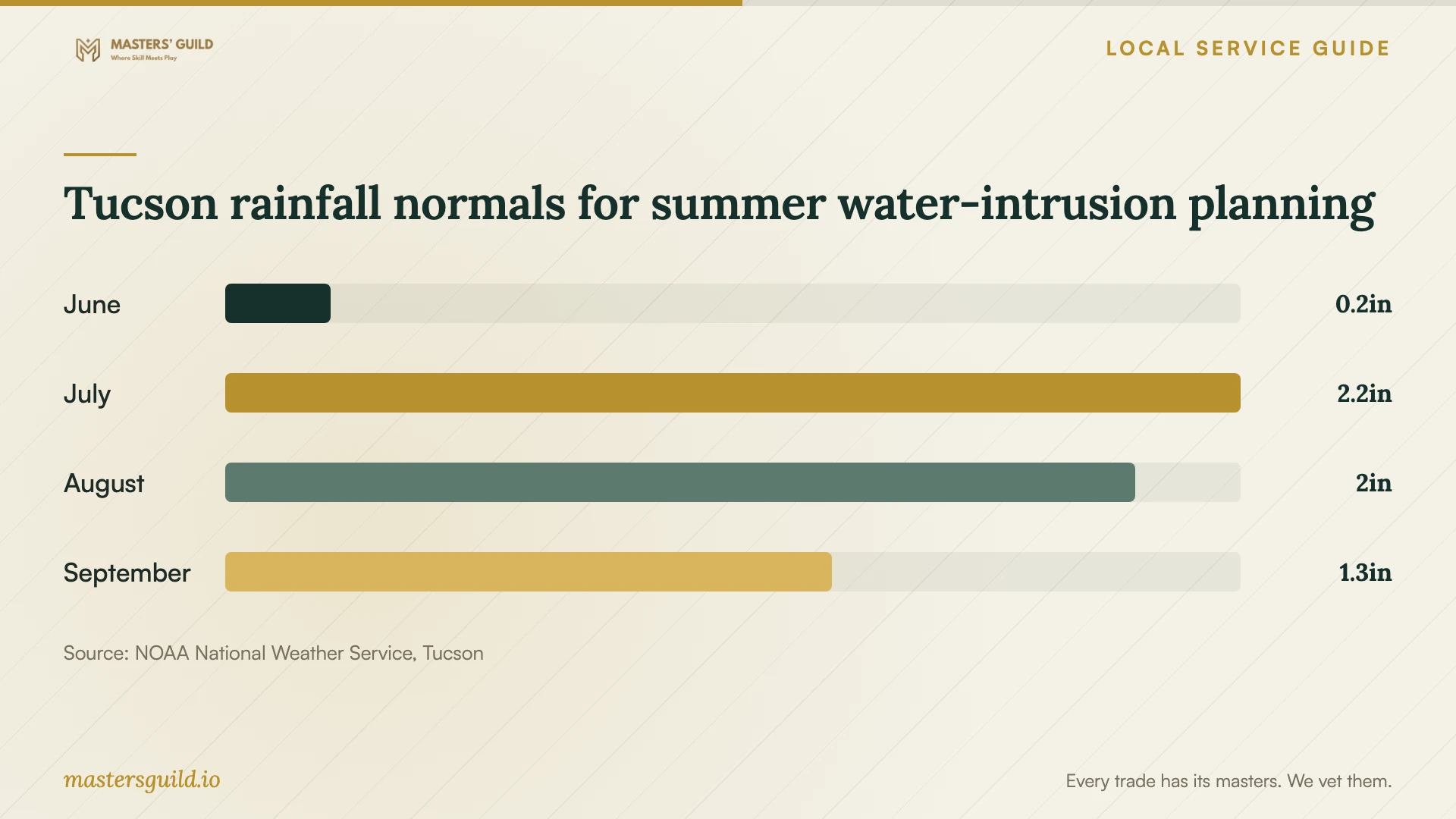
Tucson rainfall normals for summer water-intrusion planning
Local details that affect your job
Use dwelling-unit count in the asbestos inquiry
If you own a home in a residential building with four or fewer dwelling units, give PDEQ that count when discussing material removal. Pima County excludes those smaller residential buildings from the work-practice scope described on its asbestos NESHAP page. For a larger residential building, request a separate applicability determination before approving demolition. Do not use the dwelling-unit exclusion as evidence that a material contains no asbestos. [1]
Set responsibility for the county application
Pima County offers a Permit Gateway with a decision tree to help users find and apply for the appropriate permit. Users can research parcels, submit applications, and pay fees there. If PDEQ confirms that your work needs an asbestos activity permit or notification, agree with the contractor who will submit the documents and keep the confirmation with your job records. [1]
Bring summer rain dates to the inspection
NWS Tucson reports 1991–2020 rainfall normals of 2.21 inches in July, 1.98 in August, and 1.32 in September, compared with 0.23 in June. If you noticed staining after summer rain, give the contractor the event dates and request investigation of the water entry before rebuilding. These monthly averages do not identify your leak or establish mold growth. [3]
Choose your next step from the conditions you observe
| Condition | Next step | Question to resolve |
|---|---|---|
| Patch smaller than about 10 square feet | Consider EPA’s homeowner cleanup guidance and its precautions. | Can you address the moisture problem and follow the cleanup precautions? |
| Extensive water damage or more than 10 square feet | Consult EPA’s broader remediation guidance and discuss professional cleanup. | Which affected materials and areas does the proposal cover? |
| Sewage or other contaminated water | EPA recommends a professional experienced with contaminated-water damage. | Can the contractor provide references for that work? |
| Known or suspected HVAC contamination | EPA says not to run the HVAC system and to consult its referenced duct guidance. | Who will assess the suspected contamination? |
| Demolition or renovation of building materials | Confirm Pima County asbestos program applicability. | Does the dwelling-unit exclusion apply, and is notification required? |
Your hiring checklist
- Photograph affected surfaces and record the water event or recurring dampness.
- Describe suspected HVAC involvement or contaminated water before the visit.
- Request mold cleanup references and check them.
- Get written cleanup, removal, moisture repair, and rebuilding scopes.
- Agree on room access and handling of belongings during work.
- Confirm asbestos applicability with PDEQ if the plan includes demolition or renovation.
- Require written approval for added work and keep completion documents.
Frequently Asked Questions
Can I clean a small patch myself?
EPA says you can handle mold covering less than about 10 square feet yourself in most cases. Review its precautions first, including the separate guidance for contaminated water and suspected HVAC contamination. Consult a health professional if you have health concerns. [2]
Should the contractor replace moldy carpet or ceiling tiles?
EPA says porous materials such as carpet and ceiling tiles may need disposal because mold can be difficult or impossible to remove from them. Have the contractor explain the proposed treatment for each affected material before approving removal. [2]
Does every house need a Pima County asbestos NESHAP permit?
The county’s page excludes residential buildings with four or fewer dwelling units from its described work-practice scope. For covered buildings, it describes notification before demolition and before renovations involving threshold amounts of asbestos or asbestos-containing material. Confirm your project’s applicability with PDEQ before scheduling removal. [1]
What should I settle before signing the quote?
Agree on affected areas, cleaning versus removal, responsibility for moisture repair, rebuilding exclusions, room access, and approval of additional work. Request a schedule separating cleanup, drying, and reconstruction, plus a description of the documents you will receive when the agreed work ends.
Sources and scope
This guide combines the sources below with practical planning guidance. Figures apply to the stated geography and period; request a written quote for your property.