
Local service guide
Kitchen Remodeling in Tucson: Plan Scope and Hiring
Arrange Kitchen Remodeling in Tucson by giving contractors the same written scope, confirming the permit authority for your address, and choosing appliances before approving cabinet dimensions. Ask bidders to separate finish work from plumbing, electrical and ventilation changes. For properties under Pima County permitting jurisdiction, the county distinguishes cosmetic finishes from remodel improvements and new utility work. Confirm your jurisdiction before applying its rules. [1]
Define the kitchen you want contractors to price
Start with the problems you want to solve: insufficient prep space, awkward storage, a difficult appliance opening or a layout you want to change. Mark what you intend to keep. Give each bidder the same photos and a sketch showing the sink, range, refrigerator, dishwasher and proposed cabinet arrangement.
Request separate descriptions of demolition, cabinets, countertops, appliances, flooring, plumbing, electrical work and ventilation. State who buys each item and who installs it. Ask for product names or written allowances for undecided finishes. Have the contractor explain how they will price a selection that exceeds an allowance.
If you are undecided about moving fixtures, request both a keep-the-layout proposal and your preferred redesign. Ask the contractor to identify the work they would add or remove. Choose between those written scopes using your budget and priorities; obtain project-specific quotes before setting a spending limit.
Resolve permit responsibility before demolition
Confirm the building department for your address before accepting a permit exemption. Use the Pima County table only for work under county permitting jurisdiction. For a property under City of Tucson jurisdiction, request a scope review from the city permit authority before proceeding.
Pima County lists painting, tiling, cabinets and countertops as permit-exempt finishes when they do not affect plumbing or electrical systems. It lists remodel improvements, new pipe work, a new dishwasher, new electrical outlets or fixtures, and duct modifications as permit-required work. Show the applicable department your complete scope so it can resolve the boundary between finishes and utility changes. [1]
Have the contractor name the person responsible for submitting plans, paying permit fees and arranging inspections. Include those responsibilities in the agreement. Before authorizing demolition, request the department's scope determination and a copy of any required permit. Keep those documents with your drawings and contract.
Choose appliances before approving cabinet openings
Give the installer exact appliance model numbers before approving the cabinet order. Ask them to check openings, door clearance, utility connections and access for future replacement against the manufacturers' instructions. Include your proposed ventilation equipment in this review.
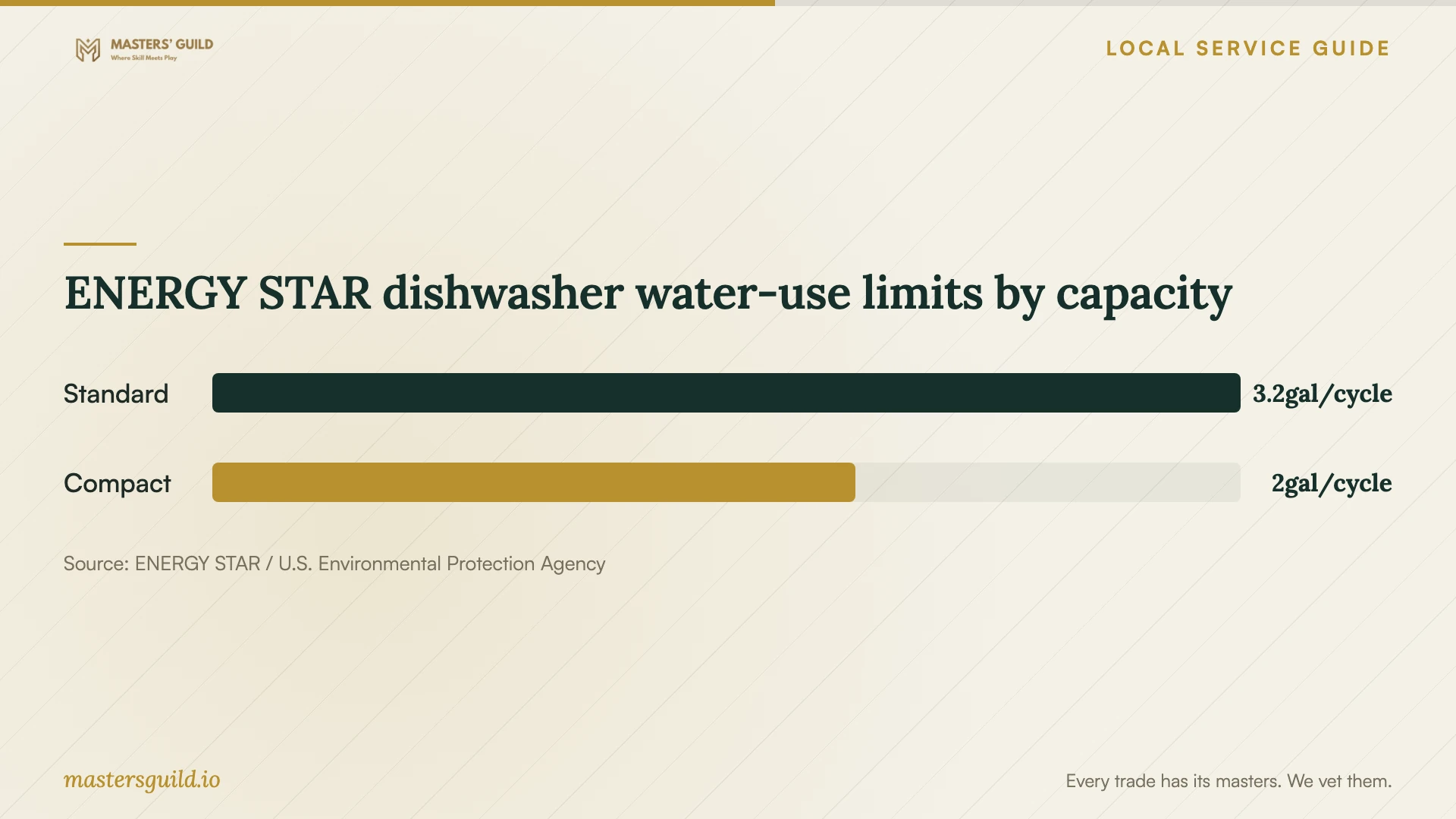
ENERGY STAR lists maximum water use of 3.2 gallons per cycle for standard dishwashers and 2.0 gallons per cycle for compact models. It defines standard capacity as at least eight place settings plus six serving pieces, and compact capacity as less than that threshold. Choose capacity for your household before comparing these certification limits. [3]
Use the chart as a reference for certification criteria, then examine the selected model's specifications and EnergyGuide label. ENERGY STAR explains that EnergyGuide estimates use electricity consumption, assumed cycle frequency and an average energy cost. Those assumptions do not establish your household's future bill. [3]
Consider your TEP plan when selecting appliance controls
Check the pricing plan on your electricity account before making an operating-cost decision. TEP's Demand Time-of-Use plan combines usage charges with a monthly demand charge based on the highest hourly usage during on-peak hours. TEP advises customers on this plan to avoid running the oven, dishwasher and other large appliances together during those hours. [2]
For this plan, TEP lists weekday on-peak hours of 3–7 p.m. from May through September, and 6–9 a.m. plus 6–9 p.m. from October through April. Weekends and the plan's listed major holidays are off-peak. If evening cooking overlaps with dishwashing, consider a dishwasher with delay-start controls and choose a separate run time. [2]
Review your usage history before changing plans. TEP says savings depend on usage patterns and warns that high on-peak demand can increase costs on Demand Time-of-Use. Apply its scheduling guidance to that plan rather than assuming the same billing rules apply to your account. [2]
Compare agreements and prepare for the work
Ask who will supervise the project and who will perform plumbing, electrical and ventilation work. Request insurance documentation and license information for you to verify. Ask for references from projects with a similar scope, and discuss how the contractor handled changes, cleanup and communication.
Request a schedule that separates ordering, demolition, installation and completion. Ask which selections you must approve before setting a start date. Agree on temporary cooking arrangements, access to water, dust containment, debris removal and protection for rooms outside the kitchen.
Put payment stages, change-order approval and completion requirements in writing. Before final payment, walk through the kitchen with the contractor, test appliances and fixtures, and record unfinished items. Request the agreed project documents, warranties and final product list.
ENERGY STAR dishwasher water-use limits by capacity
Local details that affect your job
County finish exemptions have a utility-work boundary
For a property under Pima County permitting jurisdiction, request a review of the whole kitchen scope. The county exempts cabinets, countertops and similar finishes when they do not affect plumbing or electrical work. It lists new pipe work and a new dishwasher as permit-required work. Disclose appliance and connection changes before treating a cabinet replacement as exempt. [1]
TEP demand billing affects dishwasher scheduling
For a household enrolled in TEP's Demand Time-of-Use plan, discuss delay-start controls when selecting a dishwasher. From October through April, weekday peak periods run from 6–9 a.m. and 6–9 p.m. TEP bases the demand charge on the highest on-peak hour. Review when you cook and wash dishes before choosing an appliance routine or changing plans. [2]
Match your scope to the next planning step
| Proposed work | Decision to resolve | Next step |
|---|---|---|
| Cabinets and countertops | Pima County exempts these finishes when they do not affect plumbing or electrical work. | Confirm county jurisdiction and disclose related utility changes before relying on the exemption. |
| New pipe work or dishwasher | Pima County lists new pipe work and a new dishwasher as permit-required work. | Ask the applicable department how to include the work in your application. |
| New outlets or altered ducts | Pima County lists new electrical outlets or fixtures and duct modifications as permit-required work. | Include these changes in the contractor's scope and permit discussion. |
| Dishwasher selection | ENERGY STAR uses separate standard and compact capacity categories. | Choose household capacity, then ask the installer to confirm openings and connections. |
| Dishwasher scheduling | TEP Demand Time-of-Use includes a highest-on-peak-hour demand charge. | Check your account plan and consider running the dishwasher apart from evening cooking. |
Your hiring checklist
- Confirm the permit authority for your address and request a review of your written scope.
- Photograph the kitchen and mark fixtures, finishes and appliances you want to keep.
- Give bidders the same drawing, appliance models and finish selections.
- Request itemized work, allowances, exclusions and permit responsibilities.
- Ask who supervises the project and verify insurance and license information.
- Agree on ordering dates, temporary cooking arrangements, cleanup and change approvals.
- Record completion requirements, warranties and the process for resolving unfinished work.
Frequently Asked Questions
Do I need a permit to replace kitchen cabinets?
Pima County lists cabinets and countertops as exempt finishes when they do not affect plumbing or electrical work. Confirm that the county handles your address and request a review of the full scope. For a city property, ask the city permit authority before relying on the county exemption. [1]
How should I compare remodeling bids?
Give contractors the same scope and request itemized work, product allowances and exclusions. Compare who supplies materials, who handles permits and how each contractor prices changes. Ask bidders to explain differences before selecting a proposal.
Will a new dishwasher lower my electricity bill?
Use the selected model's specifications and your account usage to assess that question. ENERGY STAR provides certification limits and explains the assumptions behind EnergyGuide estimates. On TEP Demand Time-of-Use, appliance timing and your highest on-peak hour also affect charges. These references cannot predict your household's savings. [2] [3]
What should I settle before work starts?
Approve the drawing, appliance models, finish selections and written scope. Confirm permit responsibilities, material readiness, payment stages and change approval. Agree on temporary cooking space and how you will review unfinished items at completion.
Sources and scope
This guide combines the sources below with practical planning guidance. Figures apply to the stated geography and period; request a written quote for your property.