
Local service guide
Pressure washing in Toledo: hiring and preparation
Arrange pressure washing by asking each contractor for a written surface-by-surface scope, a plan for collecting cleaning waste, and a weather cancellation policy. In Toledo, walk the drainage route before agreeing to the work: the city includes curb inlets, yard catch basins, and connected ditches in its stormwater guidance. For historic masonry, ask a preservation professional to assess the material and approve a test patch before cleaning. [1] [2]
Get a quote you can compare
Send each contractor the same photos and description. Identify the driveway, patio, steps, siding, or masonry you want cleaned, then mark anything you want excluded. Include close views of stains, cracks, loose finishes, and previous repairs. Ask whether the contractor needs an inspection before committing to a price.
Request an itemized total with the cleaning method, products, stain treatment, waste collection, and cleanup included. Ask who supplies water and whether the quote includes moving furniture or returning for unfinished work. Keep sealing, repainting, repairs, and cleaning as separate line items so you can choose the scope without guessing.
Set the expected result before booking. Ask the contractor to identify marks they expect to remove and marks they expect to leave. Photograph the starting condition together and agree on how you will inspect the finished work. Use property-specific quotes to set your budget; the supplied evidence does not establish local cleaning prices.
Plan where the cleaning water will go
Walk from the cleaning area toward the street and through the yard with the contractor. Toledo explains that runoff can carry dirt, oil, and chemicals into rivers and lakes without treatment. The city also identifies dumping trash and chemicals into storm drains as illegal. Ask the contractor to explain collection and disposal before they connect equipment. [1]
Point out curb inlets, yard catch basins, nearby water, and connected swales or ditches. Ask how the contractor will keep cleaning waste away from those routes and where they will take collected water or residue. Request a disposal plan rather than suggesting a destination yourself. Toledo’s general stormwater page does not specify an approved disposal method for your particular cleaning waste. [1]
Separate loose debris removal from washing. Toledo warns that yard waste, trash, and grass clippings blown into the street can clog curb catch basins and contribute to roadway flooding. Agree who will pick up loose debris before cleaning and remove it afterward. Do not treat the street gutter as the cleanup destination. [1]
Match the method to the surface
Ask the contractor to name the material and explain the proposed method before accepting a general promise to wash the whole exterior. Request the product name, application method, rinse method, and protection measures. Ask what they mean by soft washing and which surfaces that proposal covers.
For historic brick or stone, use GSA’s guidance as a discussion reference with a qualified preservation professional. GSA calls for assessment of materials, previous treatments, and soiling; small test patches; and the gentlest method that cleans without damaging the substrate. Its procedure also addresses protecting openings, adjacent materials, vegetation, and collecting cleaning effluent. [2]
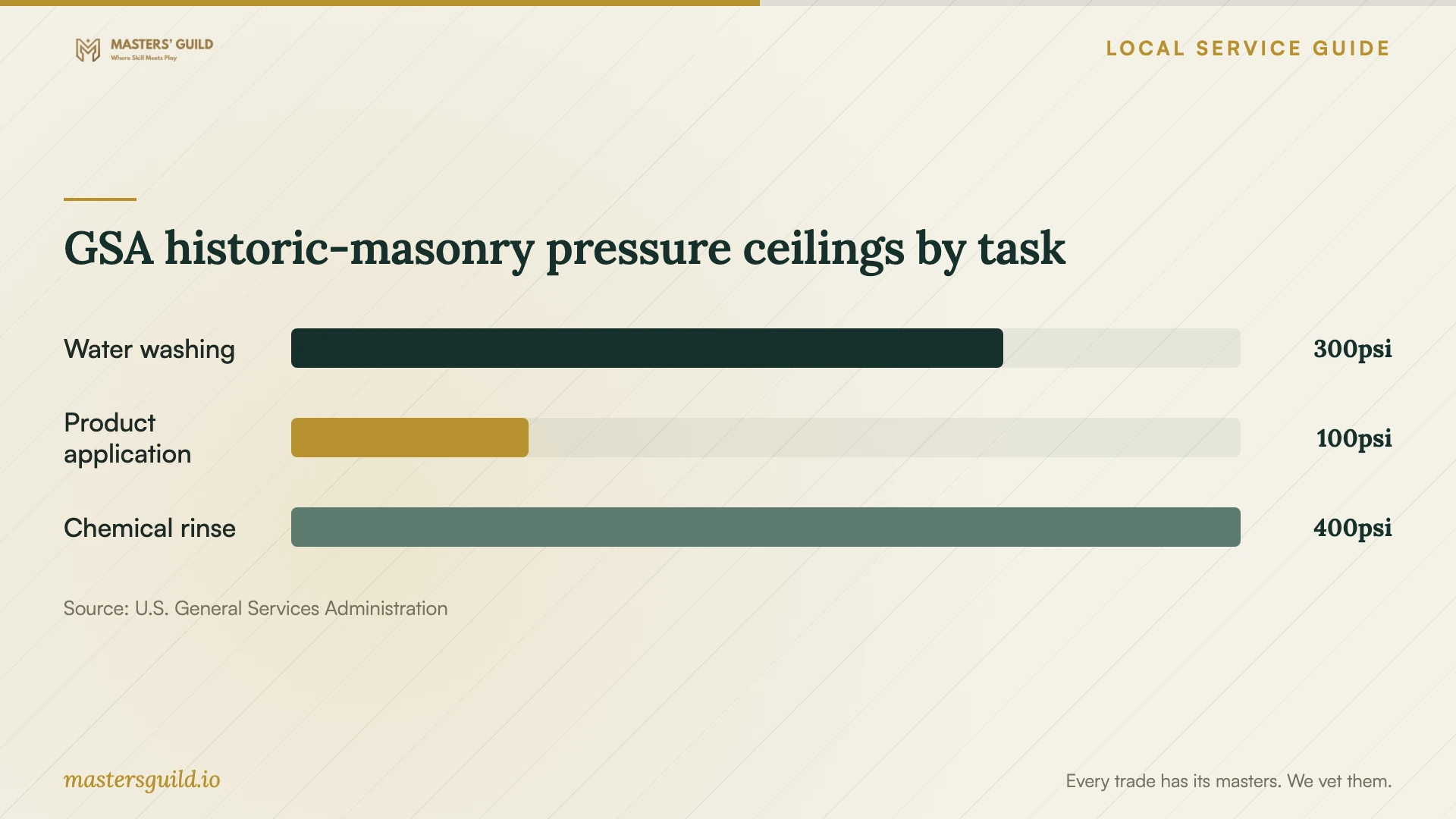
The pressure chart describes separate tasks within GSA’s historic-masonry procedure. Its ceilings do not establish a suitable setting for your house, a Toledo legal limit, or permission to use maximum pressure. GSA requires project-specific judgment and testing. Ask the professional to document the method they approve for your masonry. [2]
Schedule around the forecast and prepare access
Choose a date with a backup plan and ask when the contractor will make the final weather decision. The National Weather Service’s Toledo table shows declining normal low temperatures from October into November. Those averages provide seasonal context; they do not establish safe conditions on your appointment date. Check the forecast for the work and the period afterward. [3]
For historic masonry, GSA’s reference procedure calls for temperatures above freezing for at least 24 hours after completion and says not to start when rain, snow, or below-freezing temperatures are expected within the next 24 hours. Ask your preservation professional how the complete temperature requirements and product instructions apply to the job. [2]
Before arrival, agree on parking, equipment access, water access, and the areas you need to keep available. Move vehicles and personal items from the agreed work area. Identify openings or existing damage with the contractor, then confirm who will provide protection. Ask when you may use the cleaned steps, patio, or driveway again.
GSA historic-masonry pressure ceilings by task
Local details that affect your job
Check yard drains as well as street inlets
Toledo asks residents to report illegal dumping through Engage Toledo and includes yard catch basins, local bodies of water, and swales or ditches flowing into a creek or river. Before booking, map those features with the contractor and require a waste-handling plan that addresses them. If you observe dumping into the stormwater system, use the city’s reporting channel. [1]
Assign debris pickup before washing
Toledo identifies street-bound yard waste, trash, and grass clippings as causes of clogged curb catch basins and roadway flooding. Include pickup and removal of loose debris in the scope, apart from collecting dirty wash water. Confirm who handles that step so neither you nor the contractor leaves debris for the rinse to push toward the gutter. [1]
Choose the next step before booking
| Your situation | Request | Booking decision |
|---|---|---|
| Runoff could reach a curb or yard catch basin | A collection and disposal plan covering that drainage route | Resolve waste handling before agreeing to the work |
| Loose yard debris lies beside the work area | Pickup and removal before rinsing | Assign responsibility in the written scope |
| Historic brick or stone needs cleaning | Preservation assessment and a test patch | Approve a material-specific method before full cleaning |
| Historic-masonry work coincides with a cold or wet forecast | Review of GSA reference conditions and product instructions | Agree on postponement terms before scheduling |
| Quotes include different surfaces or extras | Revised quotes using the same scope | Compare totals after resolving the differences |
Your hiring checklist
- Send matching photos and surface descriptions to each contractor.
- Mark excluded surfaces and photograph existing damage.
- Request methods, products, stain expectations, and an itemized total.
- Walk the route to curb inlets, yard drains, and connected ditches.
- Assign loose-debris pickup and cleaning-waste collection.
- For historic masonry, arrange professional assessment and an approved test patch.
- Confirm access, water supply, protection, and forecast cancellation terms.
Frequently Asked Questions
How should I compare pressure-washing prices?
Ask each contractor to price the same surfaces and list the method, stain treatment, protection, waste collection, and cleanup. Separate optional repairs or sealing. Ask about exclusions and additional charges before choosing an offer. These sources do not provide a verified Toledo price range.
Can the contractor rinse cleaning waste into a storm drain?
Toledo says dumping trash and chemicals into storm drains is illegal. Its stormwater page does not authorize disposal of your cleaning waste. Ask the contractor for a collection and disposal plan that addresses both street inlets and connected yard drainage. [1]
Should I request a test patch for historic masonry?
Yes. GSA’s preservation reference calls for small test patches to identify a successful method with minimal damage. Ask a qualified preservation professional to assess your building and approve the method. GSA’s procedure serves as guidance and does not establish universal Toledo washing requirements. [2]
Can I arrange cleaning in October?
Ask the contractor to assess the forecast and the surface-specific requirements. Toledo’s normal temperatures give seasonal context, not appointment-day conditions. For historic masonry, GSA’s reference includes post-cleaning temperature requirements and restrictions when rain, snow, or freezing weather is expected. Agree on a backup date. [2] [3]
Sources and scope
This guide combines the sources below with practical planning guidance. Figures apply to the stated geography and period; request a written quote for your property.