
Local service guide
Mold removal in Toledo, OH: Plan the Right Cleanup
Arrange mold removal in Toledo by identifying the water source and choosing a contractor with experience handling your type of damage. EPA says homeowners can handle most patches smaller than about 10 square feet, but sewage contamination calls for an experienced professional. For a basement backup, report the water concern to Engage Toledo and ask a plumber to assess the source while you arrange cleanup. [1] [2]
Choose the cleanup route before booking
EPA's small-area guidance applies to mold covering less than about 10 square feet, roughly a 3-foot-by-3-foot patch. In most cases, you can handle that cleanup yourself. EPA advises consulting its broader remediation guidance when growth exceeds that area or substantial water damage has occurred. Treat the size as one consideration alongside the water source and affected materials. [1]
For a small hard-surface patch, EPA recommends scrubbing with detergent and water and drying the surface. Moldy porous materials, including carpet and ceiling tiles, may need disposal because cleanup may not remove all the growth. Do not paint or caulk over mold. Fix leaks and dry materials before refinishing. [1]
If you know or suspect mold contamination in the HVAC system, EPA advises against running it because it could spread mold through the building. If you have health concerns, consult a health professional before starting cleanup. Tell prospective contractors about either issue when requesting an assessment. [1]
Coordinate basement cleanup with the water investigation
For water in your basement, contact Engage Toledo at 419-936-2020 or use its online reporting form. The city asks for the address, suspected cause, whether the water is clean or dirty and smelly, how it is moving and whether the problem recurs. Include the plumber's name if you have contacted one. [2]
The city recommends also calling a plumber when the concern involves your property or home. Its guidance assigns cleaning and clearing building-sewer blockages from the premises to the main sewer to the property owner. Ask the plumber to explain the suspected location of the problem and document findings you can share with the city and cleanup contractor. [2]
Keep your service-request number. Toledo explains that a request can appear closed after staff create a work order, even though the repair remains unresolved. Call Engage Toledo for progress updates rather than filing a duplicate request for the same issue. [2]
Request a written scope you can compare
Ask each contractor to identify the rooms and materials included in the price. Have the contractor separate assessment, cleanup, material removal, drying and rebuilding where applicable. Request an explanation of how the crew will protect occupied areas, handle debris and decide when the work is complete.
EPA recommends checking references and confirming experience cleaning mold. It also advises asking contractors to follow guidance from EPA, ACGIH, IICRC or another professional or government organization. Ask for a reference from a job involving similar materials and, for a sewer backup, similar contaminated-water damage. [1]
Ask who will repair the moisture source and who will confirm that repair before rebuilding starts. Request written exclusions for concealed damage and a process for approving additional work. Have the contractor explain access needs, room restrictions, payment stages and any follow-up visit before you agree to the schedule.
Separate prevention funding from cleanup costs
Toledo's Basement Flooding Grant Program applies to owners of city properties that experience backups from overloaded main sewers. Eligible work must prevent sanitary sewage from backing up into basements. The city lists measures such as standpipes, check valves, sewer or plumbing modifications and sump pumps. [3]
The city excludes cleanup costs, insurance deductibles and damaged-property replacement. It also excludes work addressing strictly groundwater or storm-water flooding, including wall waterproofing, footer-drain work and landscaping changes. Sewer lateral repairs or cleaning also appear on its exclusion list. Keep those costs separate when discussing a grant application. [3]
Submit an application with at least two written quotes. The city must verify a public sanitary backup and review the proposed solution before approval. After approval, follow the city's instructions and complete any required inspections. Ask the program staff to confirm eligibility and the sequence before authorizing proposed prevention work. [3]
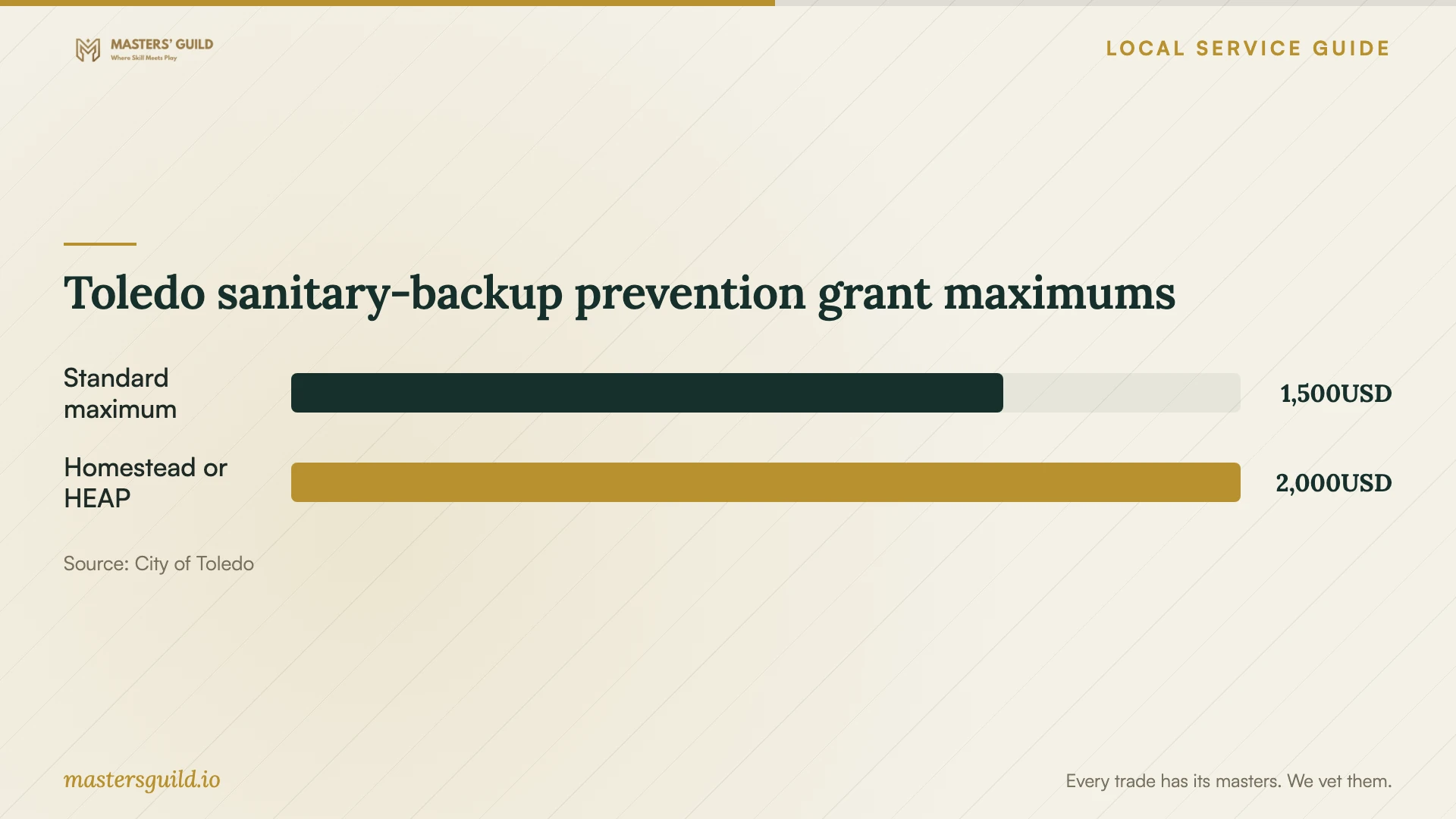
Toledo sanitary-backup prevention grant maximums
Local details that affect your job
A city report does not replace your plumber's assessment
Engage Toledo accepts basement water reports at 419-936-2020. The city recommends a plumber's assessment for concerns on private property and assigns building-sewer blockage clearing to the owner from the premises to the main sewer. Arrange both contacts when the backup source remains uncertain, and share the plumber's findings with the city. [2]
Prepare two prevention quotes for the grant application
Toledo requires at least two written quotes with a Basement Flooding Grant application and city verification of a public sanitary backup. The standard maximum grant is $1,500; the maximum is $2,000 for Homestead Exempt owners or Home Energy Assistance Program recipients. Cleanup costs do not qualify, so request a separate prevention scope. [3]
Use the county housing complaint route for unresolved sanitation concerns
The Toledo-Lucas County Health Department accepts housing complaints and says it inspects water, sewage and other unsanitary conditions within Lucas County. Describe the location, dates and unresolved moisture or sewage problem in the complaint. This page does not establish a mold-testing or remediation service; ask the department what inspection assistance applies to your situation. [4]
Choose your next step by the damage you see
| Situation | Cleanup guidance | Next step |
|---|---|---|
| Patch smaller than about 10 square feet | EPA says homeowners can handle cleanup in most cases. | Check the water source and materials before choosing DIY cleanup. |
| Larger growth or substantial water damage | EPA directs readers to broader remediation guidance. | Arrange an assessment and request a written cleanup scope. |
| Sewage or contaminated-water damage | EPA advises hiring a professional experienced with contaminated water. | Coordinate cleanup with a plumber; report basement water to Engage Toledo. |
| Known or suspected HVAC contamination | EPA advises against running the affected system. | Tell the contractor about suspected system involvement before cleanup. |
| Recurring sanitary backup from overloaded main sewers | Toledo offers a prevention grant subject to eligibility and verification. | Obtain two prevention quotes and apply; budget separately for cleanup. |
Your hiring checklist
- Photograph affected rooms and write down when you first noticed the water or growth.
- Record whether the problem followed rain, a plumbing leak or a suspected sewer backup.
- Describe affected materials and suspected HVAC involvement when requesting an assessment.
- Ask contractors for relevant cleanup references and their proposed remediation guidance.
- Request separate written scopes for cleanup, moisture-source repair and rebuilding.
- Clarify room access, occupancy restrictions and completion documentation before booking.
- Confirm grant eligibility and application steps with city staff before authorizing prevention work.
Frequently Asked Questions
Will Toledo's grant pay for mold removal?
The city excludes cleanup costs and damaged-property replacement. Its grant supports eligible measures to prevent sanitary sewage backups into basements, subject to city verification and approval. Ask for separate cleanup and prevention quotes. [3]
Can I clean a small bathroom patch myself?
EPA says homeowners can handle most mold patches smaller than about 10 square feet. For hard surfaces, it recommends detergent and water followed by drying. Address the moisture source. Sewage contamination, suspected HVAC involvement or health concerns require additional precautions or professional advice. [1]
Who should I contact about a recurring basement backup?
Report the concern to Engage Toledo at 419-936-2020 and arrange a plumber's assessment. Give the city the recurrence history, suspected cause and water description. Keep the request number so you can ask about progress if staff close the request after creating a work order. [2]
Can the health department help with unresolved housing conditions?
The Toledo-Lucas County Health Department offers a housing complaint form and inspects water, sewage and other unsanitary conditions within Lucas County. Ask what assistance applies to your home. Its housing page does not promise mold testing or contractor cleanup. [4]
Sources and scope
This guide combines the sources below with practical planning guidance. Figures apply to the stated geography and period; request a written quote for your property.