
Local service guide
Toledo duct cleaning: scope, estimates and access
Arrange duct cleaning in Toledo after a provider shows you contamination that warrants cleaning, then compare written estimates covering the same components. EPA recommends cleaning as needed for substantial visible mold, vermin, or excessive debris. Correct the underlying cause before cleaning or replacing ducts. Request dryer-exhaust cleaning as a separate service, and ask Toledo Building Inspection about approvals if the proposal includes mechanical alterations. [1] [2]
Confirm the problem before buying cleaning
Ask the provider to show the affected areas and explain how they will reach them. EPA identifies substantial visible mold on hard duct surfaces or system components, vermin infestation, and excessive dust or debris as reasons to consider cleaning. A dusty return register does not establish deeper contamination. [1]
Have the provider investigate the cause before cleaning, retrofitting, or replacing ducts. For suspected mold, ask who will confirm its identity and identify the moisture source. EPA says an expert may need laboratory analysis to confirm mold, and cleaners cannot effectively clean wet or moldy duct insulation. Arrange the necessary correction and replacement before approving cleanup. [1]
Treat health and energy promises with caution. EPA says duct cleaning has not been shown to prevent health problems, and little evidence supports efficiency improvements from cleaning ducts alone. Discuss unexplained symptoms with your doctor rather than relying on a cleaning salesperson to identify their cause. [1]
Compare the same scope across estimates
Get written estimates from at least three providers. Ask each bidder to identify the supply and return ducts, registers, coils, drain pans, blower, and air-handler housing included in the job. EPA advises agreeing on all system components because an untreated contaminated component can recontaminate the system. [1]
Give bidders the same system count, equipment locations, and description of the problem. Ask whether they need an inspection before setting a firm price. Require a written total and scope before work begins, and record exclusions and the process for approving additional work. List dryer exhaust, repairs, and chemical treatments separately. [1]
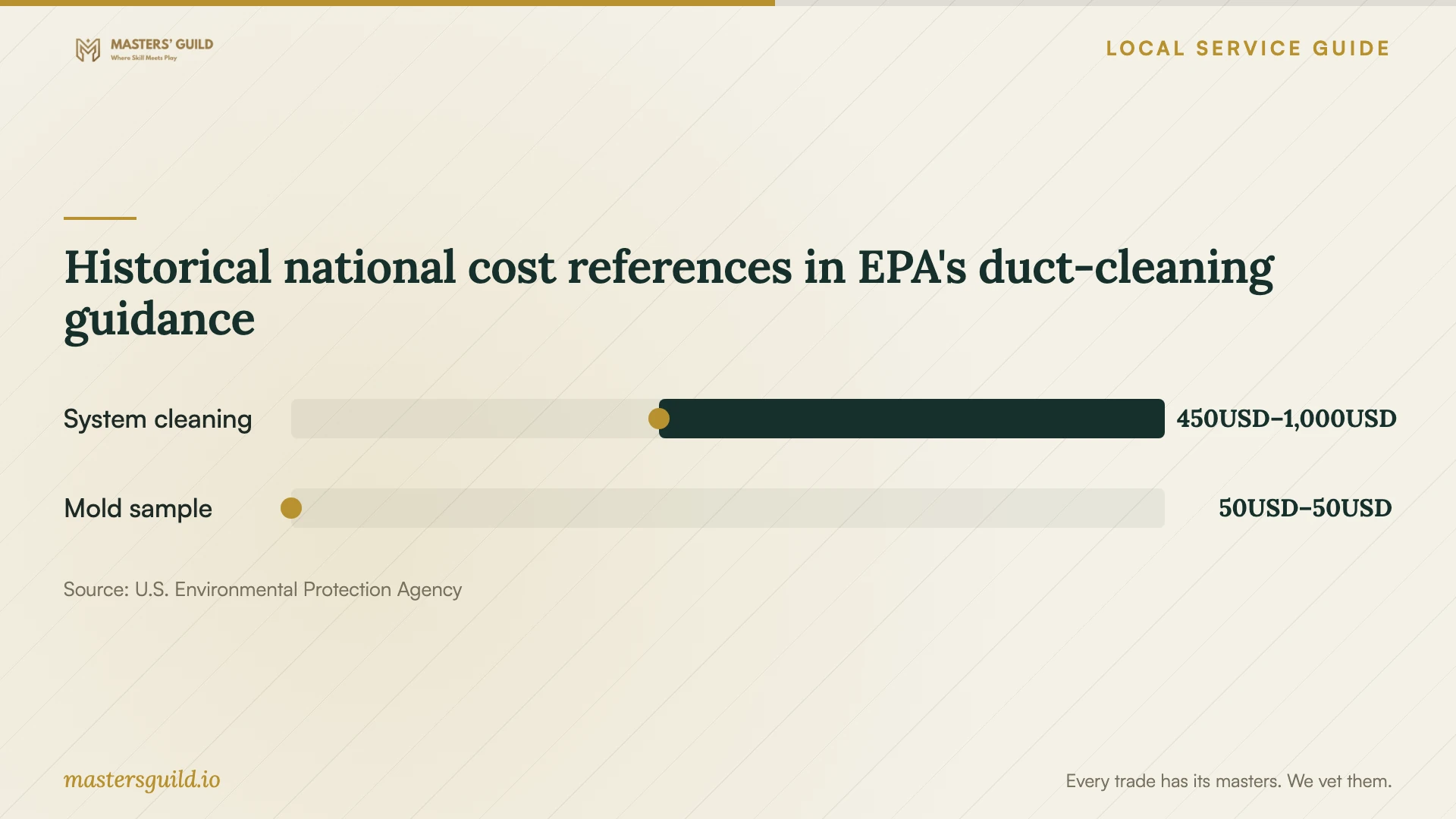
Obtain property-specific estimates for your budget. EPA's October 1997 publication includes national reference costs, but those figures do not establish today's Toledo prices. Ask bidders to explain differences in included components, access, and contamination rather than comparing advertised starting prices alone. [1]
Check tools, materials and proposed treatments
Ask how workers will collect loosened debris and protect your rooms. EPA recommends vacuum equipment that exhausts outdoors, or HEPA vacuum equipment when exhaust stays indoors. Have the crew explain how they will protect furnishings and seal and reinsulate access holes. [1]
Have the provider identify sheet metal, flexible duct, and fiberglass-lined sections before choosing tools. EPA recommends soft-bristled brushes for fiberglass duct board and fiberglass-lined metal ducts. It also advises inspecting for asbestos-containing materials before cleaning and reserving their disturbance or removal for specially trained and equipped contractors. [1]
Request a separate explanation for any biocide or interior coating. Ask to see the product label and the permitted use for your duct material. EPA cautions that research has not demonstrated the effectiveness of these treatments in duct cleaning or their potential adverse health effects. Ask why physical cleaning and moisture control would not address the problem. [1]
Prepare access and separate the dryer exhaust
Before booking, agree on the work areas, equipment access, and any outdoor exhaust location. Ask how long workers expect to stay and when you can run the heating or cooling system. Move furniture from agreed access routes, secure pets, and identify rooms you cannot make available. Discuss a rescheduling plan if the expected interruption would leave your household uncomfortable.
Specify dryer-exhaust cleaning separately from heating and cooling duct cleaning. The U.S. Fire Administration recommends annual dryer vent ductwork cleaning and lint-filter cleaning with each dryer use. Ask the provider to describe the exhaust route, access to its termination, and what the quoted service includes. [3]
For basement access, move stored items away from the equipment and clear the stairs. The U.S. Fire Administration advises keeping combustible items at least 3 feet from furnaces and other heat-generating equipment and keeping stairs clear for an emergency exit. [3]
Verify completion with the crew
Agree on completion evidence before work starts. EPA recommends a visual inspection and asking the provider to show cleaned components. Request photographs of inaccessible sections and compare the same locations before and after cleaning. Ask for an explanation of areas the crew could not reach. [1]
Walk through the work with the provider. EPA's completion checklist covers clean supply and return areas, blower components and drain pans, intact fiberglass, reattached registers, sealed access openings, and system operation after cleaning. Record unfinished items and ask the provider to correct them before closing the job. [1]
Historical national cost references in EPA's duct-cleaning guidance
Local details that affect your job
Resolve approvals before expanding the Toledo job
If the provider proposes duct replacement, equipment changes, or other mechanical alterations, contact Toledo's Division of Building Inspection before authorizing that scope. The department enforces building and mechanical codes and handles permits and construction trade licenses. Call 419-245-1220 with your address and the written work description. Ask which approvals and credentials apply, including whether the cleaning-only portion has any requirements. [2]
Assign responsibility for any city inspection
If Building Inspection requires an inspection for expanded work, agree on who will schedule it and provide access before setting the completion date. Toledo schedules inspections Monday through Friday through its online permit portal or by telephone at 419-245-1220 between 8 a.m. and 3 p.m. The city has discontinued its former 24-hour automated scheduling system. Ask the contractor to include the inspection step in the proposed schedule. [2]
Choose the next step from the condition you can verify
| Condition | Next step | Before approving work |
|---|---|---|
| Dust on return grilles only | Clean accessible registers and review filter maintenance | Ask for evidence of deeper contamination |
| Excessive debris or particles leaving supply registers | Request inspection and a cleaning estimate | Have the provider show affected areas |
| Suspected mold or wet insulation | Confirm contamination and investigate moisture | Correct the cause before cleaning or replacement |
| Dryer exhaust due for annual cleaning | Request a separate dryer-exhaust scope | Agree on route, termination access, and included work |
| Proposed mechanical alterations | Ask Toledo Building Inspection about approvals | Assign permit and inspection responsibilities |
Your hiring checklist
- Describe the problem and request photographs of claimed contamination.
- Correct the underlying contamination or moisture cause before cleaning or replacement.
- Give bidders the same system count and requested component list.
- Compare written totals, exclusions, and approval terms for additional work.
- Ask about duct materials, debris collection, and protection of furnishings.
- Separate dryer-exhaust cleaning, repairs, and chemical treatments in the estimate.
- Clarify city approvals for mechanical changes and assign inspection scheduling.
- Confirm access, expected system interruption, and completion evidence before booking.
Frequently Asked Questions
Should I schedule whole-home duct cleaning each year?
EPA recommends cleaning as needed rather than as routine annual maintenance. Ask for evidence of substantial contamination. Dryer exhaust has different guidance: the U.S. Fire Administration recommends cleaning its ductwork each year. [1] [3]
Does the estimate include the blower and coils?
Ask the provider to name included components in writing. EPA advises cleaning all components of a contaminated system because leaving one untreated can recontaminate the system. Request explicit exclusions before comparing prices. [1]
Do I need a Toledo permit?
Ask Building Inspection about your specific scope, including cleaning-only requirements. If the provider proposes duct or equipment alterations, give the department the written description before approving them. Call 419-245-1220. [2]
Can cleaning solve mold in insulated ducts?
EPA says cleaners cannot effectively clean wet or moldy duct insulation and recommends removal and replacement. Have a qualified provider investigate the moisture source and correct the underlying cause before cleaning or replacing ducts. [1]
Sources and scope
This guide combines the sources below with practical planning guidance. Figures apply to the stated geography and period; request a written quote for your property.