
Local service guide
TV mounting in Tampa: Wall, Power and Quote Planning
Arrange TV mounting in Tampa by getting a written quote for the TV, bracket, wall attachment, cable route and any electrical changes before booking. Ask the installer to identify proposed wall openings and who will repair them. For work requiring permits, confirm the application route: the City of Tampa uses residential permitting for single-family homes and duplexes, and commercial permitting for condominiums. [1]
Give installers a complete mounting brief
Include the TV model, the bracket you own or want supplied, and photos of the wall from floor to ceiling. Photograph the outlet and equipment you want connected. Ask the installer to check the TV and bracket instructions and explain the proposed attachment method before you accept the quote.
Mark the screen outline and sit in your usual viewing position. Check the location with your normal lighting and curtain positions. Discuss access to connections, bracket movement and soundbar placement. For a fireplace location, request a review of both the TV and fireplace instructions before approving that position.
If you do not know the wall construction, tell the installer. Ask how they will assess the mounting location before drilling and what they will do if they cannot use it. Agree on who approves a different position or additional work.
Define cable concealment and power work separately
Specify whether you want a surface cable cover, concealed signal cables or an outlet behind the screen. Have the installer name the cables and materials, describe each proposed wall opening, and include patching and painting responsibilities. Ask for a drawing or marked photo if the route is hard to describe.
The City of Tampa's residential electrical guidance lists an Electric or Plumbing Trade Permit application and an ELE-Final inspection. It directs readers to consult Client Facilitation about additional project requirements. For a proposed outlet addition or wiring change, ask the city to determine the requirements for your scope before work starts. [2]
Request the name of the person doing the electrical work and ask how you can verify their qualifications. Include responsibility for applications, inspection scheduling and corrections in the quote. Do not approve a vague promise to hide all wires without an agreed method.
Confirm the authority and property type
Confirm which permitting authority handles your address before applying a city or county exemption. Under City of Tampa guidance, residential permits apply to single-family residences and duplexes. Condominiums require commercial permits. Tell the provider your property type before they plan any work requiring approval. [1]
For work under Hillsborough County jurisdiction, the county lists a low-voltage exemption for an existing single-family residence. It covers work by the property owner, or work by a non-owner when total labor and materials do not exceed $5,000. Ask Development Services whether your full signal-cable scope qualifies. [3]
Beside that exemption, account for the county's wall-opening limits: it lists cutting away any wall, partition or portion of one as work requiring a permit. The county also states that permit exemptions do not waive other building-code, certification or applicable agency requirements. Describe the size and location of proposed openings as well as the cable work when requesting a scope-specific determination. [3]
The county's separate nonstructural single-family exemption for work valued under $7,500 requires an exemption application and excludes electrical work. Do not use the installation price alone to decide whether approval is needed. Ask the county to assess the complete scope, including any electrical changes. [3]
Compare itemized quotes for the actual installation
Request separate line items for mounting labor, the bracket, attachment hardware, cable management, electrical work, wall repair and cleanup. Get a total for the agreed installation and ask which findings could change it. Require approval before the provider adds work or substitutes materials.
Confirm who supplies the bracket and who checks compatibility. Ask about insurance, damage handling and correction of a loose or misaligned installation. Arrange building access and any owner or association permissions before the visit. For a rental, seek the owner's approval for the proposed holes and cable route.
Check placement, connections and setup at handover
Ask the installer to demonstrate the bracket's movement and locking mechanism. Test the remote, inputs, sound and connected equipment together. View the screen from your seat. Record unfinished patching, inspection follow-up or corrections and agree on who will complete them.
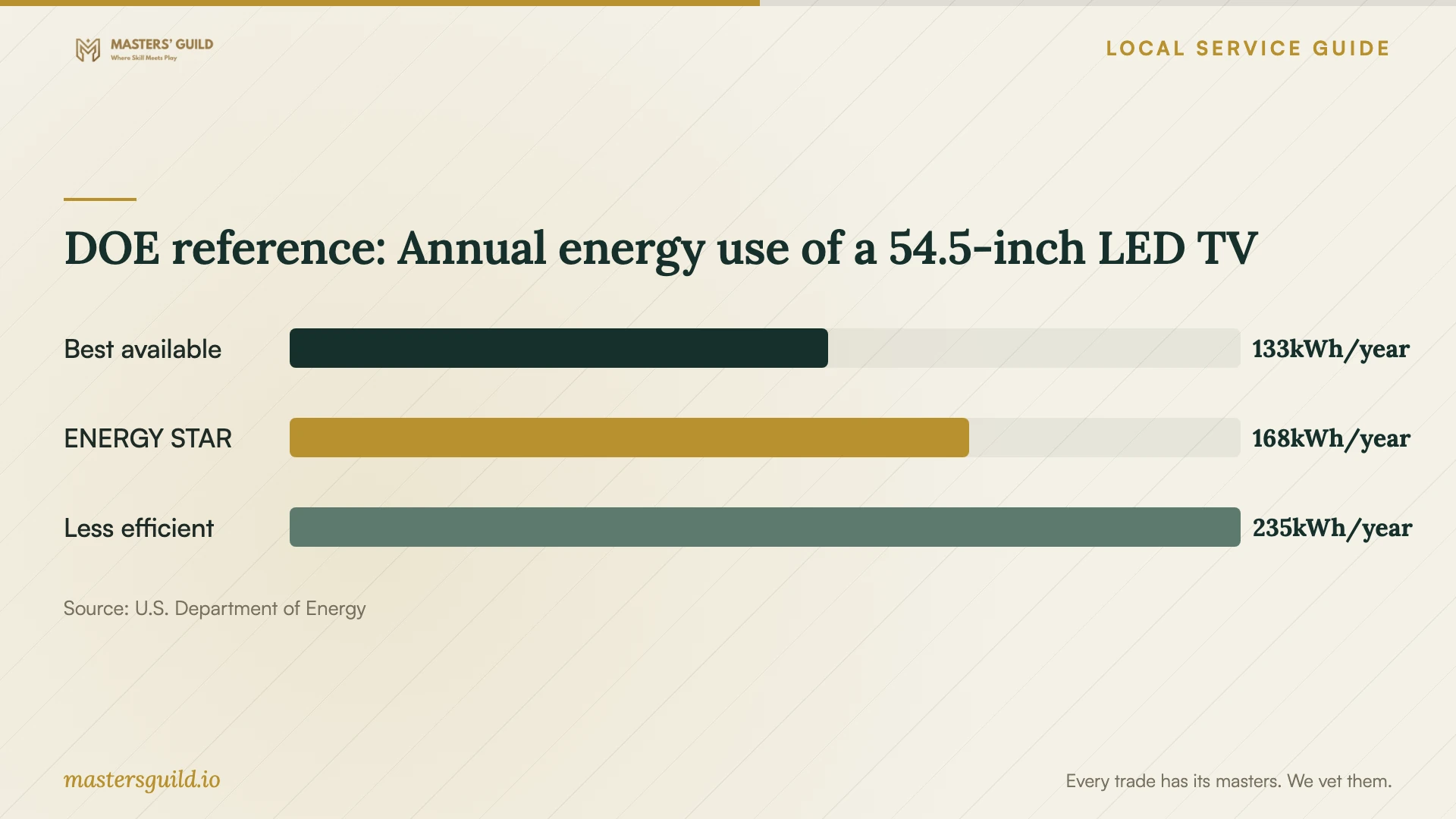
Include picture settings in the setup discussion. The Department of Energy recommends using the ENERGY STAR preset on certified TVs to maintain energy savings. Its national example compares annual energy use across three efficiency levels of a 54.5-inch LED TV. The chart provides background for choosing a TV; it does not measure savings from mounting or changing picture settings. [4]
DOE reference: Annual energy use of a 54.5-inch LED TV
Local details that affect your job
City condominium projects use commercial permitting
For condominium work requiring a City of Tampa permit, the city requires commercial permitting despite residential occupancy. Ask the provider to confirm that route before quoting electrical work. Construction Services lists 813-274-3100, option 1, for help identifying the permit type. [1]
City electrical guidance includes a final inspection
Tampa's residential electrical guidance lists the Electric or Plumbing Trade Permit application and ELE-Final inspection. Ask whether your proposed electrical scope requires this process and name the person responsible for the application and inspection arrangements. [2]
County cable exemptions do not settle wall-opening requirements
Under Hillsborough County jurisdiction, the listed low-voltage exemption applies to existing single-family residences, with a $5,000 labor-and-materials ceiling for non-owner work. The county also lists wall cutting as permit-required work and preserves other code and certification requirements despite exemptions. Describe cables and openings to Development Services at 813-272-5600 before approving concealment work. [3]
Choose the next step before booking
| Your situation | Next step | Question for the provider |
|---|---|---|
| Bracket installation using an existing outlet | Request a wall assessment and defined attachment scope. | How will you check the wall and bracket compatibility? |
| Electrical changes in a city single-family home or duplex | Confirm the scope with City of Tampa Construction Services. | If a permit applies, who handles the application and ELE-Final inspection? |
| Permitted work in a city condominium | Confirm the city's commercial permit route. | Does the quote cover the correct application and building access? |
| Concealed signal cables under county jurisdiction | Ask about low-voltage eligibility and wall-opening requirements together. | Have you described the openings, property type, installer and total cost? |
Your hiring checklist
- Send the TV model, bracket details, wall photos and outlet location.
- Mark the preferred screen position and check it from your seat.
- Agree on how the installer will assess the wall and attachment method.
- Describe the cable route, wall openings and proposed electrical changes.
- Confirm the permitting authority and request a determination for the full scope.
- Get an itemized quote and agree on approval of additional work.
- Arrange building access and owner or association permissions where needed.
- Test the installation and record unfinished repair or inspection follow-up.
Frequently Asked Questions
Does attaching a TV bracket require a permit?
Confirm requirements for your attachment, cable and electrical scope with the permitting authority handling your address. Describe any wall openings before treating the installation as exempt. Hillsborough County lists cutting away a wall or partition among repairs requiring a permit. [3]
Can I use residential permitting for my condo?
For condominium projects requiring a City of Tampa permit, the city requires commercial permitting. Tell your installer the property type before they plan the application. [1]
Does the county's under-$7,500 exemption cover an outlet addition?
Hillsborough County excludes electrical work from that nonstructural single-family exemption and requires an exemption application for eligible projects. Ask the county about the outlet scope before relying on the price threshold. [3]
What should an installation quote include?
Ask for mounting labor, bracket and hardware, cable routing, electrical work, wall repair and cleanup. Have the provider identify assumptions, possible additional charges and who will handle any required applications or inspections.
Sources and scope
This guide combines the sources below with practical planning guidance. Figures apply to the stated geography and period; request a written quote for your property.