
Local service guide
Duct cleaning in Tampa: scope, quotes and repairs
Arrange duct cleaning in Tampa by asking a provider to inspect your system and show you the contamination before you approve the work. EPA recommends cleaning as needed for substantial mold growth, pest infestation or excessive debris. Compare written estimates that identify the components included, methods suited to your duct material and separate repair charges. For concerns about cooling or energy use, request a diagnosis before choosing cleaning or leak sealing. [1]
Confirm the problem before booking
Ask the inspector to show you the affected supply ducts, return ducts or air-handler components. EPA identifies substantial visible mold on hard surfaces, vermin and excessive dust or debris as reasons to consider cleaning. Request photographs from your own system and have the provider identify where they took each image. [1]
Describe what you have noticed: particles leaving a supply register, a musty smell, water near the air handler or debris after renovation. Ask the provider to record the findings and explain the proposed remedy. Keep cleaning, moisture repairs and replacement work as separate approval items.
EPA reports no demonstrated prevention of health problems from duct cleaning and finds little evidence that cleaning ducts alone improves system efficiency. Ask the provider to connect the proposed work to the condition they found in your home. [1]
Compare the same scope in each quote
EPA advises obtaining written estimates from at least three providers. Ask each company to identify the supply and return ducts, registers, grilles, coils, drain pans, fan and air-handler housing included in its work. EPA warns that leaving a contaminated component untreated can contaminate the system again. [1]
Have the provider identify sheet metal, flexible duct and fiberglass-lined sections before choosing tools. EPA calls for soft-bristled brushes on fiberglass duct board and fiberglass-lined metal ducts. It recommends outdoor vacuum exhaust or HEPA equipment when the crew exhausts inside the home, plus sealing and reinsulating access holes. [1]
Request a total price, exclusions, an expected work window and written approval before additions. Ask where the crew will place equipment, whether it needs attic access and which furniture you should move. Request proof of insurance and references for work on the same duct material.
Investigate moisture before approving treatment
For recurring growth or odors, ask the HVAC provider to inspect evaporator coils, liner surfaces, the drain pan and drain line. Florida Department of Health recommends these checks and advises keeping indoor humidity below 60%. If you need a dehumidifier to reach that level despite central air conditioning, the department recommends examining the air-conditioning system for problems. [4]
Ask for photographs of wet insulation and a plan to correct the water source. EPA recommends removing and replacing wet or moldy insulated ducts. It warns that mold growth will recur if you leave the conditions causing it uncorrected. [1]
Before approving a chemical treatment, ask the provider to identify your duct material, show the product label and explain the proposed use. EPA says no chemical biocides are registered for internally insulated duct systems and advises against routine coatings that encapsulate contaminants. Florida Department of Health advises against ozone generators for indoor mold problems. [1] [4]
Prepare for the visit and check the result
Clear access to registers and the air handler, secure pets and agree on protection for floors and furniture. Ask about any period without cooling and arrange the appointment around your household's needs. Keep the approved estimate available to check proposed additions.
Before paying, ask the crew to show the cleaned components and photographs of inaccessible areas. EPA recommends a visual inspection that checks clean duct surfaces, intact fiberglass, reattached registers and sealed access openings. Have the provider demonstrate system operation and identify any defects that still need repair. [1]
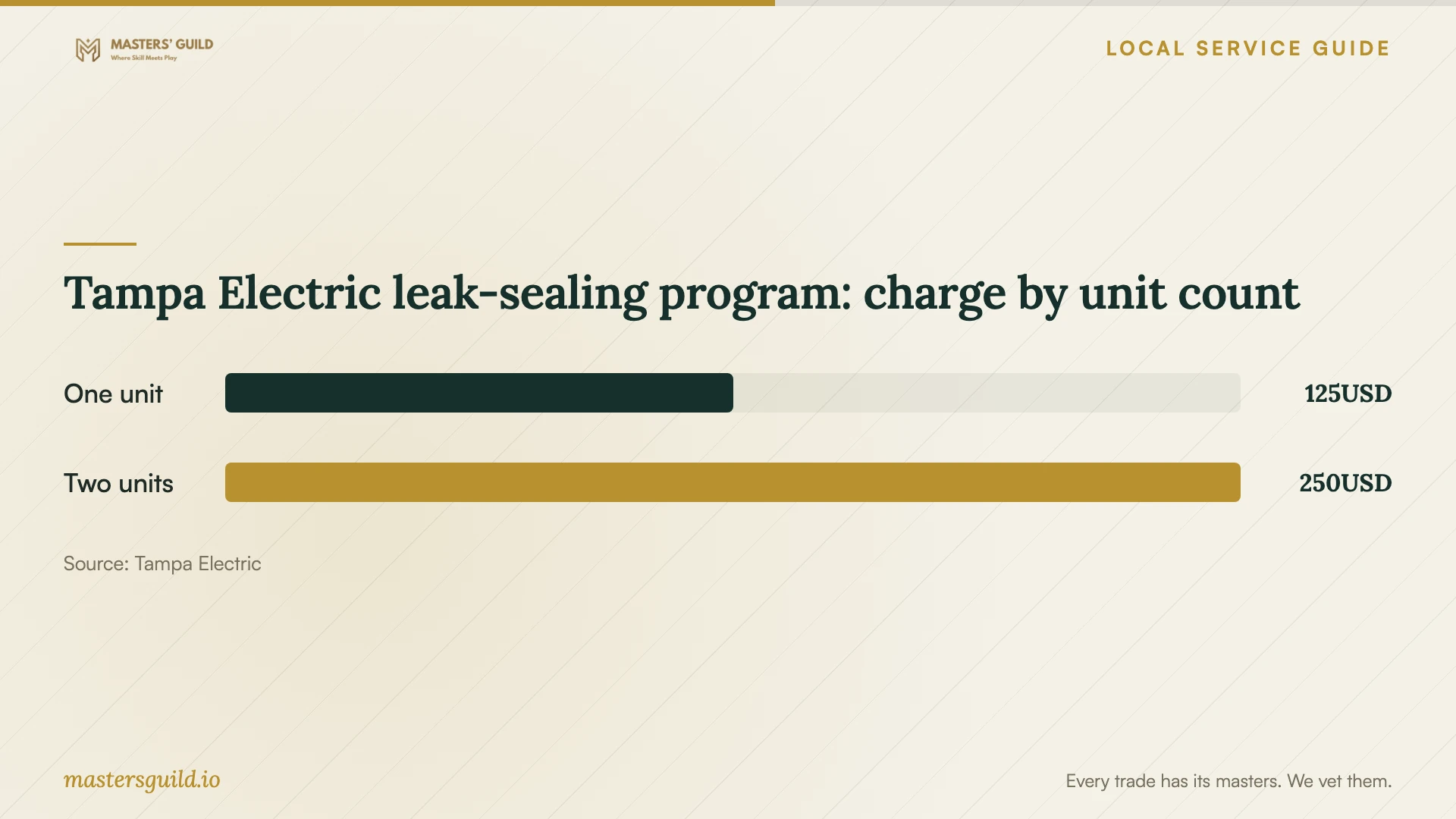
Tampa Electric leak-sealing program: charge by unit count
Local details that affect your job
Arrange Tampa Electric's inspection before leak sealing
For a home served by Tampa Electric, ask about its residential Ductwork program before hiring someone to seal leaks. An energy analyst must perform a pre-approval inspection to assess accessibility and repair needs. If approved, the analyst provides contact information for the approved contractor serving your area. The utility lists $125 per heating and cooling unit, with additional fees for extensive repairs. Call 813-275-3909 weekdays from 8 a.m. to 5 p.m. to schedule the inspection and confirm participation for your home. Budget this charge under leak sealing and request a separate quote for cleaning. [2]
Check added mechanical work with Tampa Construction Services
For property within Tampa city limits, call Construction Services at 813-274-3100 if the proposed visit expands into duct replacement or other mechanical changes. Describe the exact work and ask which permit and contractor category apply. The city's FAQ limits contractors to their license scope and distinguishes minor repairs from mechanical alterations. It requires final inspection approval for permitted construction. Ask officials to determine the requirements for your repair before accepting a permit charge or exemption from the cleaner. [3]
Use Florida's moisture guidance for recurring growth
Florida Department of Health recommends checking around air handlers for standing water and inspecting coils, liners, drain pans and drain lines. Include those checks when requesting an inspection for growth that returns after cleaning. The department advises against routine mold sampling to establish whether a home has a mold problem. Ask what decision a proposed test would change before authorizing it. [4]
Choose the next step for your duct concern
| What you notice | Next step | What to ask |
|---|---|---|
| Dust on return grilles | Clean accessible grilles and inspect before booking whole-system cleaning. | Can you show contamination beyond the grille? |
| Excessive debris or particles from supply registers | Request a system inspection and a written cleaning scope. | Which components contain debris, and what caused it? |
| Wet or moldy duct insulation | Arrange moisture correction and assessment for replacement. | Which material needs replacement, and how will you correct the water source? |
| Suspected duct leakage | Ask Tampa Electric about its pre-approval inspection if it serves your home. | Does my system qualify, and will extensive repairs cost extra? |
| Proposed mechanical alterations | Ask Tampa Construction Services about the exact scope within city limits. | Which permit and contractor category apply? |
Your hiring checklist
- Describe your concern and request photographs from your own system.
- Ask the provider to identify duct materials and wet or damaged sections.
- Compare written estimates with the same component list and exclusions.
- Separate cleaning, leak sealing, replacement and chemical treatments in the estimate.
- Agree on access, furniture protection, pet arrangements and any period without cooling.
- Ask the relevant building department about added mechanical work before approving it.
- Review completion photographs and ask the crew to demonstrate system operation.
Frequently Asked Questions
How much should I budget for duct cleaning?
Request written quotes for your home's system and compare the included components and exclusions. Tampa Electric publishes a $125-per-unit charge for its approved leak-sealing program, with additional fees for extensive repairs. Obtain a separate cleaning estimate based on the inspection and agreed scope. [1] [2]
Do I need annual duct cleaning?
EPA recommends duct cleaning as needed. Substantial contamination, pests or excessive debris warrant consideration. For dusty return grilles, clean the accessible surfaces and ask a provider to inspect for contamination before approving whole-system work. [1]
Should I pay for mold testing before cleaning?
Florida Department of Health advises against routine sampling to determine whether a home has a mold problem. EPA notes that an expert may need laboratory analysis to distinguish a mold-like substance. Ask which uncertainty the test would resolve and how the result would change the repair plan. [1] [4]
Does cleaning also fix leaking ducts?
Request leak assessment and sealing as a separate scope. EPA distinguishes sealing air leaks from coatings applied inside ducts. Tampa Electric requires a pre-approval inspection before its approved contractor performs program sealing work. [1] [2]
Sources and scope
This guide combines the sources below with practical planning guidance. Figures apply to the stated geography and period; request a written quote for your property.