
Local service guide
Mold Removal in Syracuse, NY: Hiring and Planning
For Mold Removal in Syracuse, arrange an independent mold assessment before choosing a contractor for covered professional remediation. New York requires mold licenses, an independent assessment that defines the work, and a post-remediation assessment. Ask contractors to quote that scope, and identify who will repair the moisture source and handle reconstruction before you agree to a start date. [1] [2]
Decide whether you need professional cleanup
Start with the affected area, the water history, and the materials involved. EPA says you can handle mold covering less than about 10 square feet in most cases. For a small hard-surface patch, its guidance calls for detergent and water followed by complete drying. Moldy porous materials, including carpet and ceiling tiles, may need disposal. [2]
Use a different approach if sewage or other contaminated water caused the damage: EPA recommends a professional experienced in cleaning and repairing those buildings. If you know or suspect that mold has contaminated the HVAC system, EPA says not to run it because it could spread mold. Consult a health professional before cleanup if you have health concerns. [2]
Arrange the assessment and check licenses
For covered professional work, New York requires an independent mold assessment to define the remediation scope. The state prohibits the same individual from assessing and remediating the same property and requires a post-remediation assessment. Arrange these roles before accepting a cleanup proposal, and ask each provider to explain their role in writing. [1]
New York requires valid licenses for the type of covered mold work a person performs or advertises, with limited exceptions such as owners working on their own properties. The Department of Labor provides an official contractor search. Check the provider’s exact name and relevant license, then ask for insurance information and references for similar cleanup work. [1] [2]
Compare the complete scope and price
Give each bidder the same assessment scope. Ask for separate amounts for assessment, remediation, water-source repairs, disposal, post-remediation assessment, and reconstruction where applicable. Request a written list of exclusions. Clarify who will approve extra work if the crew discovers additional affected materials after opening a wall or ceiling.
Ask which materials the contractor plans to clean and which they propose to remove. EPA warns that mold can occupy spaces within porous materials and may resist complete removal. It also advises against painting or caulking moldy surfaces before cleanup and drying. Ask the contractor to explain any proposed coating and the preparation that comes before it. [2]
Request a property-specific schedule with separate milestones for cleanup, assessment, and repairs. Ask whether you can use nearby rooms, how the crew will manage access, and who will move belongings. Compare those arrangements alongside the price so you can plan around the work.
Prepare a useful water history
Photograph visible damage and record when you first noticed it. Describe plumbing failures, roof leaks, or water entry after rain as observations rather than diagnoses. Give the assessor access to the affected rooms and explain any previous cleanup or repairs. Ask what they need to inspect before you move or discard belongings.
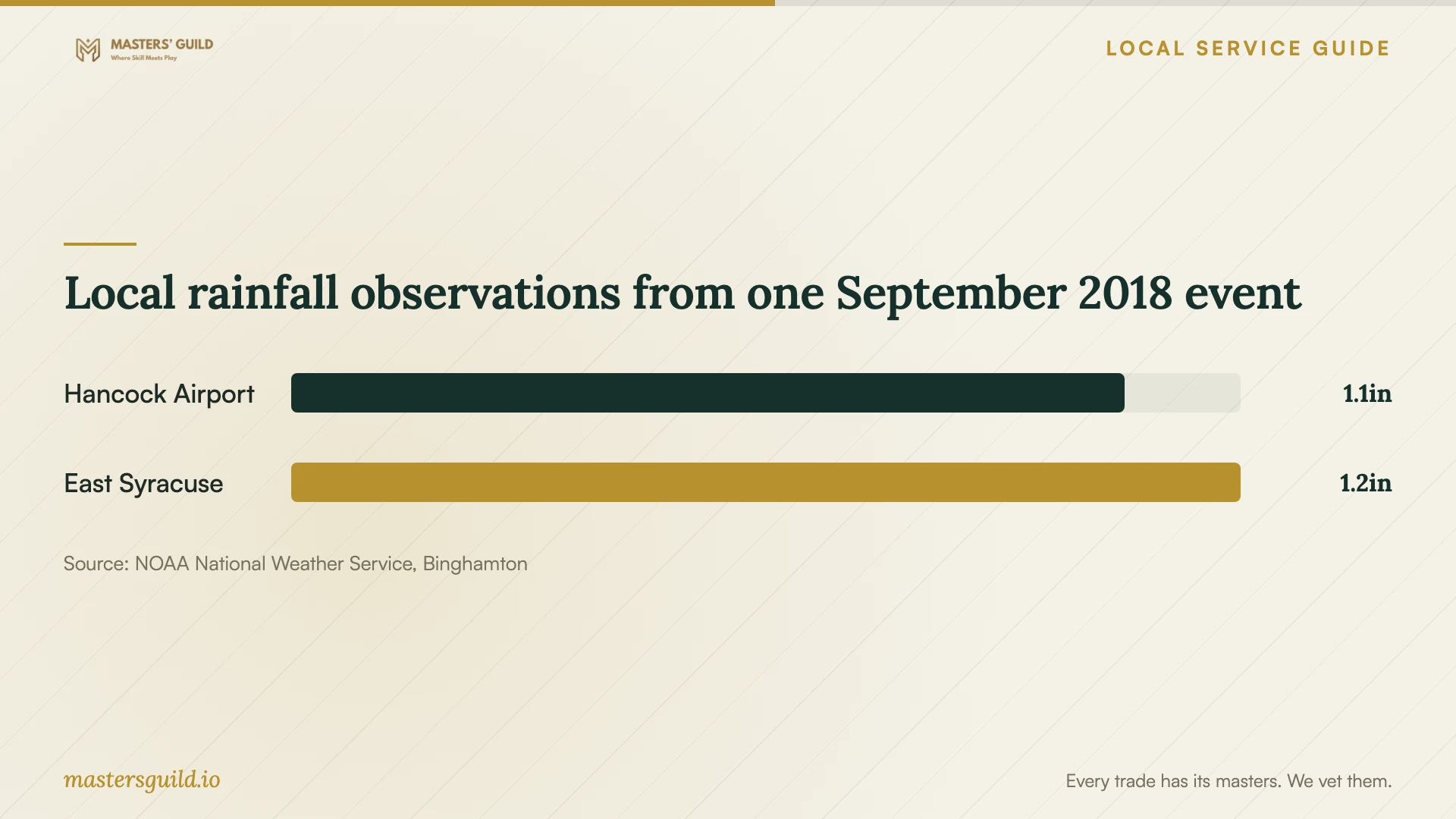
The historical rainfall chart compares two observations from one local rain event. Use it as a reminder to record conditions at your address rather than assuming a nearby station describes your home. Tell the assessor whether water appeared during rain and where you saw it; the weather figures do not establish the cause of your mold problem. [3]
Coordinate repairs and closeout
EPA advises repairing plumbing leaks and other water problems and drying items completely. For recurring bathroom mold, it recommends improving ventilation and cleaning more frequently. Ask who will address the identified water or ventilation problem and whether that work belongs in the remediation contract or a separate repair agreement. [2]
New York includes a post-remediation assessment among its minimum work standards. Confirm who will arrange it and what documents you will receive. Keep the initial assessment, agreed scope, change approvals, repair records, and final assessment together. Ask the assessor and repair contractor to coordinate the next steps before you authorize reconstruction. [1]
Local rainfall observations from one September 2018 event
Local details that affect your job
State rules change whom you hire
Syracuse homeowners arranging covered professional mold work must account for New York’s independent assessment requirement and its prohibition on the same individual assessing and remediating a property. Start with the assessment role, then request remediation bids against that scope. A home inspector who includes a mold assessment in a potential real estate transaction also needs a mold assessor license. [1]
Onondaga County enforcement contact
The Department of Labor assigns Onondaga County to its Syracuse district at 450 S. Salina Street, Room 204, Syracuse, NY 13202. The office number is 315-479-3215. For a mold licensing or work-standard complaint, use the department’s Mold Complaint Form; it states that an inspector from the district serving your county will investigate. Keep your contract, license details, photographs, and correspondence available. [1]
Choose your next step
| Situation | Next step |
|---|---|
| Hard-surface patch smaller than about 10 square feet | EPA says DIY cleanup is possible in most cases; repair the water problem and dry the surface. |
| Extensive water damage or mold exceeding 10 square feet | Consult EPA’s broader remediation guidance and discuss the scope with an assessor. |
| Sewage or other contaminated-water damage | Hire a professional experienced in contaminated-water cleanup and repairs. |
| Known or suspected HVAC mold contamination | Do not run the system; consult EPA’s duct guidance before further action. |
| Covered professional remediation in New York | Arrange an independent assessment, licensed remediation, and a post-remediation assessment. |
Your hiring checklist
- Photograph affected areas and write down when you noticed water or mold.
- Describe any sewage exposure or suspected HVAC contamination before arranging a visit.
- Check the appropriate state mold licenses using each provider’s exact name.
- Confirm independent assessment and remediation roles in writing.
- Compare bids against the same scope and request separate repair and reconstruction amounts.
- Agree on access, belongings, room use, and approval of additional work.
- Arrange the post-remediation assessment and keep the closeout documents.
Frequently Asked Questions
Can one individual assess the mold and perform the cleanup?
New York prohibits the same individual from assessing and remediating the same property. Its program requires an independent assessment to define the remediation scope. Ask providers to identify the assessor and remediation personnel before signing. [1]
Does a training certificate replace a state license?
New York requires appropriate training before licensing and a valid license for covered work. Check the required license through the Department of Labor’s official search rather than relying on a training certificate alone. [1]
Can I keep moldy carpet or paint over the affected wall?
EPA says moldy porous materials such as carpet may need disposal because complete removal can be difficult or impossible. It advises cleaning and drying moldy surfaces before painting or caulking. Ask your contractor to explain the proposed treatment for each material. [2]
How should I compare quotes without a standard local price?
Ask bidders to price the same assessed scope and list exclusions. Separate cleanup from assessment, water repairs, and reconstruction. Request written approval terms for additional work and a schedule for each stage.
Sources and scope
This guide combines the sources below with practical planning guidance. Figures apply to the stated geography and period; request a written quote for your property.