
Local service guide
Syracuse lawn mowing: hiring and clipping removal
For lawn mowing in Syracuse, request a written quote covering the areas to cut, trimming, cutting height, cleanup, sales tax and clipping handling. Choose visits around grass growth: Cornell recommends removing no more than one-third of the blade height. Decide whether you want clippings left on the lawn or hauled away before comparing offers. OCRRA recommends leaving clippings and accepts them at its Amboy and Jamesville compost sites. [2] [3] [4]
Give each provider the same mowing scope
Send photos of the front, back and side lawns, then identify the boundaries you want cut. Include gate openings, slopes, planting beds and areas where you want smaller equipment. Ask whether the offer includes trimming around obstacles, edging, and clearing clippings from the driveway and walks. Keep leaf collection and neglected-grass cleanup separate unless you want them included.
Request proof of insurance and a written explanation of how the provider handles property damage. Agree on access instructions, pets, parking and a contact method for schedule changes. For an overgrown lawn, obtain an initial cleanup quote and a separate recurring price. Require your approval before the provider adds work or charges.
Set the cutting plan before choosing visit frequency
Cornell recommends mowing high and removing no more than one-third of the grass blade at a cut. Its reference table pairs a 3-inch finished height with mowing when grass reaches 4.5 inches. Use that example to discuss how the provider will adjust visits as growth changes. Cornell offers lawn-care guidance rather than observations of growth on your property. [4]
Have the provider write down the agreed finished height and explain how they will handle grass that exceeds the trigger between visits. Agree on rescheduling for unsuitable mowing conditions and approval for extra visits. Cornell also recommends sharp mower blades and sweeping clippings from hard surfaces back into the lawn. [4]
For a seasonal agreement, decide how you will choose the last cut and whether unused visits receive a credit. Keep fall leaf work explicit. Cornell recommends mowing fallen leaves into the lawn; discuss whether your provider offers that approach and how they would handle the leaves on your property. [4]
Choose clipping handling and a disposal destination
Start with an offer that leaves clippings on the lawn. Both Cornell and OCRRA recommend this practice. OCRRA also describes composting clippings with leaves, wood chips or garden materials and delivering clippings to Amboy or Jamesville. If you prefer bagging, include collection, transport and disposal in the written scope. [3] [4]
OCRRA accepts grass and leaves at its compost sites but prohibits plastic items, including bags, as well as pet waste, rocks and soil. For a combined mowing and yard cleanup, tell the provider about mixed debris before they quote. Decide who will separate prohibited materials and where each type will go. [1]
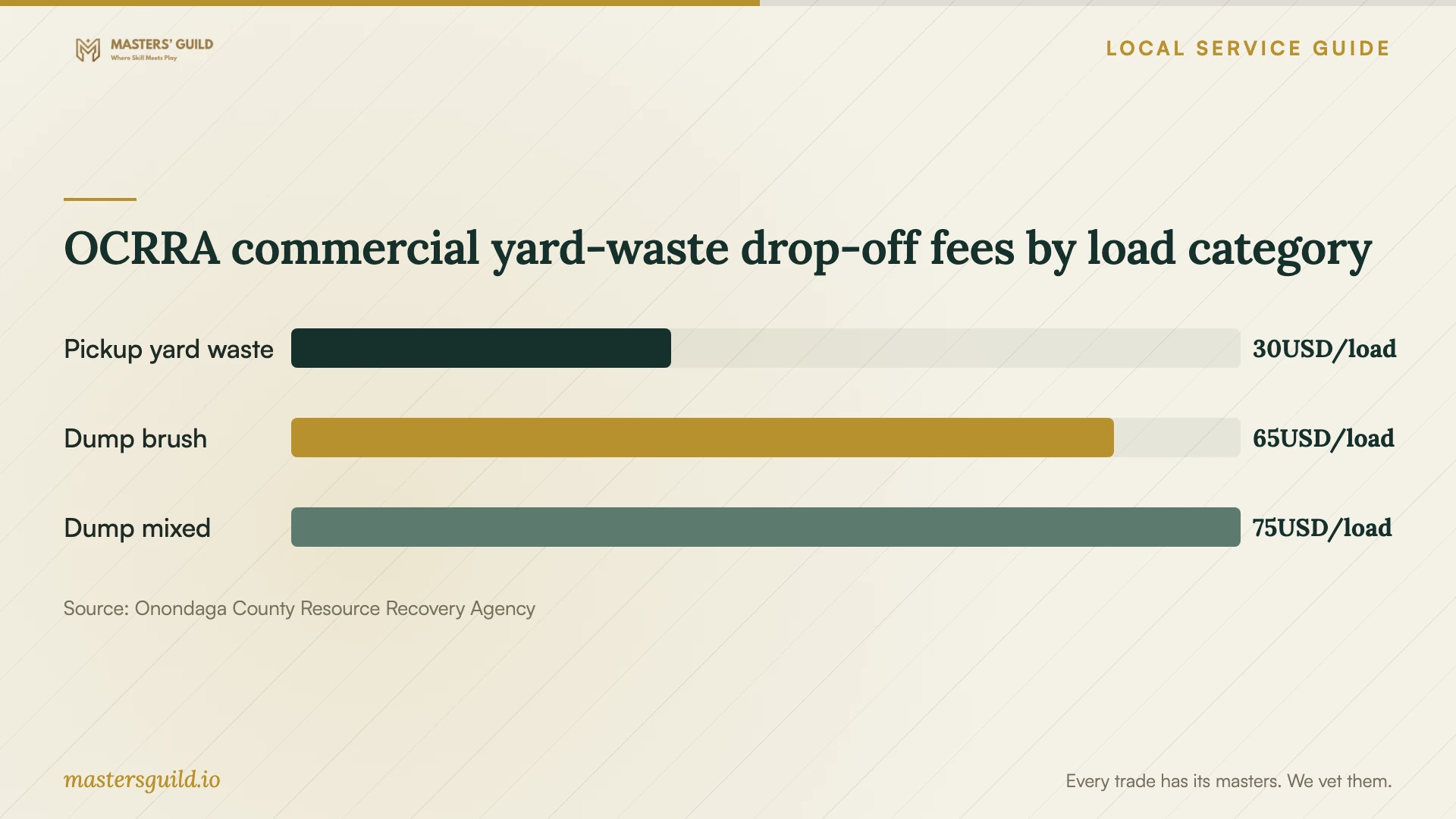
OCRRA's commercial drop-off fees identify a disposal component you can discuss with a hauler. They do not establish a mowing price or the charge for removing clippings from one lawn. Obtain the provider's complete removal price and confirm the destination's current access before authorizing hauling. [1]
Compare the complete bill and contract terms
New York's landscaping tax bulletin identifies lawn mowing as taxable repair and maintenance. For taxable work, the state instructs landscapers to charge tax on labor and materials, including expenses and markups, unless the customer supplies appropriate exemption documentation. Request the subtotal, applicable tax and total from each provider. [2]
The state requires landscapers performing taxable maintenance services to register for sales tax and hold a valid Certificate of Authority. Treat that certificate as a sales-tax requirement when discussing the invoice. If a provider proposes charging no tax, ask them to explain the exemption and required documentation. [2]
Record the visit price, included tasks, clipping choice, extra-work approval process and cancellation terms. Confirm whether you pay per completed visit or commit to a fixed seasonal amount. Before signing, resolve billing for missed visits, initial cleanup and changes to your scope. Keep a copy of the agreed terms.
OCRRA commercial yard-waste drop-off fees by load category
Local details that affect your job
Residential disposal access differs from contractor hauling
OCRRA requires residents dropping off yard or food waste to have a compost site pass. Its listed $25 pass includes unlimited yard and food waste drop-off plus two bags of Premium Compost; residents unload their own materials. OCRRA charges commercial rates for all dual-axle trailer drop-offs. Before hauling clippings yourself, confirm your vehicle and access arrangement rather than assuming the residential pass covers the trip. [1]
Amboy access requires a different entrance during the closure
OCRRA lists Amboy at 6296 Airport Road in Camillus. As of October 11, 2026, its active notice says the DPW has closed Airport Road for construction until October 13 and visitors must enter on Warners Road, even though that entrance appears blocked off. Tell your hauler about the required entrance before a trip during this period. For trips after the stated October 13 closure period, confirm access with OCRRA before choosing a route. [1]
Match the disposal site to the cleanup date and payment method
OCRRA lists Amboy hours as Monday through Saturday, 7:30 a.m. to 3:30 p.m. Jamesville, at 4370 Route 91, lists those hours during April through October. Amboy accepts cash, checks or credit cards; Jamesville accepts cash or checks. Before booking late-fall hauling, confirm current hours, holiday closures and the provider's destination. Do not assume Jamesville's listed seasonal schedule covers a November visit. [1]
Choose the service arrangement for your lawn
| Your situation | Arrangement to discuss | Detail to confirm |
|---|---|---|
| You want routine cutting with clipping return | Leave clippings on the lawn, as Cornell and OCRRA recommend | Finished height, trimming and hard-surface cleanup |
| You want clippings removed | Bagging and hauling to an agreed destination; OCRRA accepts grass | Collection, transport, disposal charges and current site access |
| You plan to haul clippings yourself | OCRRA residential site-pass access | Self-unloading and commercial rates for dual-axle trailers |
| You plan an Amboy trip during the stated road closure | Use Warners Road under OCRRA's October 11 notice of an Airport Road closure until October 13 | Confirm access for trips after the stated closure period |
| You are comparing recurring offers | A written total including applicable sales tax on mowing | Per-visit or seasonal billing and approval for extras |
Your hiring checklist
- Send lawn photos and mark the areas you want cut.
- Measure gate openings and flag obstacles or fragile planting areas.
- Agree on cutting height and how the provider adjusts visits to growth.
- Choose clipping return, home composting or paid hauling.
- Request a written scope covering trimming, edging and hard-surface cleanup.
- Compare totals including tax and obtain separate prices for optional work.
- Check insurance, damage handling, access instructions and cancellation terms.
- Confirm disposal hours, payment and access, including the Warners Road entrance during Amboy's stated closure period.
Frequently Asked Questions
Should I choose weekly or biweekly mowing?
Base visits on your agreed cutting height and grass growth. Cornell recommends removing only one-third of the blade height; its reference table pairs a 3-inch finished height with a 4.5-inch mowing trigger. Discuss how either schedule will meet that rule and who approves extra visits. [4]
Do I need to pay for clipping removal?
You can request clipping return, which Cornell and OCRRA recommend. If you want removal, obtain a separate price and agree on a disposal destination. OCRRA accepts clippings at Amboy and Jamesville, subject to its access and fee rules. [1] [3] [4]
Does New York charge sales tax on lawn mowing?
New York identifies lawn mowing as taxable maintenance. Its guidance requires tax on labor and materials, including expenses and markups, unless the customer supplies appropriate exemption documentation. Request the applicable tax and final total on the written quote. [2]
Are OCRRA's disposal fees the price of mowing?
OCRRA publishes facility drop-off charges. Its commercial pickup-truck yard-waste fee is $30 per load. Ask your provider to explain charges for cutting, collection and transport; the facility fee alone does not establish your service price. [1]
Sources and scope
This guide combines the sources below with practical planning guidance. Figures apply to the stated geography and period; request a written quote for your property.