
Local service guide
TV Mounting in St. Petersburg, FL: Plan Your Install
Arrange TV Mounting in St. Petersburg, FL with a written quote that separates bracket installation, cable routing and any outlet changes. Send the installer your TV model, wall photos and preferred screen position. For new electrical work, confirm the requirements with the city and check the responsible contractor through Pinellas County. The city's small-project exemption excludes electrical work, so the installation price alone cannot establish eligibility. [1] [2] [3]
Prepare a brief that installers can quote
Give each installer the same information: TV model, bracket model if you own one, photos of the wall and outlet, and your preferred screen position. Include a view of the whole wall and a close view of the connection area. Tell the installer whether you want them to supply the bracket, connect other devices or remove an existing mount.
Request separate prices for mounting labor, hardware, cable treatment, electrical work and wall repairs. Pinellas County recommends written estimates covering the work, materials, completion date and total cost. Ask the installer to identify any price that depends on inspecting the wall before you accept the offer. [2]
Have the installer review the TV and bracket instructions and explain the attachment method for your wall. For a moving bracket, request a demonstration of the planned movement and connection access. Agree on how you will approve additional work if the installer discovers a condition they could not assess from photos.
Choose the viewing position and cable finish
Mark the proposed screen outline with removable tape and view it from your usual seat. Check door clearance, furniture placement and access to connections. Confirm the final position with the installer before drilling. For a fireplace wall, include the fireplace in your photos and request a review of the equipment instructions before committing to that location.
Describe the cable finish you want: gathered visible cables, a surface cover or a concealed route. Have the installer identify which cables they propose to conceal and explain the power arrangement. Request an annotated photo when the proposal includes an outlet addition or relocation, so you can discuss the same scope with the contractor and city.
For a covered patio, provide photos of the roof edge, open sides and outlet. Describe where you have seen rain reach. Ask the installer to check the proposed location against the manufacturer's instructions for each component and identify who will handle electrical changes. Decide on the equipment and location before approving the mounting work.
Confirm city requirements for the exact work
St. Petersburg established a permit-exemption form effective July 1, 2026 for qualifying work on single-family dwellings totaling less than $7,500. The city excludes properties in flood hazard areas and work involving structural components, mechanical, electrical, plumbing or gas systems. It also distinguishes this process from its existing exempted-permit list. [1]
Before approving an outlet change, contact the Building Department with your address and proposed scope. Do not assume that a bracket-only installation and an installation with new power receive the same treatment. The supplied city guidance does not settle the permit status of each bracket installation. The city instructs homeowners to obtain required permits before work begins. [1]
Identify the contractor responsible for power
For regulated work, obtain the responsible contractor's name and license number and check eligibility through the Pinellas County Contractor Licensing Department. The county says state-certified contractors must register to work in Pinellas County. Its contractor-selection guidance also says a business tax receipt does not replace a contractor license. [2] [3]
Have the TV installer name the contractor who will perform the electrical portion and describe the division of work in writing. Request evidence of insurance and clarify who takes responsibility for wall openings, repairs and any required inspections. Use the county's selection guide and licensing department for their respective guidance and verification functions. [2] [3]
Check the finished installation and records
Include patching, paint touch-ups, packaging removal and device setup in the scope if you want those tasks completed. Pinellas County recommends contracts that specify materials, beginning and completion dates, cleanup and warranty terms. Record any exclusions so you can arrange the remaining work. [2]
Before the installer leaves, test the devices included in your agreement and have them demonstrate bracket movement and connection access. Keep the invoice and equipment instructions. Photograph the finished work and write down any follow-up commitments.
For permitted work, obtain the permit number and check the city's record. The online permit application allows you to view permit history and inspection results without creating an account. Discuss outstanding inspections with the responsible contractor before treating that portion of the job as complete. [4]
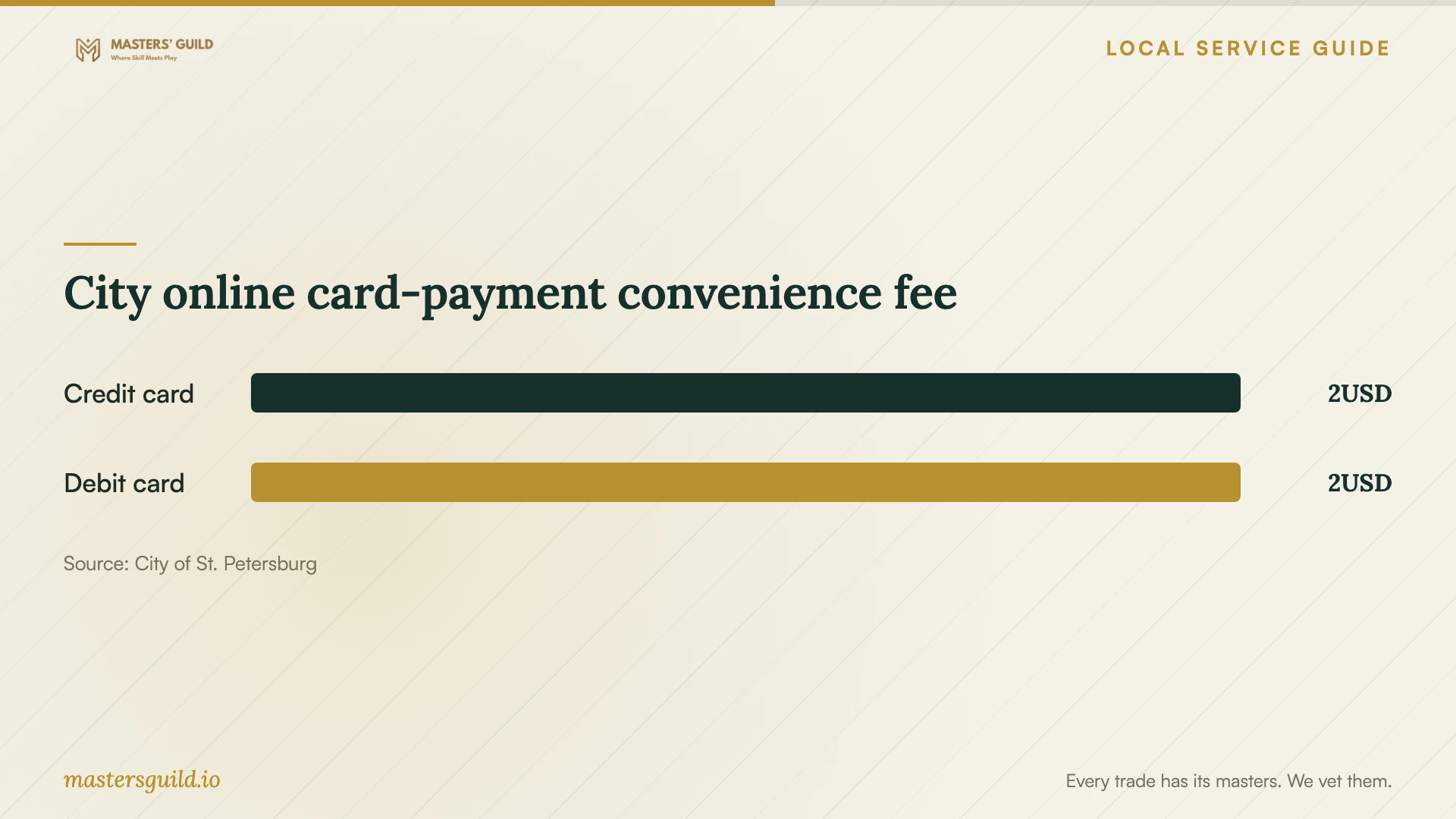
City online card-payment convenience fee
Local details that affect your job
Check exemption eligibility before approving outlet work
The city's July 2026 single-family exemption excludes electrical work and properties in flood hazard areas, even when the total falls below $7,500. Give the city your address and precise scope rather than relying on the quote amount. Work on the existing exempted-permit list does not require the new exemption form. [1]
Verify county eligibility for regulated work
Pinellas County directs homeowners to its contractor search to check eligibility and requires state-certified contractors to register to work in the county. Obtain the electrical contractor's own details. For licensing questions, contact PCCLB at (727) 582-3100. [3]
Review inspection results without opening an account
St. Petersburg provides permit-history and inspection-result access through its online application without requiring an account. Request the permit number from the contractor and use the public record to check their closeout report. [4]
Match your installation to the next step
| Your plan | Clarify before booking | Next step |
|---|---|---|
| Use an existing outlet | Attachment method and cable appearance | Approve the placement and written mounting scope. |
| Add or move an outlet | Responsible contractor and city requirements | Check contractor eligibility and confirm requirements; the small-project exemption excludes electrical work. |
| Work at a flood-hazard property | Address and proposed scope | Contact the city; its new single-family small-project exemption excludes these properties. |
| Install on a covered patio | Equipment instructions and observed rain exposure | Provide location photos and request a review before approving equipment. |
| Close out permitted work | Permit number and inspection status | View city permit history and inspection results without creating an account. |
Your hiring checklist
- Send TV and bracket models, wall photos and the existing outlet location.
- Mark the proposed screen position and check it from your usual seat.
- Request an explanation of the attachment method and equipment compatibility.
- Separate mounting, cable routing, outlet changes and wall repairs in the quote.
- Identify who will confirm city requirements and perform any electrical work.
- Agree on cleanup, warranty terms and approval of additional work.
- Test the agreed setup and retain instructions, invoices and any permit number.
Frequently Asked Questions
Does a low-cost mounting job qualify for the city exemption?
Price alone does not establish eligibility. The city limits its new exemption to qualifying single-family work under $7,500 and excludes electrical work, flood-hazard properties and other specified work. Confirm your exact scope with the city. [1]
How do I check the contractor adding an outlet?
Obtain the contractor's name and license number and use the county's licensing resources to check eligibility. Pinellas County requires state-certified contractors to register locally. A business tax receipt does not substitute for a contractor license. [2] [3]
What should the quote include?
Request mounting labor, hardware, cable treatment, electrical work and repairs as separate items. The county recommends written estimates stating the work, materials, completion date and total cost. Agree on cleanup and warranty terms before booking. [2]
Can I check inspection results myself?
Obtain the permit number from the contractor. The city's online application allows access to permit history and inspection results without an account. Contact the contractor about any outstanding inspection. [4]
Sources and scope
This guide combines the sources below with practical planning guidance. Figures apply to the stated geography and period; request a written quote for your property.