
Local service guide
Roof Cleaning and Repair in St. Petersburg, FL
Arrange Roof Cleaning and Repair in St. Petersburg by requesting separate cleaning and repair scopes, checking the repair bidder through Pinellas County’s contractor-list route, and agreeing on wash-water handling before booking. Describe any leak or damaged material first, and ask for a repair assessment before approving cosmetic work. Put the cleaning method, access arrangements, cleanup, and additional-work approval process in writing. [1]
Define the work before comparing prices
Give each bidder the same description of your concern: staining, loose material, a leak, storm damage, or a combination. Share photographs taken from the ground and previous repair records. Ask the bidder to identify which areas need assessment before cleaning. Keep roof access and chemical application with the hired crew.
Ask the cleaner to name the method and products proposed for your roof material. Request the manufacturer’s care instructions and an explanation of how the crew will follow them. Include plant protection, downspout handling, access, and cleanup in the proposal. Ask who will stop work and contact you if the crew finds damage.
For repairs, request photographs of the problem and a description of the components the contractor proposes to repair or replace. Separate temporary protection from permanent work. Obtain property-specific written prices and agree on how you will approve additional work before the contractor opens the roof.
Check the repair contractor and permit responsibility
Pinellas County states that most construction trades require a license and directs residents to its Construction Licensing Board’s list of contractors licensed to work in the county. Follow that official route for a repair bidder. Match the proposal’s contractor name to the record and ask the licensing department to clarify any uncertainty about the proposed scope. [1]
Request insurance documentation and identify who will perform the work, including subcontractors. Ask each bidder to itemize preparation, materials, access, cleanup, and permit-related charges. Record exclusions and the process for changing the agreed price so you can compare the proposals on the same basis.
County storm-recovery guidance tells owners to obtain required permits before repair or construction. Confirm your exact repair scope with St. Petersburg’s permitting staff before starting; do not assume a small repair qualifies for an exemption. Assign responsibility for applications, inspections, and completion paperwork in the contract. [4]
Plan wash-water handling before cleaning
Pinellas County explains that stormwater carries pollutants through the drainage system into area water bodies. Its guidance identifies chemicals and yard debris among pollutants prohibited from entering surface waters, drainage systems, or roads leading to storm drains. Use this regional guidance to question the cleaner’s runoff plan, and confirm the applicable rules for your St. Petersburg address. [2]
Walk the property with the bidder. Point out downspouts, street drains, planted areas, and shared access. Ask where wash water will travel, how the crew will contain contaminated water and debris, and where it will dispose of collected material. Request those arrangements in writing before accepting a cleaning offer.
Agree on weather postponement terms and who will contact you if the crew reschedules. Ask the provider to assess conditions before starting and explain how it will secure equipment and leave the property if it stops work. Keep access instructions and any restrictions on using your driveway in the booking notes.
Separate storm recovery from routine maintenance
Pinellas County advises owners to contact their insurance agent before starting storm-recovery work and to photograph or video damage before moving debris or removing damaged belongings. It also advises hiring a licensed contractor and warns against signing an Assignment of Benefits contract as a condition of repair. Keep photographs, proposals, and insurance communications together. [4]
For extensive damage, ask the city whether a substantial-damage review affects your project. County guidance describes substantial damage when repair costs equal or exceed 50% of the structure’s market value before the damage, with flood-compliance consequences. Ask the responsible officials to assess applicability before you commit to a larger recovery contract. [4]
Screen disruptive repairs for asbestos requirements
Pinellas County identifies roofing removal or repair as an activity that can disturb asbestos-containing materials. Before disruptive work, tell the contractor whether the property is non-residential, a residential building with more than four dwelling units, or part of a group of buildings at the same site under the same owner or operator’s control. Ask the county asbestos program to confirm whether the project involves a NESHAP-applicable facility. [3]
For a NESHAP-applicable facility, county procedures require a written survey by a Florida-licensed asbestos consultant before disturbing existing building materials. The county states that this testing requirement has no threshold amount or construction cut-off date. Treat the property questions as screening questions; ask the program to establish applicability and the contractor to identify who will arrange any required survey. [3]
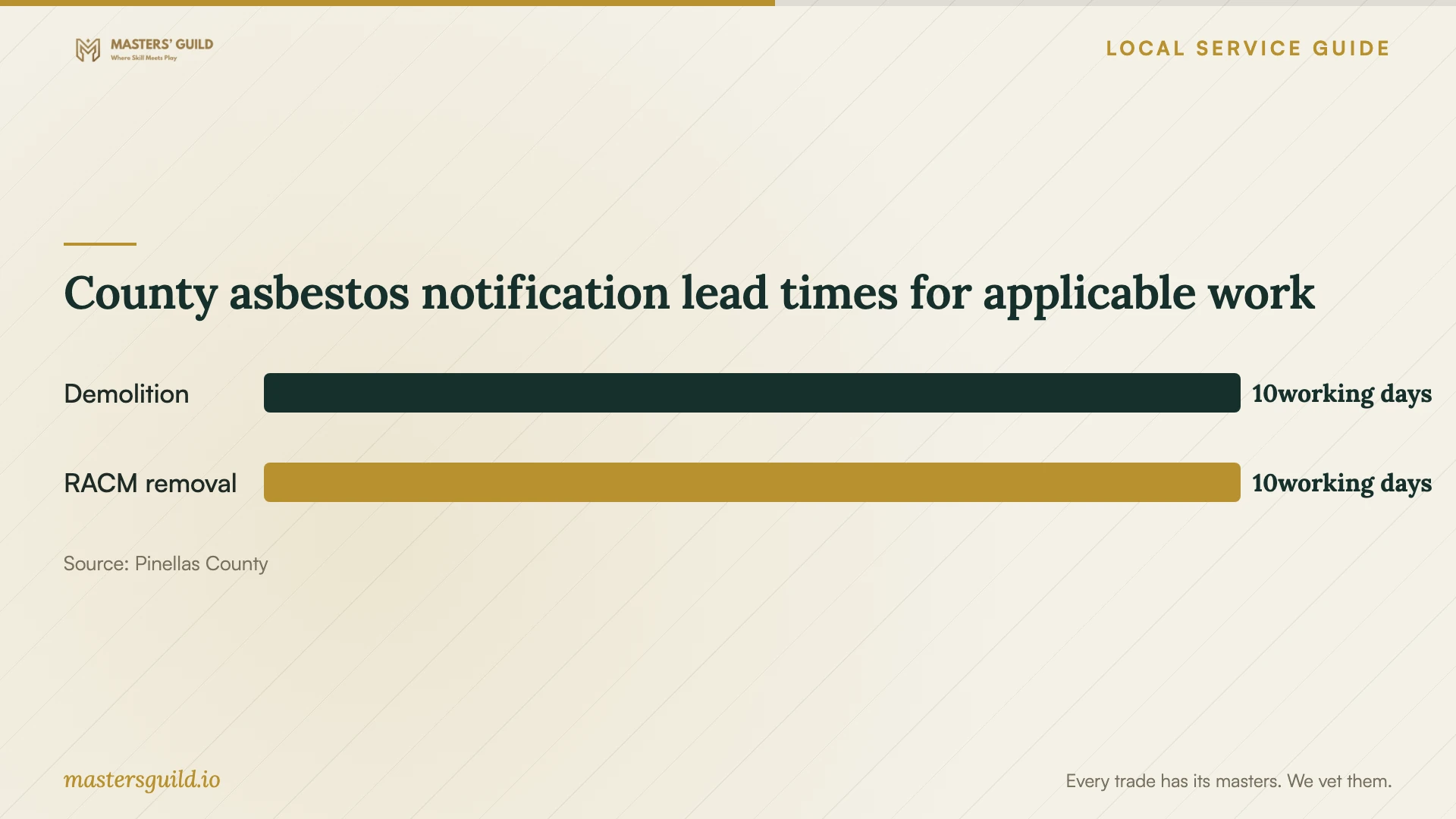
The notification chart gives the county’s published lead time for demolition or removal of Regulated Asbestos Containing Material. These are conditional requirements, not a waiting period for routine roof cleaning. If the program identifies applicable work, include survey, notification, and removal responsibilities in the project schedule before booking the repair. [3]
County asbestos notification lead times for applicable work
Local details that affect your job
Clarify a repair bidder’s authorization
Pinellas County’s Contractor Licensing Department lists 727-582-3100 and directs residents to the Construction Licensing Board contractor list. Describe the proposed roof repair to the department if the bidder’s authorization or listed trade is unclear before you sign. [1]
Resolve drainage concerns before the appointment
Pinellas County lists Environmental Management at 727-464-4425 for stormwater concerns. Ask the cleaner for its wash-water plan, then use the county contact to clarify drainage questions and identify the authority and requirements that apply to your address. [2]
Choose the next step before booking
| Situation | Next step | Question for the bidder |
|---|---|---|
| Staining without an identified repair | Request a cleaning assessment and written method | How will you follow the roof manufacturer’s care instructions? |
| Leak or visible damage | Request a repair assessment and check licensing through the county route | What repair do you propose, and who confirms permit requirements? |
| Cleaning near drainage routes | Request containment and disposal arrangements; confirm address-specific rules | Where will wash water and collected debris go? |
| Storm-related damage | Document damage and contact your insurance agent before starting work | Which proposed work provides temporary protection? |
| Disruptive repair at a non-residential facility, residential building with more than four units, or group of buildings at the same site under common owner or operator control | Ask the county asbestos program to determine applicability | Who will arrange a survey if the project involves a NESHAP-applicable facility? |
Your hiring checklist
- Photograph visible conditions from the ground and collect previous repair records.
- Give bidders the same cleaning and repair scope.
- Request the proposed cleaning method and roof-material care instructions.
- Check the repair bidder through the county’s official licensing route.
- Request insurance documentation and identify subcontractors.
- Agree on wash-water handling, plant protection, access, and cleanup.
- Assign permit confirmation and additional-work approval responsibilities.
- Set postponement terms and request completion photographs.
Frequently Asked Questions
How should I compare cleaning and repair prices?
Request written offers for the same scope at your property. Ask bidders to separate cleaning, repair materials, access, cleanup, and permit-related charges. Compare exclusions and additional-work terms alongside the total. Agree on who must approve a price change before work continues.
Does a cleaning offer include leak repairs?
Ask the bidder to state that in writing. Request separate cleaning and repair descriptions, identify who will perform repairs, and check the repair contractor through Pinellas County’s official licensing route. Ask for the proposed permanent repair before accepting a combined offer. [1]
Do I need a permit for a roof repair?
Confirm the exact scope with St. Petersburg’s permitting staff before work starts. County recovery guidance tells owners to obtain required permits, but it does not establish a city-specific exemption for your repair. Record application and inspection responsibilities in the contract. [4]
Does every roof repair need an asbestos survey?
Ask the county program to determine applicability. Its procedures require a written survey before disturbing existing materials at a NESHAP-applicable facility. Listed categories include non-residential facilities, residential buildings with more than four units, and groups of buildings at the same site under the same owner or operator’s control. [3]
Sources and scope
This guide combines the sources below with practical planning guidance. Figures apply to the stated geography and period; request a written quote for your property.