
Local service guide
Gardening in St. Petersburg, FL: Hiring and Planning
Gardening in St. Petersburg, FL starts with a written scope: identify beds to weed, plants to keep, pruning tasks, materials and debris removal. Compare quotes for that same scope and assign watering between visits. Before booking planting or fertilizer work, confirm applicable watering rules and ask the gardener to explain fertilizer credentials, product choices and timing. [1] [2] [3]
Define the work before comparing quotes
Describe your goal as a cleanup, planting project or recurring maintenance arrangement. For cleanup, mark the areas to clear and identify plants you want retained. For planting, specify ornamental beds, containers or vegetables. Walk through the property with the gardener before agreeing on removals.
For recurring edible-garden care, ask which visits include weeding, mulching, watering checks, pruning, harvesting and insect monitoring. UF/IFAS includes these tasks in its definition of edible-landscape maintenance. Assign care between visits to a named person so you and the gardener know who will handle it. [5]
Request written quotes for the same work area and task list. Have each gardener separate labor, material quantities, delivery, debris handling and follow-up care. Ask whether you will pay a fixed project price or for time worked. Agree on an approval limit for extra work and request proof of liability insurance before booking.
Confirm watering before installing plants
Identify whether your garden uses potable city water, a private well, surface water or reclaimed water. The city says its listed restrictions apply to customers who receive a St. Petersburg water bill and have property within city limits. If either condition does not apply, check with your utility or relevant water authority. [1]
As of October 11, 2026, the city page displays a once-a-week shortage notice alongside an October 1 end date, subject to extension, modification or rescission. That conflict leaves the current schedule uncertain. Call Water Watch at 727-892-5300 to confirm the rules for your water source before scheduling installation or changing irrigation. [1]
Ask the gardener to explain how you will water new plants between visits. UF/IFAS says seedlings and transplants need frequent watering until establishment. Agree who will check moisture and respond to missed watering or wilting before purchasing plants. Confirm any required watering variance and your eligibility before setting a delivery date. [1] [5]
Approve fertilizer as a separate task
Pinellas County prohibits nitrogen and phosphorus applications to turfgrass and landscapes from June 1 through September 30. October falls outside that seasonal window, but weather restrictions still apply. The county prohibits application during severe thunderstorm, flood, tropical storm or hurricane watches or warnings, and when the forecast calls for at least two inches of rain within 24 hours. [2]
Request the proposed product, application rate and reason for feeding. The county requires a soil test documenting phosphorus deficiency before phosphorus application and prohibits nitrogen on new turfgrass or plantings for 30 days. Its landscape guidance also notes that reclaimed water can supply nutrients, so extra fertilizer may be unnecessary. [2] [3]
For paid fertilizer application, request the applicator's FDACS limited fertilizer license and Green Industry BMP training record. Pinellas County says commercial and institutional applicators must complete the training and obtain that license before applying fertilizer. List fertilizer work separately in the quote so you can approve the product and timing. [3]
Plan vegetables around follow-up care
Before commissioning a vegetable bed, check drainage, water access and sunlight. UF/IFAS recommends a well-drained site near water with at least six hours of direct sunlight daily. Ask the gardener for a crop list, planting dates and a plan for preparing the soil before approving installation. [4]
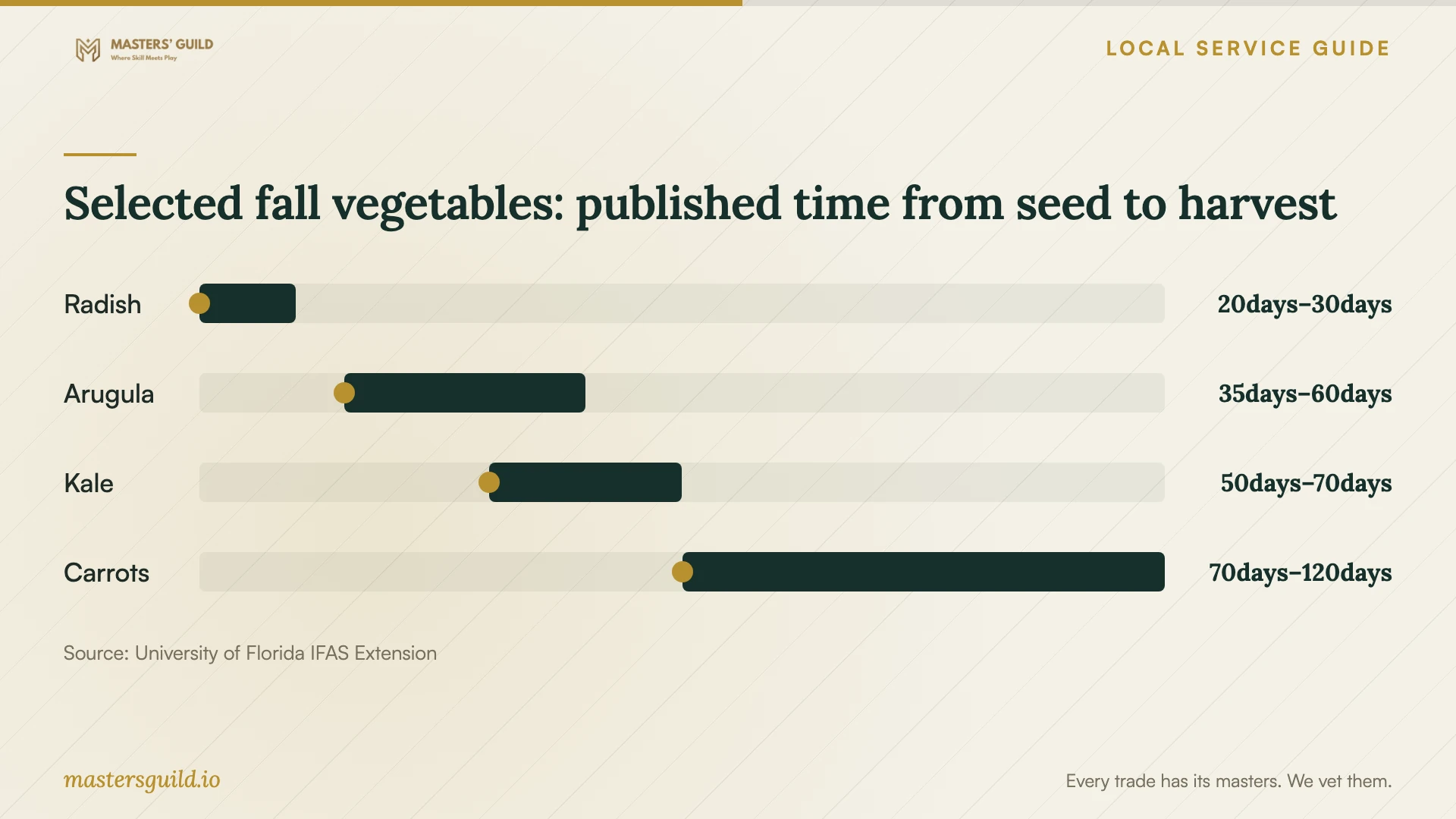
UF/IFAS lists October within the Central Florida planting windows for arugula, radish, kale and carrots. The chart's published seed-to-harvest ranges help you discuss how long to arrange care. Radish has a shorter reference range than carrots; neither range promises a harvest date for your yard. [4]
Decide whether you will handle thinning, harvesting and pest checks or include them in paid visits. UF/IFAS recommends inspecting vegetable gardens twice weekly for pests. For pruning, ask the gardener to identify each plant and explain the timing. UF/IFAS advises crop-specific pruning practices for edible landscapes. [4] [5]
Selected fall vegetables: published time from seed to harvest
Local details that affect your job
Confirm the city's new-landscape variance process
The city describes a 30-day watering variance for new plants, sod and lawn renovations using potable water, wells or surface water. Customers should call Water Resources at 727-893-7261 and submit documentation with their name, address and phone number. Ask whether the variance process currently applies to your installation and whether you qualify before scheduling delivery. The city's conflicting shortage dates make confirmation necessary. [1]
Mark waterfront buffers and agree on debris handling
Pinellas County requires a fertilizer-free zone extending 10 feet from the top of a surface-water bank, the landward edge of a seawall or a designated wetland. If your property borders one of these features, ask the gardener to mark the buffer before application. The county also requires keeping leaves, clippings and other yard debris out of roads, storm drains and waterways. Specify where the gardener will collect, compost or remove debris. [2]
Choose an arrangement for your garden
| Your goal | Arrangement to request | Confirm before booking |
|---|---|---|
| Clear overgrown beds | A defined cleanup project | Plants to retain, removal boundaries and debris destination |
| Install new plants | Planting with an establishment-care plan | Water source, current watering rules and variance eligibility |
| Feed lawn or landscape | A separately approved fertilizer visit | Applicator license, weather restrictions and phosphorus soil-test requirement |
| Start vegetables | Crop plan, installation and follow-up care | Sunlight, drainage, watering and responsibility for twice-weekly pest checks |
Your hiring checklist
- Photograph work areas and mark plants you want kept.
- Write separate scopes for cleanup, planting and recurring care.
- Identify your water source and confirm applicable rules before timer changes.
- Confirm variance eligibility before scheduling new planting.
- Assign establishment watering and care between visits.
- Request fertilizer credentials and review the proposed product.
- Compare materials, delivery, debris handling and follow-up care in written quotes.
- Request proof of liability insurance and agree on approval for extra work.
Frequently Asked Questions
How much should I budget for gardening?
Request written quotes for a defined work area and task list. Compare labor, materials, delivery, disposal and follow-up care separately. Ask how each gardener will price work beyond the agreed scope, and set a spending limit that requires your approval before extra work starts.
Can a gardener fertilize my landscape in October?
October falls outside Pinellas County's June 1 through September 30 nitrogen and phosphorus restriction. Weather prohibitions still apply. The county also requires a soil test documenting phosphorus deficiency before phosphorus application and prohibits nitrogen on new plantings for 30 days. [2]
How do I confirm watering rules before planting?
Call the city's Water Watch line at 727-892-5300 and identify your water source and property location. Confirm the current schedule before changing irrigation. For a new-landscape variance, contact Water Resources at 727-893-7261 and confirm eligibility before scheduling installation. [1]
Should recurring gardening include palm pruning?
Specify any palm work in the quote and ask which fronds the gardener proposes to remove. Pinellas County advises against removing green palm fronds because over-pruning weakens palms and increases their vulnerability to stress. [3]
Sources and scope
This guide combines the sources below with practical planning guidance. Figures apply to the stated geography and period; request a written quote for your property.