
Local service guide
Commercial Building Cleaning in St. Petersburg, FL
To arrange Commercial Building Cleaning in St. Petersburg, FL, have providers walk through your premises and quote the same room-by-room tasks, visit schedule and access window. Compare totals that include applicable tax, and request separate prices for floor restoration, disinfection and chemical removal. Florida identifies interior nonresidential cleaning as a taxable service. Before signing, agree on how you will inspect the work and how the provider will correct missed tasks. [3]
Write a scope you can inspect
Walk through the building with each bidder using the same task list. Identify the rooms they may enter, surfaces they should leave untouched and tasks you expect each visit. Include restroom fixtures, break-room counters, bins, interior glass and floor care. Decide whether staff will clear desks or whether cleaners should work around belongings.
Separate recurring work from the first deep clean and occasional projects. Request individual prices for carpet extraction, floor stripping or refinishing, and high-level dusting. Identify your floor materials and ask the provider to explain the method proposed for each surface. For leased premises, confirm the division of work between your business and the building manager.
Agree on completion standards: emptied bins with replacement liners, listed surfaces free of visible dirt and floors ready for opening. Name the person who will inspect and report missed work. Put the correction process in the agreement, including whom to contact and when you expect a response. Consider a paid initial visit before committing to a longer contract.
Compare the total invoice and contract terms
The Florida Department of Revenue lists interior nonresidential cleaning among taxable services. Florida's general state sales-tax rate is 6%, and an applicable county discretionary surtax may also apply. Sellers must state sales tax on customer invoices. Ask the provider to confirm the combined rate for your service address. [3]
Request a recurring total tied to a defined schedule, with supplies, initial cleaning and optional work identified. For a monthly quote, ask how the provider handles holidays, business closures and extra scheduled visits. Compare proposals after reconciling those details. Have the provider distinguish interior cleaning from exterior work when explaining tax treatment.
Review current insurance documentation and discuss responsibility for damaged floors, missing keys and spills. Read cancellation, renewal and price-change terms. If the provider uses subcontractors, ask who will enter your premises, who supervises the crew and who handles complaints. Record those answers alongside the cleaning scope.
Define the disinfection procedure
For a disinfection service, specify the surfaces and intended microorganisms in the scope. EPA reviews disinfectant effectiveness for claims on the product label. Ask for the EPA registration number, approved use sites, dilution directions and contact time. Use the registration number to identify the product rather than relying on its brand name. [4]
EPA directs users to keep the surface visibly wet throughout the label's contact time, which may require reapplication. Have the provider explain how the crew will follow that procedure during your access window. Include the agreed surfaces and procedure in the quote so you can inspect the service you ordered. [4]
For medical or dental premises, ask the person responsible for facility cleaning requirements to approve the scope. Identify restricted rooms, equipment the cleaner must avoid and waste excluded from the contract. Have bidders explain which tasks they will undertake and which need a separate arrangement.
Prepare the building and review the first visit
Agree on parking, loading access, alarms, keys and lock-up with your staff and building manager. Identify the water source, proposed wastewater disposal point and equipment storage area. Give the crew a contact for leaks, spills or access problems. Decide who may authorize extra work and require approval before the provider adds charges.
Clear the agreed surfaces, secure confidential papers and mark fragile items. Discuss how the crew will keep occupants away from wet floors and when each area can reopen. Inspect the first visit against the signed task list. Record missed work and arrange corrections before expanding the scope or changing the schedule.
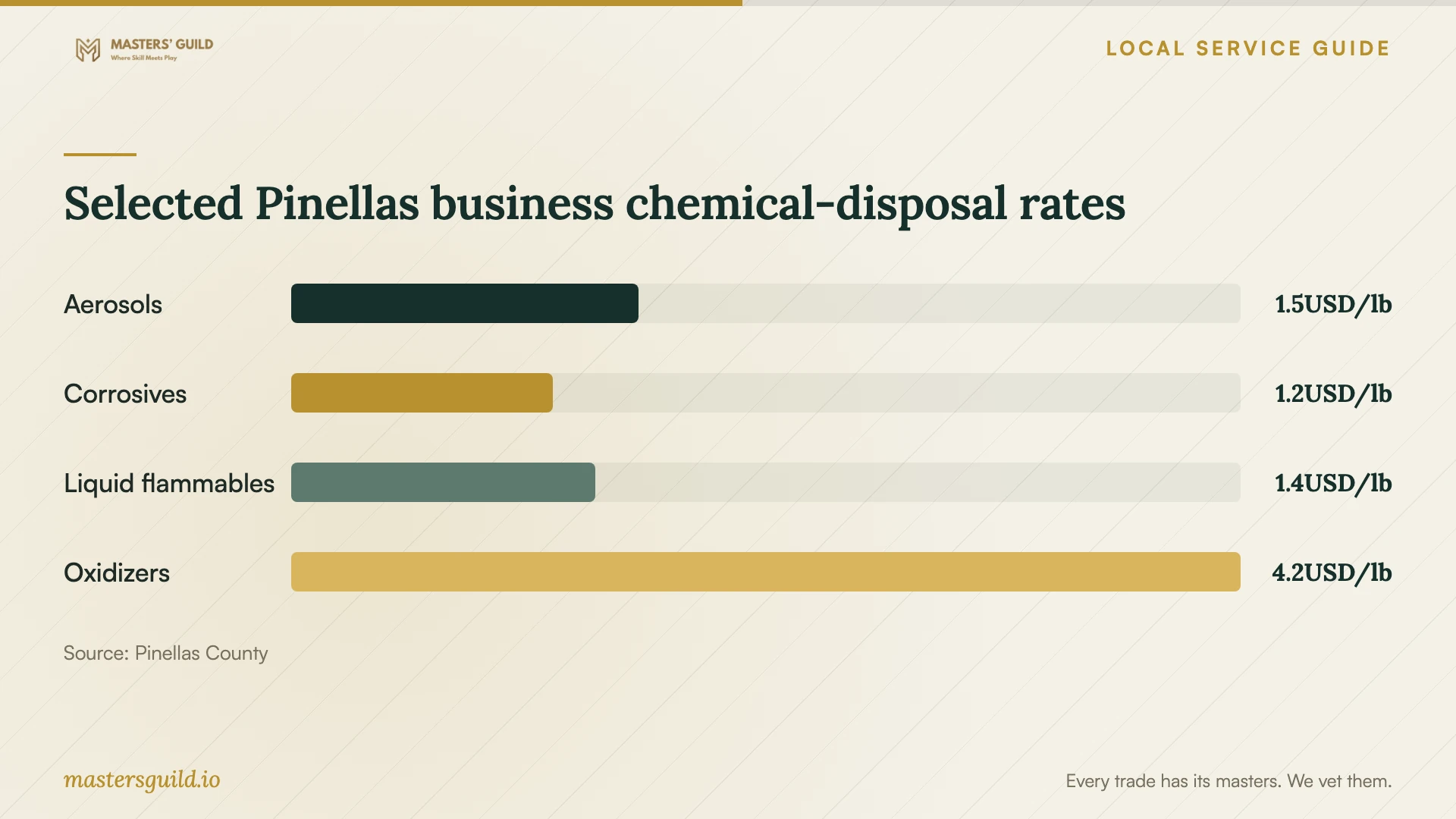
Selected Pinellas business chemical-disposal rates
Local details that affect your job
Require a wash-water plan for exterior cleaning
Pinellas County advises commercial and industrial businesses to sweep around their sites instead of hosing and to keep wash water out of storm drains. Its regional guidance directs wash water to a sanitary sewer through a utility sink, floor drain or toilet. For entrance, paving or pressure-washing work, ask the bidder to identify collection equipment and the proposed disposal point. Confirm acceptance of the particular wastewater with your utility before work starts; do not assume an outdoor drain connects to the sanitary sewer. [1]
Book chemical disposal before a storage-room cleanout
Pinellas County offers paid business chemical and electronics collection at 2857 110th Avenue N., St. Petersburg. Its 2026 schedule lists October 14, from 9 a.m. to 4 p.m., as the next event after October 10. Businesses must qualify as Very Small Quantity Generators to participate. Before arranging removal, call the program's contractor, Republic Services, at (813) 319-3400 to discuss eligibility-related quantities, unknown wastes, pricing and packing restrictions. Assign transport responsibility in writing and keep the disposal receipt that the contractor provides. [2]
Match the cleaning scope to the work
| Your need | What to request | Before accepting |
|---|---|---|
| Recurring office or shop cleaning | Room-by-room tasks and a defined schedule | Confirm tax-inclusive totals and missed-task corrections |
| Disinfection of specified surfaces | EPA registration number and label-based procedure | Check approved use sites and full wet contact time |
| Exterior entrance or paving cleaning | Wash-water collection and disposal plan | Use county runoff guidance and confirm disposal with your utility |
| Unwanted cleaning-chemical removal | Separate disposal and transport scope | Check county program eligibility, packing restrictions and current charges |
Your hiring checklist
- List included rooms, floor materials and tasks for each visit.
- Separate initial cleaning and optional projects from recurring work.
- Request totals with supplies, tax and disposal charges identified.
- Review insurance documentation and responsibility for damage.
- Agree on disinfection products, surfaces and procedures.
- Set access, alarm, lock-up and emergency-contact arrangements.
- Approve wastewater and unwanted-chemical disposal arrangements.
- Inspect the first visit and document corrections against the signed scope.
Frequently Asked Questions
How much should I budget for cleaning?
Obtain a walkthrough quote for your rooms, floor materials, tasks and schedule. Ask providers to separate recurring visits, initial cleaning, supplies and optional work. Compare the amount you will pay, including applicable tax. The county disposal rates shown here cover selected waste categories, not building-cleaning labor. [2] [3]
Does Florida charge tax on commercial interior cleaning?
Florida identifies interior nonresidential cleaning as taxable. Its general state rate is 6%, and applicable county surtax may also apply. Ask the provider to confirm the combined rate for your service address and show tax on the invoice. [3]
How can I check a disinfection proposal?
Request the EPA registration number and label directions for your intended surfaces and microorganisms. Have the cleaner explain dilution and how the crew will maintain visible surface wetness throughout the required contact time. [4]
Can the cleaner remove old chemicals?
Agree on removal as a separate task, including transport and disposal responsibility. Pinellas County's business collection program charges for disposal and requires businesses to qualify. Contact its contractor about quantities, unknown wastes and packing restrictions before transport, and request the disposal receipt. [2]
Sources and scope
This guide combines the sources below with practical planning guidance. Figures apply to the stated geography and period; request a written quote for your property.