
Local service guide
Carpet cleaning in St. Petersburg, FL: Hiring Guide
Arrange carpet cleaning in St. Petersburg, FL by asking for a written scope, total charge, drying plan and wastewater disposal method before booking. Tell the cleaner whether you need routine soil removal, stain treatment or help with wet carpet. For floodwater or suspected contamination, seek an experienced restoration professional; EPA advises professional consultation when homeowners lack contaminated-water cleanup expertise. [3]
Describe the job before requesting a quote
Send photos of the rooms and problem areas. List the carpeted spaces, stairs and closets you want cleaned, then identify furniture you want moved or left in place. Tell the cleaner about pet accidents, spills, previous treatments and any water intrusion. Ask them to inspect uncertain areas before you approve extra work.
For a condo or apartment, confirm parking, elevator reservations and equipment access with building management. Give the cleaner those restrictions before agreeing on an appointment. Ask whether they need a water connection, power outlet or a route for hoses, and agree on how they will protect shared entrances.
Compare the full scope and total charge
Request a written quote that names each area and treatment. Ask whether the total includes furniture moving, stairs, spot treatment and any minimum visit charge. If the cleaner prices by room, ask how they define a room and handle oversized spaces. For area-based pricing, confirm which measurements they will use.
Ask the cleaner to explain the proposed method for your carpet and follow its care instructions. Request clear expectations for the marks you want treated, including what they cannot promise to remove. Ask about liability insurance, who will perform the work and how you should report a problem afterward. Avoid approving an open-ended allowance for treatments.
Agree on drying and room access
Before booking, ask for the expected time until you can walk on the carpet and return furniture. Discuss how the cleaner wants you to manage air conditioning, ventilation and any drying equipment. Arrange the visit around the rooms you need that evening, and ask whom to contact if the carpet remains damp beyond the agreed estimate.
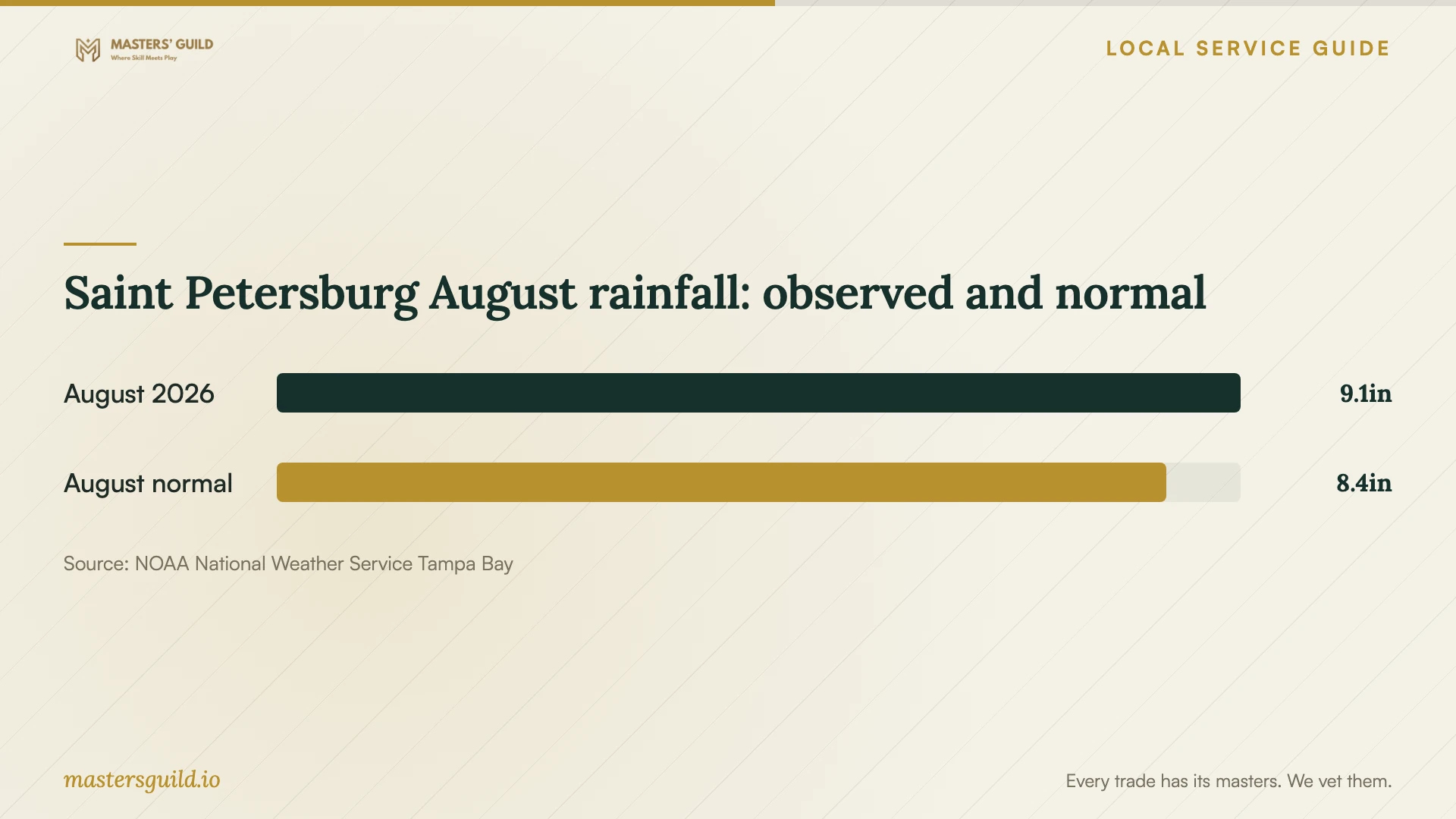
The National Weather Service recorded 9.09 inches of rain in Saint Petersburg during August 2026, compared with the August normal of 8.39 inches. Use that historical context to ask about a rain-day equipment route and indoor drying arrangements. Those monthly rainfall figures do not establish conditions on your appointment date or predict carpet drying time. [4]
Identify water damage before booking routine cleaning
Tell the provider where the water came from, when you discovered it and whether the pad or floor beneath the carpet got wet. EPA says its rapid-drying instructions apply to clean-water damage. It advises against using fans until you determine the water is clean or sanitary, and recommends experienced professional help for contaminated-water situations when you lack that expertise. [3]
For water-damaged carpet, EPA explains that extraction alone does not dry the carpet: the carpet and padding also need drying. In most cases, drying wet or damp items within 24–48 hours can prevent mold growth. Ask a restoration provider how they will assess the pad and underlying floor, address the moisture source and determine whether materials need removal. [3]
Prepare the rooms and review the work
Confirm what you should vacuum or move before the crew arrives. Clear small belongings and valuables from the agreed work areas, arrange a place for pets and leave a usable route to the rooms. Show the crew the stains you discussed, then confirm the price and scope before they start.
Before the crew leaves, review the treated areas together. Request care instructions, the expected drying window and a contact for follow-up. Keep the quote and invoice, and note any concerns with photos. If you notice continued dampness after a water-damage job, ask the restoration provider to reassess the affected materials rather than scheduling another routine cleaning.
Saint Petersburg August rainfall: observed and normal
Local details that affect your job
Ask about wash-water disposal before the visit
Pinellas County's regional pollution-prevention guidance tells businesses to dispose of wash water through a sanitary sewer, such as a utility sink, floor drain or toilet, and keep it out of storm drains. For your St. Petersburg appointment, ask where the cleaner will collect and discharge the recovered water. Confirm a suitable disposal arrangement before they arrive; do not offer a curbside gutter or street drain. [1]
Coordinate storm-damaged carpet with your insurer
Pinellas County's storm-recovery guidance tells property owners to contact their insurance agent before work, document damage before moving belongings and remove wet contents promptly. It also says to retain damaged carpet and contents until the adjuster's inspection. If your home has storm-damaged carpet, ask your insurer how to move wet materials out while retaining them for inspection. Agree on documentation and storage before authorizing disposal. [2]
Choose the right appointment
| Your situation | Next step | Question to ask |
|---|---|---|
| Routine soil or isolated stains | Request a cleaning quote with defined areas and treatments. | Which treatments and furniture arrangements does the total include? |
| Recent clean-water damage | Seek a water-damage assessment that covers carpet, padding and drying. | How will you assess and dry the materials beneath the carpet? |
| Floodwater or suspected contamination | Consult an experienced contaminated-water restoration professional. | How will you assess contamination before choosing cleanup and drying methods? |
| Storm damage with an insurance claim | Document the damage and contact your insurer before work or disposal. | How should I retain damaged carpet for the adjuster's inspection? |
Your hiring checklist
- Photograph problem areas and list the rooms, stairs and closets you want included.
- Disclose spills, pet accidents, previous treatments and water intrusion.
- Confirm building access, parking, hose routes and elevator arrangements.
- Get the total charge and exclusions in writing before approving work.
- Ask where the provider will collect and dispose of recovered wash water.
- Agree on drying expectations, furniture return and follow-up contact.
- For storm damage, coordinate documentation, removal and retention of damaged materials with your insurer.
Frequently Asked Questions
How much should I budget for carpet cleaning?
Get a written quote for your measured areas and requested treatments. Ask about the minimum visit charge, stairs, furniture moving and optional treatments, then compare the total for the same scope. The cited sources do not establish current local cleaning prices.
How long should carpet take to dry?
Ask your cleaner for an estimate based on the method, carpet and indoor drying arrangements. EPA's 24–48-hour guidance concerns drying water-damaged materials to help prevent mold; it does not establish a routine cleaning completion time. [3]
Can I use fans on carpet after flooding?
EPA says to determine that the water is clean or sanitary before using fans. If you suspect sewage or other contamination, consult an experienced professional before choosing drying methods. [3]
Where should the cleaner empty dirty water?
Pinellas County guidance directs businesses to sanitary sewer disposal and tells them to keep wash water out of storm drains. Ask your cleaner to identify the disposal arrangement before the appointment. [1]
Sources and scope
This guide combines the sources below with practical planning guidance. Figures apply to the stated geography and period; request a written quote for your property.