
Local service guide
Tile setting in St. Louis: Plan and Compare Quotes
Arrange tile setting in St. Louis by asking installers to inspect the existing surface and quote removal, preparation, installation, and cleanup as separate items. For a shower, request a written waterproofing plan and a date for returning it to use. The City lists ordinary residential floor tile among work that usually does not require a building permit, but structural changes and applicable plumbing or electrical work need permit review. Resolve suspect old flooring before anyone starts demolition. [1] [3]
Define the finished job before requesting bids
Give each installer the same brief: room dimensions, photographs, tile selection, pattern, and the surfaces you want covered. Identify whether you want a floor, backsplash, shower, or repair. Ask the installer to confirm measurements at the property and record who purchases the tile, trim, grout, and installation materials.
Request a layout discussion before installation. Agree on grout color, joint appearance, edge trim, transitions to adjacent flooring, and the position of cuts around doors or fixtures. For a repair, ask to see the proposed replacement tile beside the existing surface before approving it.
Compare preparation and waterproofing plans
Ask each bidder to describe the surface they expect to find beneath the existing finish and how they will assess it. Request separate prices or allowances for removal, substrate repair, leveling, and disposal. Agree on a pause point after removal so you can review photographs and approve any additional work before the installer covers the surface.
For a shower, request the proposed waterproofing system, product instructions, treatment of corners and penetrations, and any testing included in the quote. Ask who handles the drain and plumbing connections. Have the installer distinguish installation days from waiting periods and state when you may use the shower.
Check the City permit scope before demolition
The City of St. Louis lists floor tile and replacement flooring with like materials among residential work that usually does not require a building permit. Its ordinary-repair guidance addresses residential buildings with up to four units. The City requires building permits for structural changes and major alterations, including joist replacement and removal or installation of partitions in habitable or occupiable space. [1]
Describe the complete remodel to the Permit Section rather than asking about tile alone. Include any wall changes, floor framing repairs, fixture relocation, or electrical work. The City requires separate plumbing, mechanical, and electrical permits when applicable. Ask the contractor to record who will obtain each required permit and arrange inspections. [1]
Resolve suspect flooring before removal
Missouri DNR lists asphalt and vinyl floor tile, sheet flooring, and flooring mastics among materials that may contain asbestos. If you suspect damaged material contains asbestos, DNR recommends leaving it undisturbed until someone determines its content. Request assessment by a Missouri-certified asbestos inspector before authorizing removal or grinding. [3]
DNR exempts residential structures with four or fewer dwelling units from its inspection requirement, with exceptions that include projects involving multiple buildings under the same owner or operator and fire-training burns. The exemption does not remove the hazard from disturbing asbestos. DNR recommends trained professionals for asbestos removal, including unregulated projects. [3]
Ask the contractor to explain the removal method and disposal destination if an inspector identifies asbestos. DNR warns that sanding, grinding, cutting, or abrading asbestos-containing nonfriable materials can bring them under regulated-material requirements. It states that asbestos-containing mastic must not be dry scraped or sanded. Have an asbestos professional confirm the requirements for your property and proposed work. [2]
Build a budget and schedule around the agreed scope
Use written site-specific bids to budget the installation. Request a total with tile and materials, labor, preparation, disposal, and any permit charges identified. Ask whether the contractor offers fixed prices or allowances for unknown conditions. Agree on payment stages, written change approvals, protection of nearby rooms, and cleanup before signing.
If your remodel requires a City building permit, the application requires the project address, plans, and a $25 application fee. An applicant other than the owner of record also needs an authorization letter. The City accepts online or in-person applications; in-person applicants must bring five copies of the plans. The City collects the permit fee after final approvals, when it is ready to issue the permit. [4]
Ask the installer for a schedule that separates removal, assessment, repairs, setting, grouting, and return to use. Confirm which rooms or fixtures you will lose access to and where the crew will store materials. Keep the agreed layout, product names, change approvals, and care instructions with your contract.
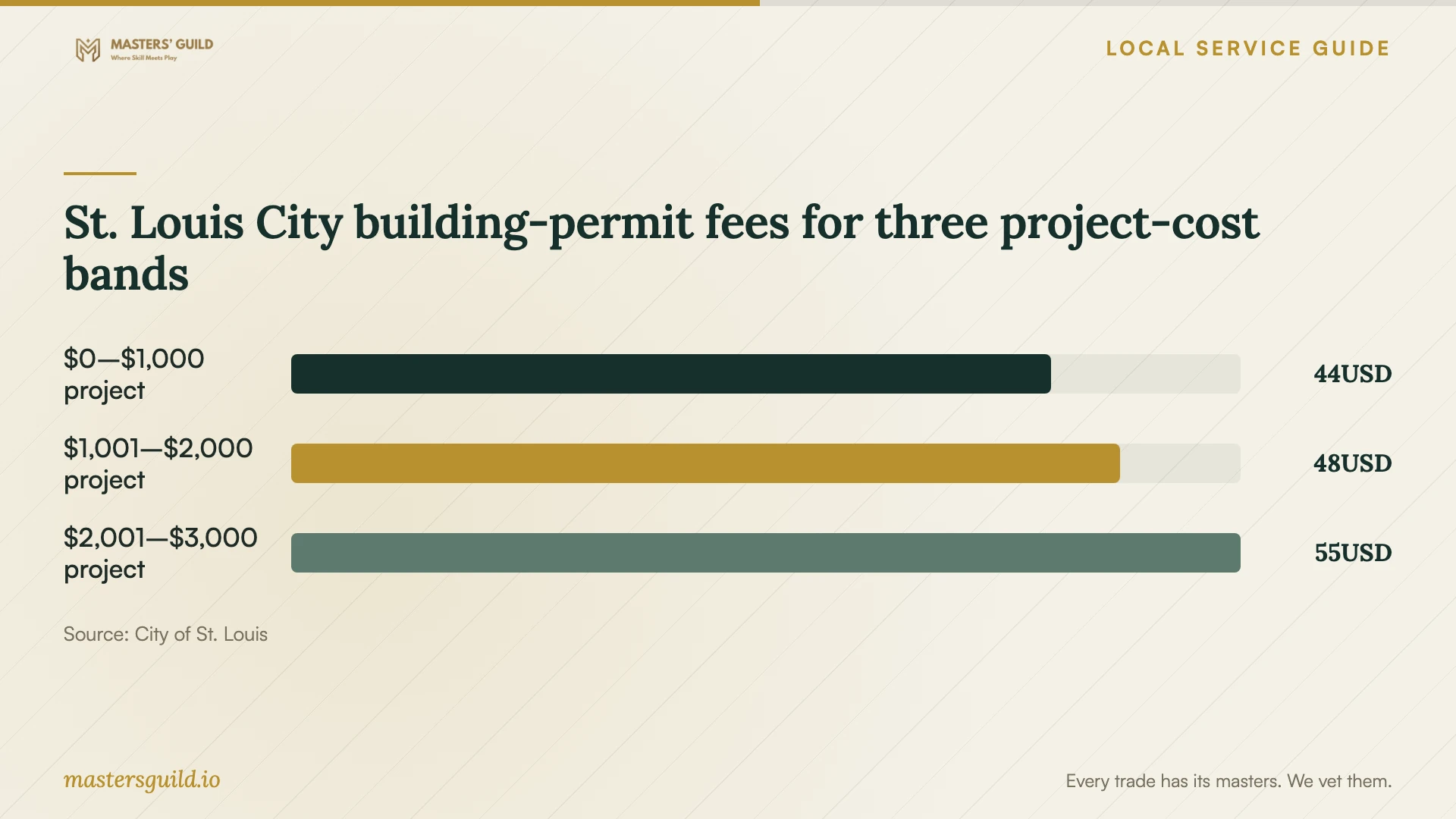
St. Louis City building-permit fees for three project-cost bands
Local details that affect your job
Use the City Permit Section for a City property
The City's building-permit application process applies to properties inside St. Louis City. For a tile job that expands into structural repairs or major alterations, contact the Permit Section at 314-622-3313 or visit 1200 Market, Room 425. Describe the full scope before booking demolition. For an address outside City limits, confirm the responsible permitting authority before using this fee schedule. [1] [4]
City and County asbestos contacts differ
Missouri DNR identifies separate local asbestos enforcement contacts: St. Louis City's Air Quality Program at 314-613-7300 and St. Louis County Health Department at 314-615-8924. DNR advises contacting the appropriate agency before a project to determine whether additional local requirements apply. Use the property's jurisdiction when planning suspect-flooring removal. [2] [3]
Check mapped flood areas and exterior historic work
The City says construction projects in mapped flood areas require a Floodway Development Permit even when the Building Code does not require a building permit. It also identifies historic-district and landmark approval requirements for specified exterior work. If your tile project includes exterior changes or lies in a mapped flood area, ask the Permit Section about these exceptions before proceeding. [1]
Choose the next step for your tile project
| Project situation | Next step | Quote or approval to request |
|---|---|---|
| Ordinary residential floor-tile work | Confirm that the work stays within the City's ordinary-repair scope. | Request a quote defining removal and preparation; the City lists floor tile as usually not requiring a building permit. |
| Joist repairs or partition changes | Contact the City Permit Section before work starts. | Identify the required building permit and who will obtain it. |
| Shower with plumbing or electrical changes | Ask the Permit Section about applicable trade permits. | Request named responsibilities for trade work alongside the tile and waterproofing scope. |
| Suspect old resilient flooring or mastic | Arrange identification before disturbance. | Request a Missouri-certified inspector's assessment and a removal and disposal plan if asbestos is present. |
| Tile project in a mapped flood area | Ask about the City's Floodway Development Permit. | Resolve this approval even if the project does not require a building permit under the Building Code. |
Your hiring checklist
- Send every bidder the same room measurements, photographs, tile selection, and layout brief.
- Ask for separate removal, preparation, installation, and disposal items.
- Arrange assessment of suspect existing flooring before authorizing disturbance.
- Confirm who will resolve permit questions and obtain any required approvals.
- For a shower, request the waterproofing plan and product-specific return-to-use instructions.
- Agree on a pause after removal to review concealed conditions and approve changes.
- Record payment stages, cleanup responsibilities, and warranty terms in the contract.
Frequently Asked Questions
Do I need a building permit to replace a tile floor?
The City lists ordinary residential floor tile and replacement flooring with like materials as work that usually does not require a building permit. Structural changes, major alterations, and applicable trade work can require permits. Confirm the complete scope and any property-specific exceptions with the Permit Section. [1]
What should I ask about old flooring before removal?
Ask whether the flooring or adhesive needs asbestos assessment before disturbance. Missouri DNR lists floor tile, sheet flooring, and mastics as possible asbestos-containing materials and recommends a Missouri-certified inspector to identify suspect materials. Avoid authorizing sanding or grinding while that question remains unresolved. [2] [3]
Can I use the permit-fee chart as a tile price estimate?
No. The chart contains City building-permit charges for specified estimated construction-cost bands. It does not include tile, installation, preparation, or disposal. Request site-specific bids and include permit charges only when your project requires them. [4]
How should I compare two shower-tile quotes?
Ask both installers to price the same removal, substrate preparation, waterproofing system, tile, trim, and plumbing scope. Request product names, any testing included, change-order terms, and a return-to-use date. Resolve differences before choosing an installer.
Sources and scope
This guide combines the sources below with practical planning guidance. Figures apply to the stated geography and period; request a written quote for your property.