
Local service guide
Duct cleaning in Springfield, MA
Duct cleaning in Springfield, MA should begin with an inspection that shows why you need the work, followed by written estimates from at least three providers. EPA recommends cleaning as needed. Ask each bidder to identify the affected components, explain the method and list exclusions. If the proposal adds construction or alterations, confirm permit requirements with the city before approving that work. [1] [2]
Decide whether cleaning addresses the problem
Ask for photographs or an accessible inspection before accepting a whole-system cleaning recommendation. EPA identifies substantial visible mold on hard surfaces, vermin infestation, and excessive debris or particles coming from supply registers as reasons to consider cleaning. You can vacuum a dusty return grille without assuming heavy contamination farther inside. [2]
Have the contractor investigate the cause alongside the cleaning proposal. EPA warns that contamination can recur if you leave its underlying cause unresolved. For suspected mold, request evidence and an explanation of any moisture problem. An expert may need laboratory analysis to confirm mold. EPA recommends replacing wet or moldy duct insulation because cleaning cannot address it. [2]
Avoid choosing a provider on promises of better health or lower bills. EPA says duct cleaning has not been shown to prevent health problems and finds little evidence that cleaning ducts alone improves system efficiency. Describe the problem you want addressed, such as debris discharge, and ask how the contractor will document completion. [2]
Compare complete written scopes
Give each bidder the same description of your system and symptoms. EPA recommends written estimates from at least three providers and a written agreement stating the total cost and scope before work begins. Ask each company to show the contamination that justifies its recommendation and explain its experience with your duct materials. [2]
Have the contractor name the components included: supply and return ducts, registers, grilles, air handler, blower, coils and drain pans as applicable. EPA warns that leaving a contaminated component uncleaned can contaminate the system again. Ask who will handle any component the duct cleaner excludes, and obtain a separate price before authorizing additional work. [2]
Use current written Springfield bids to set your budget. Ask bidders to separate cleaning, replacement, chemical treatments and dryer exhaust work so you can compare equivalent proposals. Include your system count, access constraints and requested components in each estimate request. Ask how the provider will price discoveries made after work starts, and require your approval before additions.
Check methods before the crew starts
Ask where the vacuum will exhaust. EPA recommends equipment that exhausts particles outdoors, or HEPA vacuum equipment when exhaust stays indoors. Have the provider explain how workers will protect furnishings, access the system, and seal and re-insulate any access holes they create. [2]
Ask the crew to identify duct materials before selecting brushes or treatments. EPA calls for soft-bristled brushes on fiberglass duct board and fiberglass-lined metal ducts. It also recommends an inspection for asbestos-containing materials before cleaning and says only trained, equipped specialists should disturb those materials. Do not authorize removal as an incidental cleaning add-on. [2]
Require a separate explanation for any proposed biocide or interior coating. Ask for the product label, the approved use and the reason physical cleaning and moisture control will not address the problem. EPA reports unresolved questions about these treatments and says no biocides are registered for fiberglass duct board or fiberglass-lined ducts. [2]
Separate dryer exhaust from HVAC cleaning
Request a separate line item describing dryer exhaust work instead of assuming a duct-cleaning package includes it. USFA identifies failure to clean (31%) as the leading factor contributing to ignition in home clothes dryer fires during 2018–2020. This national historical finding supports discussing dryer cleaning as a safety concern; it does not measure the condition of your vent. [4]
Ask the bidder to describe the route they intend to inspect and clean, the access they need, and any parts they propose replacing. If replacement involves construction or related wiring or gas work, confirm the expanded scope with Springfield’s Building Division. Keep repair authorization separate from the cleaning agreement. [1]
Prepare access and verify completion
Before the visit, agree on access to registers and equipment, furniture movement, pet arrangements and the expected interruption to heating or cooling. Ask for an estimated duration based on your system. Photograph accessible areas you want the crew to address and identify fragile finishes before workers bring equipment inside.
At completion, ask the provider to show the cleaned components. EPA recommends a visual inspection and notes that providers can use remote photography to document duct interiors. Check that workers have reattached registers, closed access openings and demonstrated proper system operation. Resolve missing scope items before accepting the job as complete. [2]
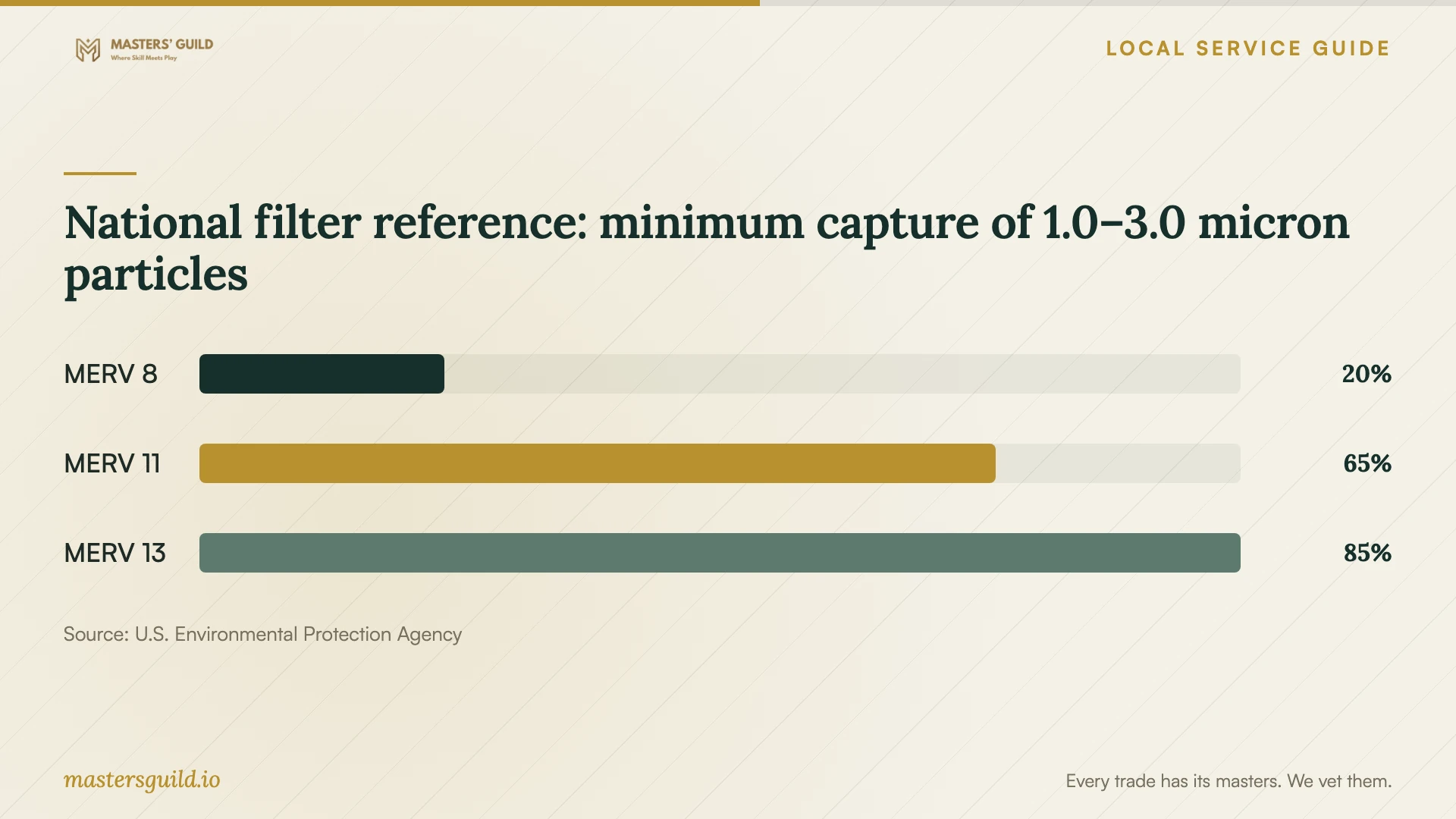
Discuss filter fit and replacement with your HVAC technician. EPA recommends choosing MERV 13, or as high a rating as your fan and filter slot can accommodate, when upgrading filtration. Follow manufacturer replacement guidance. Use the chart to discuss compatible filter choices; it does not show the benefits of duct cleaning. [3]
National filter reference: minimum capture of 1.0–3.0 micron particles
Local details that affect your job
Confirm expanded work with the local permit office
Springfield’s Building Division issues building, wiring, plumbing and gas permits, and the city requires building permits before construction begins. If a cleaning quote adds duct alterations or related trade work, ask the division which approvals apply before authorizing the change. Call 413.787.6031 or contact the office at 70 Tapley Street. The cited city guidance does not answer whether cleaning alone requires a permit. [1]
Verify a contractor’s claimed permit
The city provides Building Permit Lookups and Search for Records on its Code Enforcement page. If a contractor says an alteration already has city approval, request the permit identifier and use the city’s record tools to check that claim. Ask the Building Division about any unclear result before allowing the proposed construction to proceed. [1]
Choose the next step from the observed condition
| Condition | Next step | Question to ask |
|---|---|---|
| Dust on a return grille | Clean the accessible grille and inspect before buying whole-system service. | Can you show substantial contamination inside the system? |
| Excessive debris or particles from supply registers | Consider cleaning and investigate the underlying cause. | Which components need cleaning, and why did debris collect? |
| Suspected mold or wet insulation | Confirm the condition and address moisture; replace wet or moldy insulation. | Who will confirm the material and correct the moisture source? |
| Proposed construction or related trade work | Confirm permit requirements with Springfield’s Building Division. | Which approvals apply to this added scope? |
| Concern about dryer exhaust | Request a separate cleaning and inspection scope. | What route, access and proposed replacements does your price cover? |
Your hiring checklist
- Describe the symptom and ask the bidder to show the affected area.
- Request comparable written estimates with included components and exclusions.
- Ask how the crew will collect debris and protect duct materials.
- Require separate approval for chemicals, replacement and dryer exhaust work.
- Confirm city requirements if the proposal adds construction or related trade work.
- Request the permit identifier if the contractor claims city approval.
- Agree on access, furniture movement, pets and service interruption.
- Inspect completion photographs and ask the crew to demonstrate system operation.
Frequently Asked Questions
Should I book duct cleaning every year?
EPA recommends cleaning as needed rather than on a routine schedule. Ask for evidence of substantial contamination. Keep filter changes and heating-equipment inspections separate from the decision to clean ducts. [2]
Does Springfield require a permit for duct cleaning?
The cited city guidance does not answer whether cleaning alone requires a permit. It identifies the Building Division as the permit office and requires building permits before construction begins. Ask the division about proposed alterations or related wiring, plumbing or gas work. [1]
Should I accept a sanitizing treatment?
Ask why the provider recommends it, request the label and confirm that its approved use matches your duct materials. EPA reports unresolved effectiveness and health questions and says no biocides are registered for fiberglass duct board or fiberglass-lined ducts. [2]
Can I install a higher MERV filter after cleaning?
Ask an HVAC technician which rating your fan and filter slot can accommodate. EPA recommends MERV 13, or as high a rating as the system can accommodate, when upgrading filtration. Follow the manufacturer’s maintenance and replacement instructions. [3]
Sources and scope
This guide combines the sources below with practical planning guidance. Figures apply to the stated geography and period; request a written quote for your property.