
Local service guide
Flooring installation and repair in Sioux Falls
Arrange Flooring installation and repair in Sioux Falls by getting an inspection and a measured, itemized quote before choosing an installer. Have the contractor assess repair options, define preparation work and explain the complete payable total. Resolve suspect old-floor materials before approving demolition, and ask which South Dakota flooring tax classification applies to your project. [1] [2]
Choose between a repair and replacement
Show the installer the damaged area and explain what you want to achieve. Identify loose edges, damaged boards, uneven spots and any places where you have seen water. Bring photographs and spare flooring to the inspection. Ask what the contractor needs to examine before recommending a repair or replacement.
For a repair, request the proposed boundaries and an explanation of the expected color and finish match. Decide what variation you would accept before work begins. For replacement, have the installer record each room, its measured area and the exact product. Include closets, stairs and connections to adjacent rooms in the discussion.
Compare the complete payable price
Request an itemized proposal covering material supply, removal, disposal, subfloor preparation, installation and finishing. Discuss transitions, baseboards and door clearances. Assign responsibility for moving furniture and appliances. Have each bidder identify exclusions so you can compare the same work.
Ask the installer which preparation costs they can confirm during the visit and which require inspection after removal. Request an allowance or an agreed pricing method for uncertain work. Require photographs, a description and a price before authorizing changes. Keep the payment schedule and written workmanship warranty with the proposal.
DOR says most floor-covering sales and installations fall under sales or use tax, while ceramic tile, terrazzo and epoxy flooring fall under contractor's excise tax. Have the bidder explain the classification and include applicable taxes in the total. Avoid applying one assumed tax treatment to every material option. [2]
Set the removal method before demolition
Pause removal if you suspect asbestos in existing resilient flooring. Ask the contractor how they will establish the material's content and condition. DANR classifies asbestos-containing resilient floor coverings as Category I nonfriable materials. Friable means a material can crumble or reduce to powder and release asbestos fibers. [1]
DANR explains that sanding, cutting, grinding or abrading can make these materials friable. It identifies pneumatic chippers and power saws as equipment that causes that change. Before accepting a removal quote, have the contractor explain the proposed equipment, handling requirements and disposal destination. [1]
DANR says single-family residences usually qualify for an exemption from demolition and renovation NESHAP requirements, with exceptions for certain larger projects involving homes under common ownership. The department also identifies additional OSHA requirements and landfill acceptance rules. Ask the contractor to establish which requirements apply to your property rather than relying on the residential exemption alone. [1]
Prepare rooms and agree on completion
Walk through the carrying route, storage location and rooms you need to keep usable. Agree on delivery, preparation and installation dates. Ask who will handle appliance connections and trim removal. Request the manufacturer's instructions for the exact flooring product and have the installer assign each preparation task.
Show the installer any water marks or history of leaks before covering a basement floor. Discuss wet-footwear storage and mat placement for an entryway. Ask what assessment they require for your rooms and how they will document the findings. Base your approval on the property inspection and product instructions.
Before the final payment, inspect the agreed repair areas, transitions and trim with the installer. Record any unfinished work and its completion date. Obtain care instructions, the warranty and the remaining product details. Ask when you can walk on the floor, move furniture back and resume cleaning.
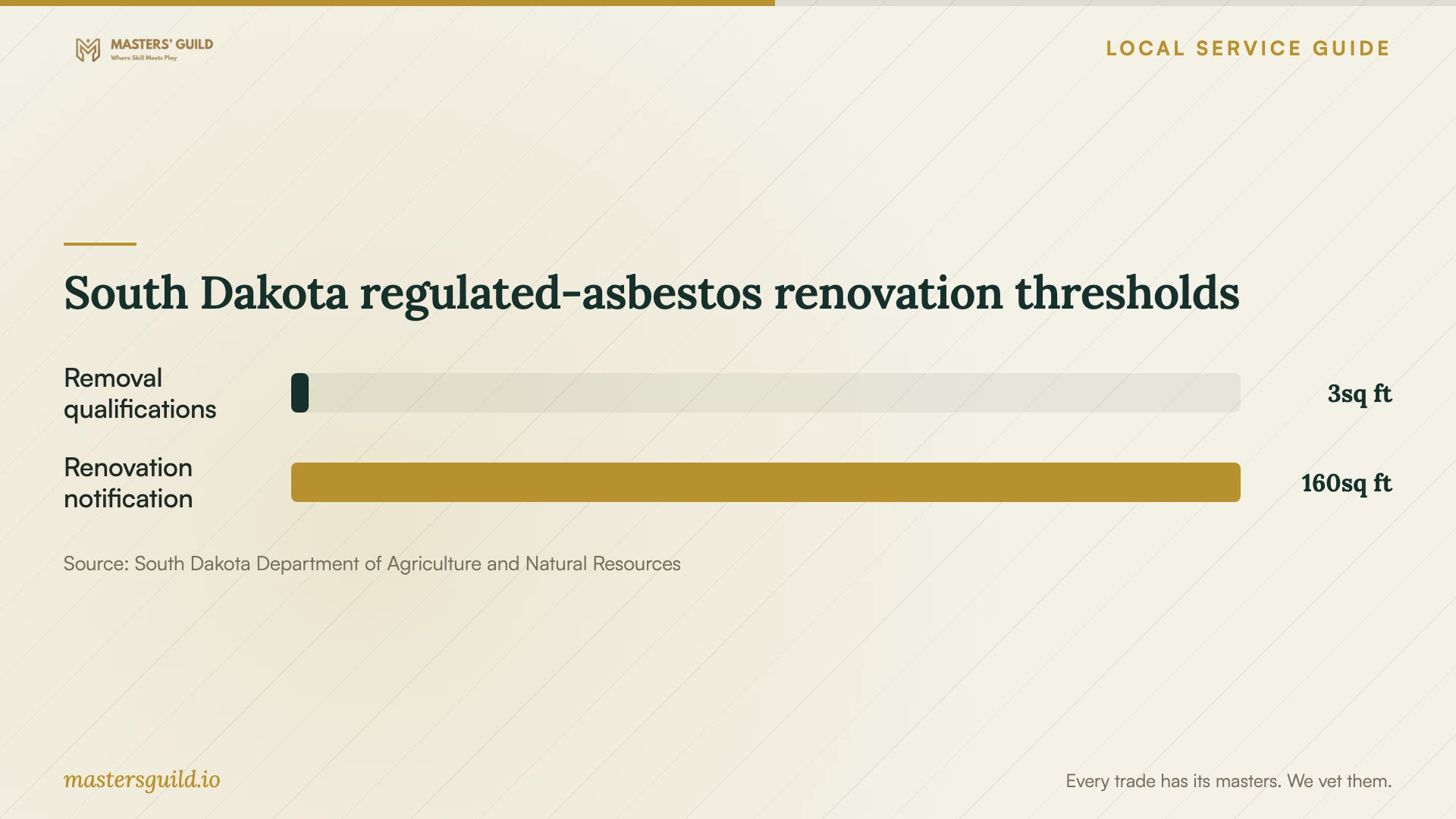
South Dakota regulated-asbestos renovation thresholds
Local details that affect your job
South Dakota tax categories affect quote comparisons
For your Sioux Falls project, request the flooring category and complete payable total from each bidder. South Dakota DOR distinguishes most floor-covering sales and installations from ceramic tile, terrazzo and epoxy flooring for tax purposes. If you compare different materials, ask each contractor to explain the applicable taxes before treating a different tax line as an error. [2]
State removal guidance affects equipment and disposal
South Dakota DANR warns that power saws and pneumatic chippers make asbestos-containing Category I materials friable. It also says landfill operators control the materials they accept and how they accept them. Before approving suspect-floor removal here, have the contractor confirm the removal method and acceptance with the intended landfill operator. Include those arrangements in the scope. [1]
Choose your next step before accepting a proposal
| Situation | Next step | Written detail to request |
|---|---|---|
| Damage in one area | Arrange a repair assessment | Repair boundaries and expected appearance |
| Replacement across rooms | Define the installation scope | Product, measurements, transitions and trim |
| Suspect asbestos-containing resilient flooring | Resolve identification and removal questions | Equipment, handling plan and landfill acceptance |
| Different flooring materials in competing bids | Clarify South Dakota tax treatment | Classification and complete payable total |
| Preparation costs remain uncertain | Agree on change approval | Allowance or pricing method and approval procedure |
Your hiring checklist
- Photograph damage and identify all rooms in the project.
- Show spare flooring and agree on acceptable repair appearance.
- Record the product, measured area, transitions and trim.
- Itemize removal, disposal and subfloor preparation.
- Request the tax classification and complete payable total.
- Resolve suspect-material identification and removal methods.
- Require written approval for additional work.
- Confirm access, furniture moving and return-to-use instructions.
Frequently Asked Questions
How should I set a flooring budget?
Obtain a measured, itemized quote for your rooms and chosen product. Include materials, removal, disposal, preparation and finishing. Have the contractor identify allowances and exclusions, explain taxes and state how you will approve additional work. Compare complete payable totals for matching scopes.
Does every flooring job carry contractor's excise tax?
DOR says most floor-covering sales and installations fall under sales or use tax. It identifies ceramic tile, terrazzo and epoxy flooring as subject to contractor's excise tax. Ask the bidder to explain the treatment for your proposed work and include applicable taxes in the total. [2]
Can the installer grind off old flooring?
Resolve asbestos questions before approving grinding of suspect resilient flooring. DANR explains that grinding and other abrasive methods can make asbestos-containing floor coverings friable. Have the contractor establish the material's content and condition, then explain the applicable handling and disposal requirements. [1]
How can I keep part of my home usable?
Give the installer a room-by-room access plan and identify essential routes. Agree on the work sequence, storage area and furniture-moving responsibilities. Get return-to-use instructions for each stage before arranging your household schedule.
Sources and scope
This guide combines the sources below with practical planning guidance. Figures apply to the stated geography and period; request a written quote for your property.