
Local service guide
Lawn mowing in Seattle: scheduling and hiring
Arrange Lawn mowing in Seattle by asking for a written quote that covers mowing, trimming, cleanup, clipping handling and sales tax. Agree on how the provider will adjust visits when growth changes. Seattle Public Utilities recommends regular mowing and leaving clippings on the lawn. Choose mulching as your starting request, then specify separate leaf cleanup or hauling where you need it. [1] [3]
Specify the work before comparing quotes
Send each provider the same photos and description. Show the front and back lawn, steps, narrow gates, slopes and areas around planted beds. Give the gate opening measurement and explain where the crew can enter. Ask the provider to identify any area their equipment cannot reach before you agree to recurring service.
Request separate prices for the first visit and ongoing care. Describe any tall grass or accumulated leaves, and ask whether the first visit includes that cleanup. Put mowing, trimming around obstacles, edging along pavement and clearing clippings from paths into the written scope. Confirm which tasks the provider includes and which require an added charge.
Washington's Department of Revenue includes mowing among landscaping services subject to retail sales tax. The department bases the rate on where the provider performs the work. Ask each provider to show the service subtotal, applicable tax and total. The sources here do not establish a local mowing price range; obtain a quote for your lawn. [3]
Agree on a schedule that follows lawn growth
Ask the provider to explain the proposed interval using your lawn's current growth and your watering plans. Start with an agreed schedule, then set a point to review it. Confirm who can authorize an extra visit, how much notice you need to cancel and whether the provider charges for a skipped mow.
Seattle Public Utilities recommends regular mowing and gives a mowing-height range of 1 to 2 inches. Ask the provider which height they propose for your lawn and how they will maintain it between visits. Include your preferred finish in the scope so both of you can assess the work after the first mow. [1]
Your summer watering choice belongs in the service discussion. The utility says lawns need about one inch of water per week, including rain, to stay green in summer. It also describes letting areas without heavy wear go brown and dormant, with watering once a month. Tell the provider which approach you intend to use and ask how they will review mowing visits as growth changes. [1]
Choose where clippings and leaves will go
Seattle Public Utilities recommends leaving grass clippings on the lawn, a practice called grasscycling. Its guidance explains that soil organisms recycle the clippings into fertilizer and that grasscycling does not cause thatch buildup. Ask the crew to leave clippings on the lawn and include clearing paved areas in the cleanup scope. [1]
If you want the crew to collect material, specify its destination: your food and yard waste cart, approved extra containers or offsite hauling. Ask who supplies bags and who sets them out. Seattle can charge for an overflowing cart when the lid cannot close, as well as for extra units beside it. Give the provider a clear instruction about what to do when your cart is full. [2]
For an autumn booking, ask for leaf collection as a separate line item. Seattle's November program allows eligible households to set out up to 10 extra yard-waste bags per collection day without extra yard-waste fees. Arrange bagging and setout around your collection day, and compare that option with the provider's hauling quote. [2]
Keep lawn repair separate from routine mowing
Ask for a separate proposal if you want to improve thin patches or change difficult areas. Seattle Public Utilities recommends spring or fall aeration, followed by overseeding thin areas and adding compost. A mowing agreement should name any additional work you approve rather than leave lawn repair as an undefined part of maintenance. [1]
For a steep, soggy or heavily shaded patch, discuss whether you want to keep grass there before paying for added lawn treatments. The utility advises considering plants better suited to those conditions and says grass grows best on level, well-drained soil in full sun or part shade. Ask the provider to distinguish mowing access concerns from a separate planting proposal. [1]
Before the first visit, remove toys and pet waste, mark items you want the crew to avoid and confirm gate access. Ask for the provider's insurance details and a contact for damage concerns. After the visit, review the agreed height, trimming and cleanup together before committing to a longer arrangement.
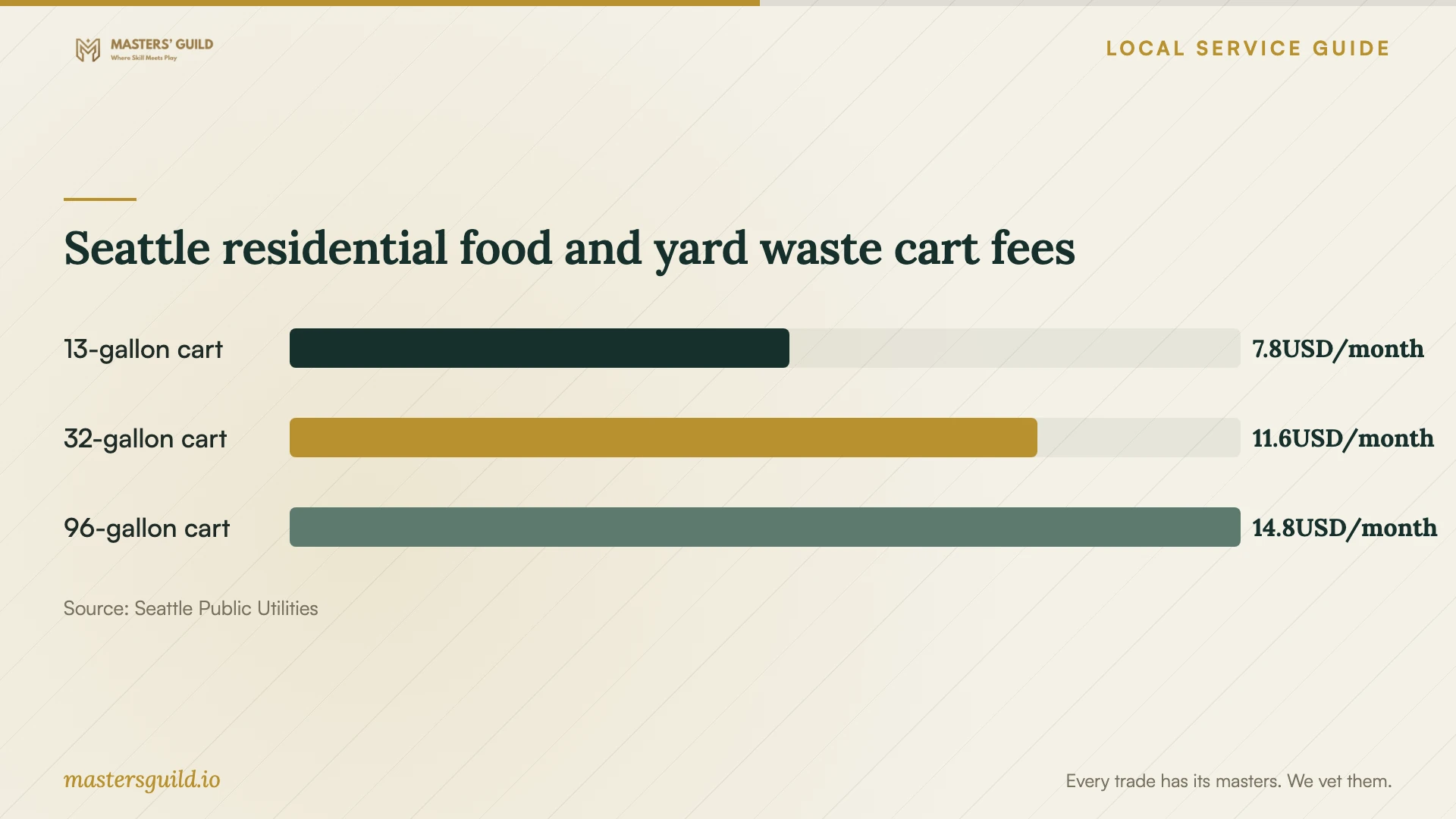
Seattle residential food and yard waste cart fees
Local details that affect your job
Budget for extra yard-waste setout
Effective April 1, 2026, Seattle lists a $7.50 charge per extra yard-waste unit, such as a brown kraft bag, bundle or 32-gallon container. The maximum weight for an extra container or bundle is 60 pounds. Ask your provider to agree on a disposal plan before filling extra units, and keep food waste in the City-provided cart. [2]
Use November's residential leaf-collection option
From November 1 to 30, households that receive bills for regular food and yard waste collection can set out up to 10 extra yard-waste bags per collection day without extra yard-waste fees. For fall service, ask whether the crew can bag and set out leaves for this program. Get a separate price for the crew's labor; the collection benefit does not establish a free cleanup service. [2]
Check tax at your service address
Washington requires retail sales tax on landscaping services to homeowners, including mowing, and uses the job location to determine the rate. Give each bidder the service address and request the final total with tax before comparing offers. [3]
Match the service scope to your yard
| Your situation | Request | Confirm before booking |
|---|---|---|
| You want clippings left on the lawn | Grasscycling, which Seattle Public Utilities recommends | Mowing height and cleanup of paved areas |
| You want material collected | Bagging with an agreed cart or hauling destination | Handling when the cart is full and any disposal charges |
| You have autumn leaves | Separate leaf cleanup; consider November's eligible residential setout program | Bag supply, collection-day timing and labor price |
| You have thin lawn patches | Separate assessment for the utility's spring or fall aeration approach | Whether overseeding and compost form part of the proposal |
| You have steep, soggy or heavily shaded areas | Discuss the utility's recommendation to consider alternative plants | Which areas the mowing quote covers |
Your hiring checklist
- Send matching lawn photos, gate measurements and access notes to each bidder.
- Request separate first-visit and recurring prices.
- Specify mowing, trimming, edging and paved-area cleanup.
- Agree on mowing height, visit reviews and skipped-visit charges.
- Choose mulching, cart use, extra setout or hauling.
- Ask for a total that includes applicable sales tax.
- Confirm insurance details, access arrangements and a contact for concerns.
Frequently Asked Questions
Should I book weekly or biweekly mowing?
Ask the provider to recommend an interval based on your lawn's growth and watering plans. Seattle Public Utilities recommends regular mowing but does not prescribe one weekly or biweekly schedule on this page. Agree on a review point and the terms for changing visits. [1]
Do I need the provider to bag grass clippings?
Seattle Public Utilities recommends leaving clippings on the lawn and says grasscycling does not cause thatch buildup. If you prefer collection, specify where the material will go and ask for any bagging or hauling charge in the quote. [1]
Does Seattle's free November collection cover mowing labor?
The program waives extra yard-waste fees for up to 10 bags per collection day for households billed for regular food and yard waste collection. Arrange and price the provider's mowing, leaf collection and bagging labor as separate services. [2]
Should a mowing quote include sales tax?
Washington requires retail sales tax on mowing provided as a landscaping service to homeowners. Ask the provider to state whether the quoted amount includes tax and to show the total using the job location's rate. [3]
Sources and scope
This guide combines the sources below with practical planning guidance. Figures apply to the stated geography and period; request a written quote for your property.