
Local service guide
Bathroom Remodeling in Seattle: Plan and Hire
For Bathroom Remodeling in Seattle, define whether you want a surface refresh, a replacement bathroom in the same layout, or relocated fixtures before requesting written bids. Choose a registered contractor after checking credentials, references, scope, and payment terms. Assign construction and plumbing permit responsibilities in the contract, and arrange the required asbestos survey before demolition. [1] [2] [3] [4]
Choose the scope before comparing contractors
Write a room-by-room scope for this bathroom: what stays, what comes out, and what you want to move. Identify the toilet, shower or tub, vanity, lighting, and exhaust fan. Give each bidder the same photos and measurements. Separate essential repairs from optional finishes so you can reduce the scope without losing the work you need.
For the shower, ask each bidder to describe the proposed waterproofing materials, installation steps, and responsibility for the finished assembly. Ask how the crew will handle damage discovered after demolition. Request a written change-order process with pricing and your approval before extra work begins. L&I recommends that contracts identify the work, materials, subcontractors, warranties, and change-order procedures. [4]
Separate construction review from plumbing permits
SDCI says minor repairs or alterations costing $6,000 or less in any six-month period can fall within a construction permit exemption, unless the property lies in an environmentally critical area. The threshold uses the fair-market value of labor and parts, including work you do yourself. Work on load-bearing supports, changes to the building envelope, or reductions in egress, light, ventilation, or fire resistance require a permit regardless of project size. [1]
Public Health – Seattle & King County handles plumbing permits and inspections in Seattle. Its guidance requires a permit whenever you install, relocate, or change a plumbing system. Ask the contractor to identify construction, plumbing, and electrical permit needs separately and record who applies, pays fees, and schedules inspections. L&I says hired contractors must take out permits in most instances; clarify any proposed homeowner application before signing. [2] [4]
Resolve asbestos questions before demolition
Puget Sound Clean Air Agency requires an asbestos survey before renovation. If you own and live in the single-family house you plan to remodel, the agency allows you to conduct your own survey under its sampling guidance. For other situations, including condos and rental properties, you must hire an AHERA-certified building inspector. Share the results with anyone who may encounter the materials and keep a copy on site. [3]
Put the survey ahead of the demolition date in your project plan. Ask the bidder which materials the crew intends to disturb and whether the quote includes survey coordination or any required abatement. For a condo or rental property, the agency requires a certified asbestos abatement contractor if you remove asbestos. Do not authorize demolition while the survey or removal responsibilities remain unresolved. [3]
Compare the full contract and plan bathroom access
Use L&I’s contractor verification guidance to check registration, bonding, liability insurance, and infractions. Check workers’ compensation coverage when the contractor has employees; L&I notes that contractors without employees do not need a workers’ compensation account. Request the subcontractor list and check the companies that will work in your home. Contact references and ask about communication, changes to the bill, and completion. [4]
Ask for a schedule that identifies demolition, inspections, fixture installation, and the point when you can use the bathroom again. If this is your only bathroom, agree on an alternative before work starts. Specify dust protection, debris removal, work hours, and shutdown notices. Ask which fixtures must arrive before demolition and who handles an incorrect or damaged delivery.
L&I recommends paying as significant phases finish rather than by calendar date, retaining a portion until completion, and avoiding full payment before you accept the work. Before final payment, request completed lien releases from major subcontractors and suppliers. Include those payment and closeout arrangements in the written contract. [4]
Consider fixture use alongside the installation budget
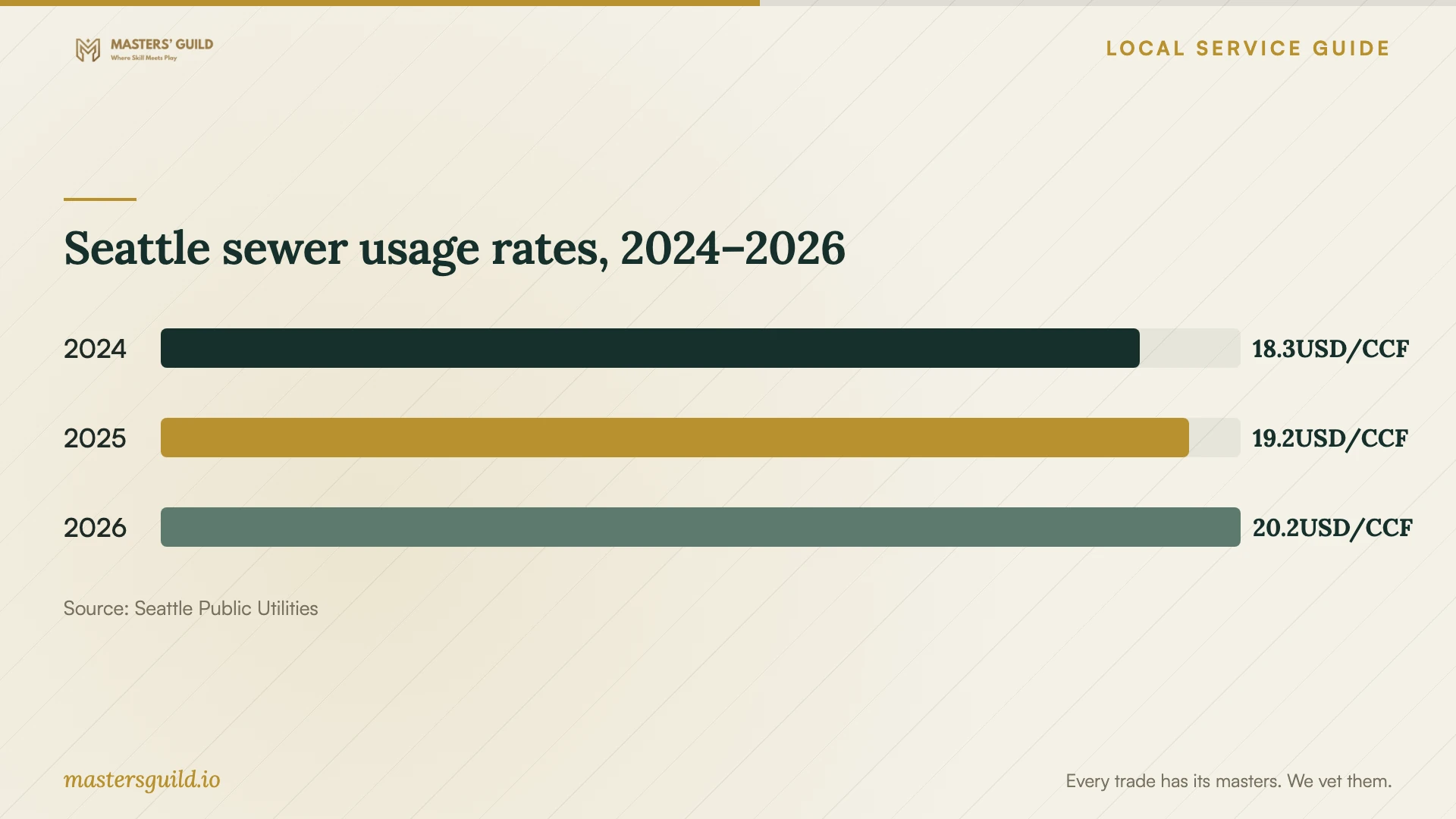
Seattle Public Utilities lists sewer rates of $18.30 per CCF in 2024, $19.21 in 2025, and $20.18 in 2026. One CCF equals 748 gallons. These rates provide operating-cost context when you compare toilet and shower specifications; they do not establish a bathroom remodel price or a promised saving from a new fixture. [5]
SPU bases single-family residential sewer billing on winter water consumption and uses the winter average for summer bills. Multifamily residential customers use actual water consumption throughout the year. Check your account’s billing category before estimating a fixture’s effect on your bill. For the project budget, request itemized installation bids rather than treating utility rates as construction cost evidence. [5]
Seattle sewer usage rates, 2024–2026
Local details that affect your job
Use the Public Health Permit Center for Seattle plumbing
Seattle plumbing permits run through Public Health – Seattle & King County. Its Public Health Permit Center accepts applications, design documents when needed, inspection requests, and status checks. Ask your contractor for the permit record and inspection responsibility before plumbing work begins. The county directs projects in other King County cities, apart from its listed jurisdictions, to those cities’ building departments. [2]
A condo changes who can perform the asbestos survey
The regional asbestos survey exception applies to an owner who lives in the single-family house being remodeled. A condo owner must hire an AHERA-certified building inspector, as must an owner renovating a rental property. Identify the property type when requesting bids and include the survey before the contractor’s demolition start. [3]
Check the scope before relying on the construction exemption
Seattle counts fair-market labor and parts toward its $6,000 minor-alteration threshold over six months, including DIY labor. A project below that value still requires a permit if it affects the listed structural, envelope, or building-function protections. Send SDCI a description of the proposed changes if the exemption is unclear. [1]
Match the proposed work to your next step
| Proposed work or property | Decision before hiring | Ask the bidder |
|---|---|---|
| Painting and surface finishes | Check SDCI’s exemptions and confirm the complete scope meets code. | Does the quote include any work beyond surface finishes? |
| Installing or moving plumbing | Arrange the required Public Health plumbing permit. | Who applies and schedules inspections? |
| Changing supports or reducing ventilation | Seek construction permit review regardless of project value. | Which parts of the design need SDCI review? |
| Condo or rental renovation | Hire an AHERA-certified inspector for the asbestos survey. | Who coordinates the survey before demolition? |
| A bid with unclear allowances | Request a complete written scope, materials list, and change-order process. | Which fixtures, fees, taxes, and subcontractors does this price include? |
Your hiring checklist
- Give each bidder the same fixture list, measurements, photos, and keep-or-replace scope.
- Ask for separate prices for essential repairs and optional finishes.
- Record who will confirm permit needs, submit applications, pay fees, and request inspections.
- Resolve the asbestos survey and any removal responsibilities before setting demolition.
- Request a description of shower waterproofing and the process for hidden damage.
- Agree on bathroom access, water shutdown notices, dust protection, and debris removal.
- Write payment milestones, change approval, and final documentation into the contract.
Frequently Asked Questions
Does a bathroom remodel under $6,000 avoid permits?
The price alone does not settle the question. Seattle’s minor-alteration exemption has scope restrictions and counts fair-market labor and parts over six months. Public Health requires a separate plumbing permit when you install, relocate, or change a plumbing system. [1] [2]
Can I get a homeowner plumbing permit?
Public Health – Seattle & King County offers homeowner plumbing permits and recommends hiring a professional plumber. A homeowner permit authorizes the homeowner to perform the plumbing. If you hire a contractor, clarify why they propose a homeowner permit; L&I says contractors must obtain permits in most instances. [2] [4]
Can I conduct the asbestos survey for my condo?
Puget Sound Clean Air Agency requires an AHERA-certified building inspector for condo renovations. Its option to conduct your own survey applies to a single-family house that you own and occupy. [3]
How should I compare bathroom remodeling prices?
Request written bids against the same scope. Compare materials, subcontractors, start and completion dates, warranties, permit fees, taxes, and payment terms. Ask each bidder to identify exclusions and explain how you approve and price changes before signing. [4]
Sources and scope
This guide combines the sources below with practical planning guidance. Figures apply to the stated geography and period; request a written quote for your property.