
Local service guide
Furniture Assembly in San Jose: Plan Your Job
Arrange Furniture Assembly in San Jose by sending the assembler your model numbers, instructions and access details, then request a written quote covering the tasks you need. Agree on carrying, final placement, tip-restraint installation and cleanup before booking. For built-ins or room alterations, confirm permit requirements and applicable contractor credentials before authorizing that work.
Get a quote for the furniture you own
Send each provider the manufacturer, model number, quantity and assembly instructions. Include photographs of the boxes and the intended room. Tell the assembler whether you have started the build, removed packaging or discovered damaged panels. Ask them to review the instructions and identify any steps that need another person or equipment before quoting.
List carrying boxes, moving existing furniture, assembly, restraint installation, placement and packaging removal as separate tasks. Request an item-specific quote. For hourly work, ask about the minimum charge, billing increments and approval for additional time. For a fixed quote, ask what happens if parts are missing or the item differs from your description.
Ask who supplies additional hardware and whether the quote includes a return visit. Agree on a stopping point if the assembler finds damage or cannot complete a required step. Put those terms in writing so you can compare the total scope, rather than choosing from prices that cover different work.
Include restraints in the completion plan
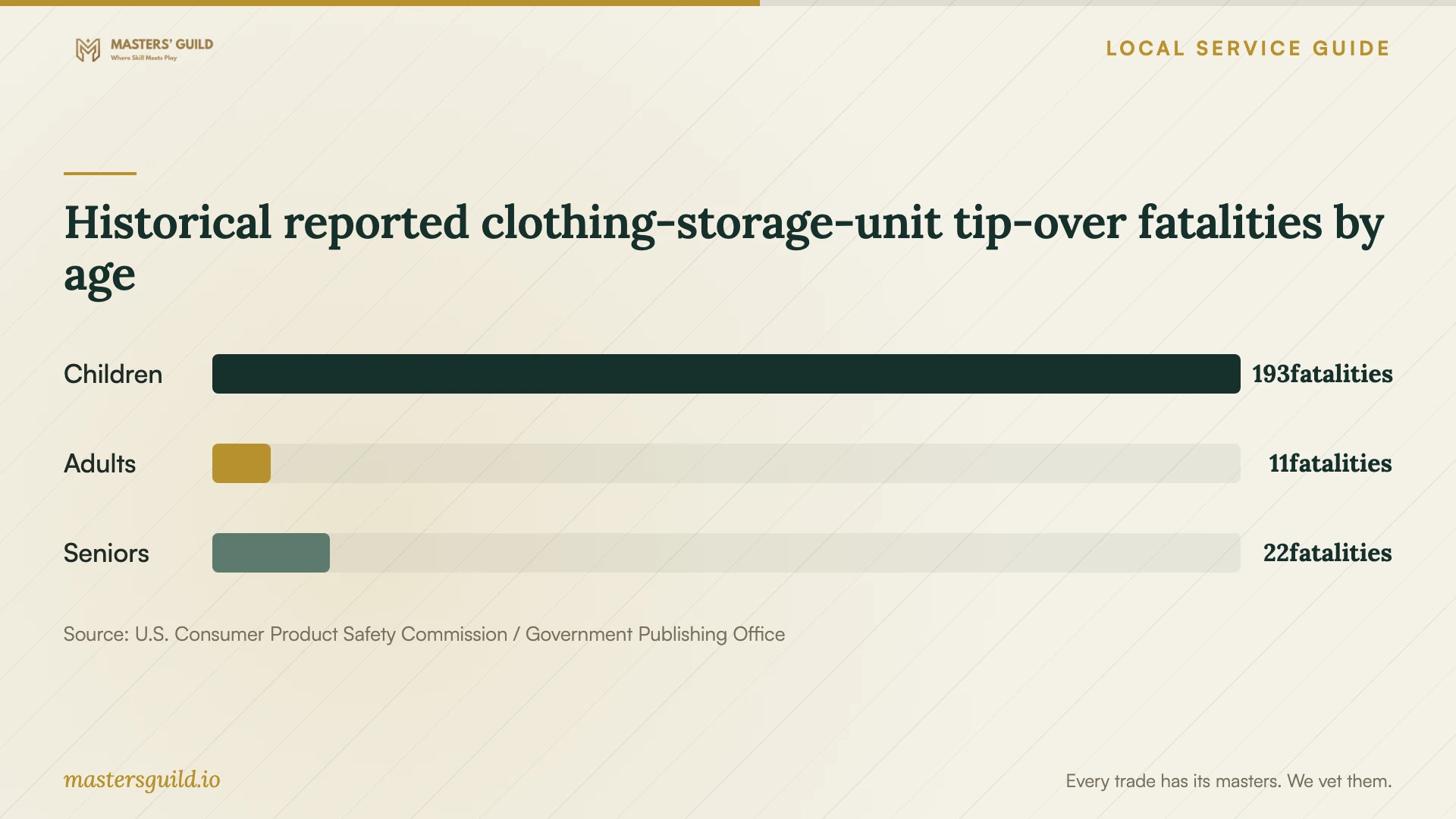
Ask the assembler to review the manufacturer's tip-restraint instructions for your dresser or wardrobe. CPSC's historical research documents clothing-storage-unit tip-overs involving children, adults and seniors. The agency also describes its Anchor It campaign, which promotes restraints for furniture and televisions. [3]
Show the provider the intended position and discuss both the furniture connection and wall connection. Ask them to confirm suitable hardware against the product instructions and the wall construction. If you rent, resolve drilling permission before the visit. Ask the assembler to explain any attachment they cannot complete and agree on the next step before using the item.
In convenience-sample testing of 26 clothing storage units, CPSC staff reported results suggesting that specific heights or weights did not correlate with stability or instability. Staff limited the results to the tested units and observed reduced stability as more drawers opened. Treat that exploratory finding as a reason to follow your product's instructions, rather than judging safety from size or weight alone. [3]
Separate assembly from changes to the room
Describe any work beyond joining furniture parts. Tell the provider whether you want a freestanding wardrobe with a restraint, permanently installed cabinetry, or alterations to the room. Ask them to identify those tasks in the quote and explain the credentials needed for any covered construction work.
California CSLB guidance requires a current license for covered contracting projects that require a building permit, use employee labor or workers, or total $1,000 or more in combined labor and materials. The guidance does not determine the licensing status of a particular freestanding assembly job. Use the statewide check for installation work here, and confirm permit requirements for your scope with the city. [1]
Prepare the room and check the finished work
Plan the route from the unloading point to the room. Tell the assembler about stairs, elevator access and building appointment requirements. Ask your building manager about loading arrangements and reserve access if required. Clear space for laying out parts, protect nearby surfaces and keep children and pets away from the work area.
Inspect the furniture with the assembler before they leave. Ask them to demonstrate drawers, doors and adjustment features against the instructions. Check the agreed placement and restraint work, and ask about any unfinished step. Photograph damage or missing parts, keep the instructions and spare hardware, and record who will resolve outstanding work.
Historical reported clothing-storage-unit tip-over fatalities by age
Local details that affect your job
Check the downtown parking location before booking
San Jose City Council File 26-1004 names Market/San Pedro Square, Third Street and Convention Center garages in proposed parking changes. The record shows Agenda Ready status and no recorded final action, so it does not establish current charges. If your appointment involves one of these facilities, verify posted charges and event terms. Agree whether you will reimburse a receipt or a capped amount. [2]
Verify California credentials for covered installation
CSLB offers license verification and a telephone check at (800) 321-2752. For a San Jose job involving covered installation or alterations, ask for the provider's license number and check it before authorizing the work. Ask the provider to explain the relevant classification; CSLB distinguishes general building contractors from specialists who perform individual trades. [1]
Choose the next step for your job
| Your situation | Next step |
|---|---|
| Small item with complete parts | Review the instructions and decide whether you can perform the steps; request help for steps you cannot manage. |
| Dresser or wardrobe | Discuss the manufacturer's restraint instructions and include the agreed installation work in the quote. |
| Permanent installation or room alterations | Ask about applicable credentials and confirm permit requirements before authorizing the work. |
| Apartment with controlled access | Ask the building manager about loading and elevator arrangements, then share them with the assembler. |
| Damaged panels or missing hardware | Arrange replacements and agree whether to postpone or complete other items during the visit. |
Your hiring checklist
- Send model numbers, quantities, instructions and photographs.
- List carrying, assembly, restraint installation, placement and cleanup.
- Confirm billing terms and approval for additional work.
- Inspect parts and arrange replacements for damage or missing hardware.
- Resolve drilling permission and discuss attachment hardware.
- Arrange loading access, elevator reservations and parking reimbursement.
- Inspect completion together and record unresolved steps.
Frequently Asked Questions
How much should I budget?
Request quotes for your exact models and the same task list. Ask providers to state minimum charges, additional hardware, parking reimbursement and return-visit terms. For hourly work, agree on when the assembler must seek your approval to continue.
Should I unpack everything before the appointment?
Ask the assembler how they want you to prepare the boxes. Keep labels and instructions, photograph damage, and avoid mixing hardware between items. Tell the provider about missing parts before the appointment and agree whether to reschedule.
Can I book several items together?
Request a quote for the complete list and ask the assembler to propose the order of work. Identify the item you need first, and agree on what to do if one build stops because of missing parts. Confirm whether the provider can finish the remaining items during that visit.
Sources and scope
This guide combines the sources below with practical planning guidance. Figures apply to the stated geography and period; request a written quote for your property.