
Local service guide
TV Mounting in San Francisco: Plan Your Installation
For TV Mounting in San Francisco, hire an installer who will assess your television, mounting kit, wall attachment and cable route before drilling. Send model numbers and photos, compare itemized quotes for the same scope, and agree on building access and parking. Earthquake Country Alliance recommends wall mounting where possible and following the mounting-kit manufacturer's instructions. [1]
Define the job before comparing quotes
Send the television and mounting-kit model numbers, the TV's documented weight, and photos of the proposed wall and nearby outlets. Include a wider view showing your seating. If you have not bought a bracket, ask the installer to propose one and explain its suitability before you order.
Mark your proposed screen position with removable tape and check it from your usual seat. Tell the installer whether you want the screen to tilt or extend. Ask them to review movement, cable slack and furniture clearance, then confirm the position with you before drilling.
Request comparable itemized quotes for installation labor, the bracket, cable management, wall repair and any additional worker. Ask whether each quote includes connecting devices and demonstrating bracket adjustments. Agree on how the installer will price changes if the wall assessment reveals additional work.
Include earthquake restraint in the assessment
Earthquake Country Alliance's California preparedness guidance warns that televisions can tip or fall during earthquakes. The organization includes a Bay Area region and recommends wall mounting where possible, following the manufacturer's instructions. Ask your installer how the proposed attachment meets your kit's requirements. [1]
Have the installer identify the wall construction and attachment points before approving drilling. If they cannot confirm a suitable attachment, pause and discuss another position or a furniture-based setup. Ask them to explain any additional assessment or work before you authorize it.
For a television on furniture, the Alliance describes flexible straps connecting the screen to its supporting furniture. It also advises securing tall supporting furniture to wall studs. Include the console in your restraint discussion rather than assessing the screen alone. [1]
Set the cable route and repair responsibilities
Choose between visible cable covers and a proposed route through the wall before requesting a final quote. Ask the installer to identify wall openings and explain who will assess any new or relocated outlet, confirm applicable requirements, and complete the electrical work. Put patching, paint and cleanup responsibilities in writing.
Tell the installer if your home predates 1978. EPA explains that renovation involving lead-based paint can create hazardous dust and recommends a lead-safe certified contractor for renovation, repair and painting projects in these homes. Ask the firm to determine which RRP requirements and exemptions apply to your proposed paint disturbance. [4]
If you rent or need building-association approval, obtain the relevant permission before scheduling. Share work-hour rules, elevator arrangements and instructions for protecting common areas. Confirm who will provide access if you cannot be present for the whole appointment.
Check the vehicle and parking location
SFMTA allows advance purchase of one-day visitor permits and limits each address to 20 per calendar year. Before buying, check address eligibility and ask for the arriving vehicle's type, whether it is electric, and its gross vehicle weight rating, or GVWR. SFMTA excludes non-electric vehicles over 6,000 pounds GVWR, electric vehicles over 8,000 pounds GVWR, and trailers from residential permits. Motorcycles are ineligible for short-term permits. [2]
A residential permit covers posted residential time limits in its matching permit area. It does not waive color-curb restrictions, the requirement to move a vehicle every 72 hours, or ordinary meter payment. SFMTA allows meter-payment exemptions only on qualifying Pay or Permit blocks with matching permit-area signs. Check the actual space before offering it to the installer. [2]
Ask whether the arriving vehicle already has an SFMTA contractor permit. Eligibility requires commercial plates, a business with a relevant California contractor's license, and permanent company-name and license-number markings on both vehicle sides. These permits provide meter-payment and parking-time-limit exemptions subject to restrictions: the driver cannot use one at a meter within 1,500 feet or three blocks, whichever is greater, of the contractor's principal business address or any satellite office. SFMTA also prohibits parking in yellow truck loading zones designated for vehicles with six or more wheels. [3]
Agree on a lawful parking location and who pays parking charges before setting the arrival time. Give the installer entrance instructions and describe the route from the vehicle to your home, including stairs or elevator access.
Review the installation before closing the job
Ask the installer to demonstrate bracket adjustments and explain any limits in its instructions. Check screen position, cable routing and connected devices together. Record any unfinished repair or electrical work and identify who will complete it.
Keep the kit instructions, itemized invoice and photos of the attachment before the screen covers it. Ask whom to contact if you notice movement or need to remove or replace the television.
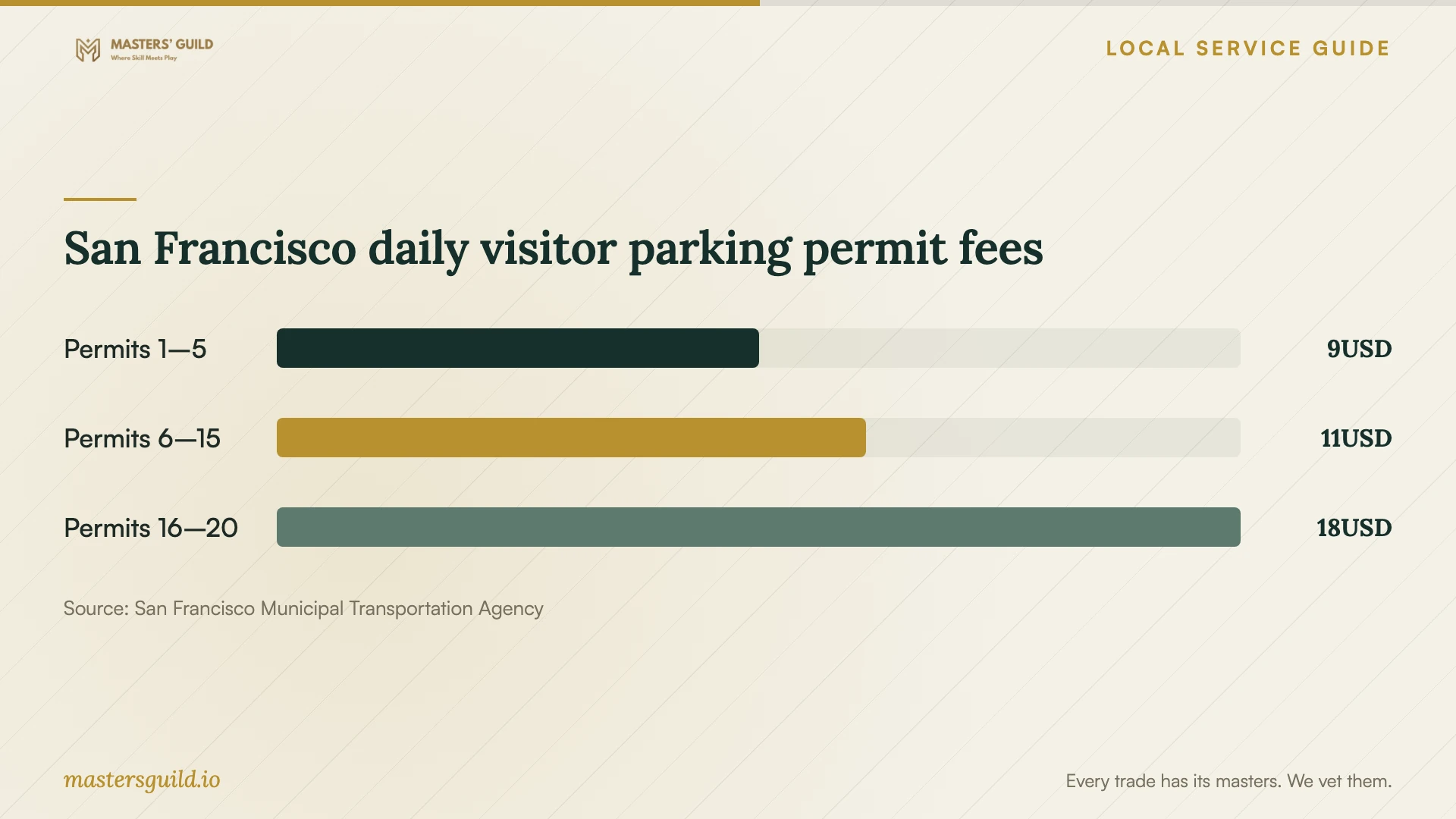
San Francisco daily visitor parking permit fees
Local details that affect your job
Check visitor-permit eligibility before purchase
SFMTA offers advance-purchase daily visitor permits, limited to 20 per address per calendar year. Permits 1–5 cost $9 each, 6–15 cost $11 each, and 16–20 cost $18 each. Ask the installer for vehicle type, electric status and GVWR: residential permits exclude non-electric vehicles over 6,000 pounds, electric vehicles over 8,000 pounds, and trailers; short-term permits exclude motorcycles. Check your address eligibility and annual purchase history before buying. [2]
Verify contractor-permit restrictions at the planned space
An SFMTA contractor permit provides conditional meter-payment and time-limit exemptions for eligible marked commercial vehicles. Drivers cannot use it at meters within 1,500 feet or three blocks, whichever is greater, of their principal business address or any satellite office. SFMTA also prohibits parking in yellow truck loading zones for vehicles with six or more wheels. Ask the installer to confirm the planned space against these restrictions before relying on their permit. [3]
Apply California earthquake guidance to the whole setup
Earthquake Country Alliance recommends wall mounting where possible and following the kit manufacturer's instructions. Its California guidance also describes TV-to-furniture straps and securing tall supporting furniture to wall studs. For your Bay Area installation, ask the provider to assess the screen and supporting furniture together. [1]
Choose your next step before booking
| Your situation | Next step | Confirm with the installer |
|---|---|---|
| You have a television and mounting kit | Send both model numbers and wall photos. | How will the attachment follow the kit instructions? |
| You want concealed cables | Request a route and an itemized scope. | Who handles wall openings, electrical assessment and repairs? |
| Your pre-1978 home needs paint-disturbing work | Discuss EPA's lead-safe contractor recommendation. | Which RRP requirements and exemptions apply? |
| You plan to buy a visitor parking permit | Check address eligibility, purchase history and vehicle restrictions. | What vehicle, electric status and GVWR will arrive? |
| The installer has a contractor parking permit | Check the planned space and business-address proximity restriction. | Does the space comply with meter-location and yellow truck loading-zone restrictions? |
| You will keep the television on furniture | Discuss the Alliance's strap-based restraint option. | How will you secure the screen and any tall supporting furniture? |
Your hiring checklist
- Send television and bracket model numbers, documented weight and wall photos.
- Mark the proposed screen position and describe the movement you want.
- Ask the installer to assess attachment points before drilling.
- Agree on cable routing, electrical assessment, patching, paint and cleanup.
- Share building age and discuss lead-safe practices before paint disturbance.
- Obtain relevant building approval and arrange entrance and elevator access.
- Confirm the arriving vehicle, lawful parking space and parking charges.
- Review bracket operation, connected devices and unfinished work together.
Frequently Asked Questions
How should I budget for installation?
Request itemized quotes for the same television, bracket, wall and cable plan. Compare labor, hardware, repairs, device connection and parking charges. Ask each installer to explain how they will obtain approval and price additional work after assessing the wall.
Can I buy a visitor parking permit for the installer?
Check your address eligibility and the arriving vehicle first. SFMTA excludes non-electric vehicles over 6,000 pounds GVWR, electric vehicles over 8,000 pounds GVWR, and trailers from residential permits; motorcycles cannot receive short-term permits. Confirm the matching permit area and obey remaining curb and meter restrictions. [2]
Does the installer's contractor permit cover any nearby meter?
SFMTA prohibits its use at meters within 1,500 feet or three blocks, whichever is greater, of the contractor's principal business address or any satellite office. It also prohibits parking in yellow truck loading zones designated for vehicles with six or more wheels. Ask the installer to check the proposed space. [3]
Should I mention old paint before mounting?
Tell the installer if your home predates 1978 and describe planned drilling, cutting or patching. EPA recommends lead-safe certified contractors for renovation projects in these homes. Ask the firm to determine applicable RRP requirements and exemptions before approving paint disturbance. [4]
Sources and scope
This guide combines the sources below with practical planning guidance. Figures apply to the stated geography and period; request a written quote for your property.