
Local service guide
Move-Out Cleaning in San Francisco: Plan Your Handover
Arrange Move-Out Cleaning in San Francisco after you remove your belongings, and give the cleaner a written room-by-room scope before accepting a quote. For a rental, compare that scope with your move-in records: California Courts says landlords can deduct for cleaning only to restore the cleanliness at move-in. Request a pre-inspection, arrange furniture disposal before your cleaning appointment, and leave time to check the work before handing over keys. [1]
Set the cleaning scope before requesting quotes
Start with your move-in condition report, photographs and any written handover instructions. California Courts says a landlord must notify a tenant in writing of the right to request a pre-inspection after the tenant gives notice. Request that inspection and use the findings to discuss the cleaning work you plan to complete. [1]
Send prospective cleaners the same task list. Specify kitchen counters, sinks, bathroom fixtures, floors, baseboards and the surfaces inside empty cupboards. Ask whether the quote includes the oven and refrigerator interiors, window glass and tracks, or carpet cleaning. Point out grease, pet hair and any marks you want the cleaner to assess before booking.
Separate cleaning from repair requests. California Courts distinguishes cleaning deductions from deductions for damage beyond normal wear and tear. Photograph disputed marks and ask the landlord to identify the concern before you pay someone to treat it. [1]
Compare written quotes and completion terms
Ask for a total based on the agreed scope, with separate amounts for optional tasks and any parking or access charges. Give each provider the home size, bathroom count, photographs and the date you expect the rooms to be empty. Ask who supplies equipment and products, and who will attend the appointment.
Before accepting, confirm how the cleaner handles a task that takes more work than expected. Require your approval before extra charges. Ask about insurance, responsibility for damaged surfaces, cancellation terms and whether the provider offers a return visit for missed agreed tasks. Record those answers with the quote.
Avoid treating a cleaning receipt as a promise of a full deposit refund. California Courts lists other permitted deductions, including damage beyond normal wear and tear and, generally, unpaid rent. Buy the cleaning work you need and retain records of its completion. [1]
Remove furniture before the cleaner arrives
Check Recology collection availability before setting your cleaning date. Its San Francisco bulky-item program requires an active residential or apartment account. Tenants can contact Recology to schedule their collection, and customers cannot schedule a pickup after closing their account. [3]
Recology accepts up to 10 items per bulky-item appointment, subject to its accepted-item rules. The program excludes hazardous waste, construction and demolition debris, and auto parts and tires. It also does not serve as collection for extra household garbage or recyclables that belong in your carts. Describe your items when arranging disposal. [2] [3]
If the available pickup date falls after your handover, arrange another route before the cleaning visit. Recology says customers cannot pay an extra fee for an earlier bulky-item collection. It identifies donation, a junk-removal company or drop-off at the transfer station at 501 Tunnel Avenue as alternatives; transfer-station fees may apply. [3]
Confirm building access and cleaning products
Agree on keys, entry instructions, elevator access and a lawful place for the cleaner to park. Ask your building manager whether you need to reserve an elevator or follow service-entry rules. Schedule the cleaner after the movers finish, and keep water and electricity available for the agreed work.
Check street jurisdiction before setting the moving date or requesting a moving-van reservation. SFMTA requires at least five business days between application and enforcement for new temporary-sign requests, excluding legal holidays. For applications on Port property, it requires at least 15 calendar days between the request and event. Temporary signs do not override existing parking restrictions or reserve parking for personal vehicles. Confirm the cleaner’s parking arrangements separately. [4]
Tell the cleaner about product sensitivities and ask which products they plan to use on your surfaces. San Francisco Environment recommends products carrying Green Seal, EcoLogo or EPA Safer Choice certification and advises users to follow label warnings and directions, including for safer alternatives. Ask the provider to confirm surface compatibility before treating stone, wood or other finishes. [5]
Check the work and retain handover records
Walk through the empty home against the agreed task list before returning keys. Check appliance interiors and cupboards if you paid for them. Photograph the completed rooms and any remaining issues, request correction of missed tasks, and keep the invoice with your quote and move-in records.
California Courts says a landlord has 21 days after move-out to return the deposit or return the balance with an itemized deduction statement. Its guidance also permits a reasonable good-faith repair-cost estimate if repairs remain unfinished within that period for a good reason. The landlord must then send receipts within 14 days after completing the repairs. [1]
For deductions exceeding $125, California Courts requires invoices or receipts with the itemized statement, subject to the repair-estimate procedure. If the landlord or an employee performs the work, the landlord must describe the work, time spent and hourly rate, which must be reasonable. Compare any cleaning deduction with your records and keep copies of your correspondence. [1]
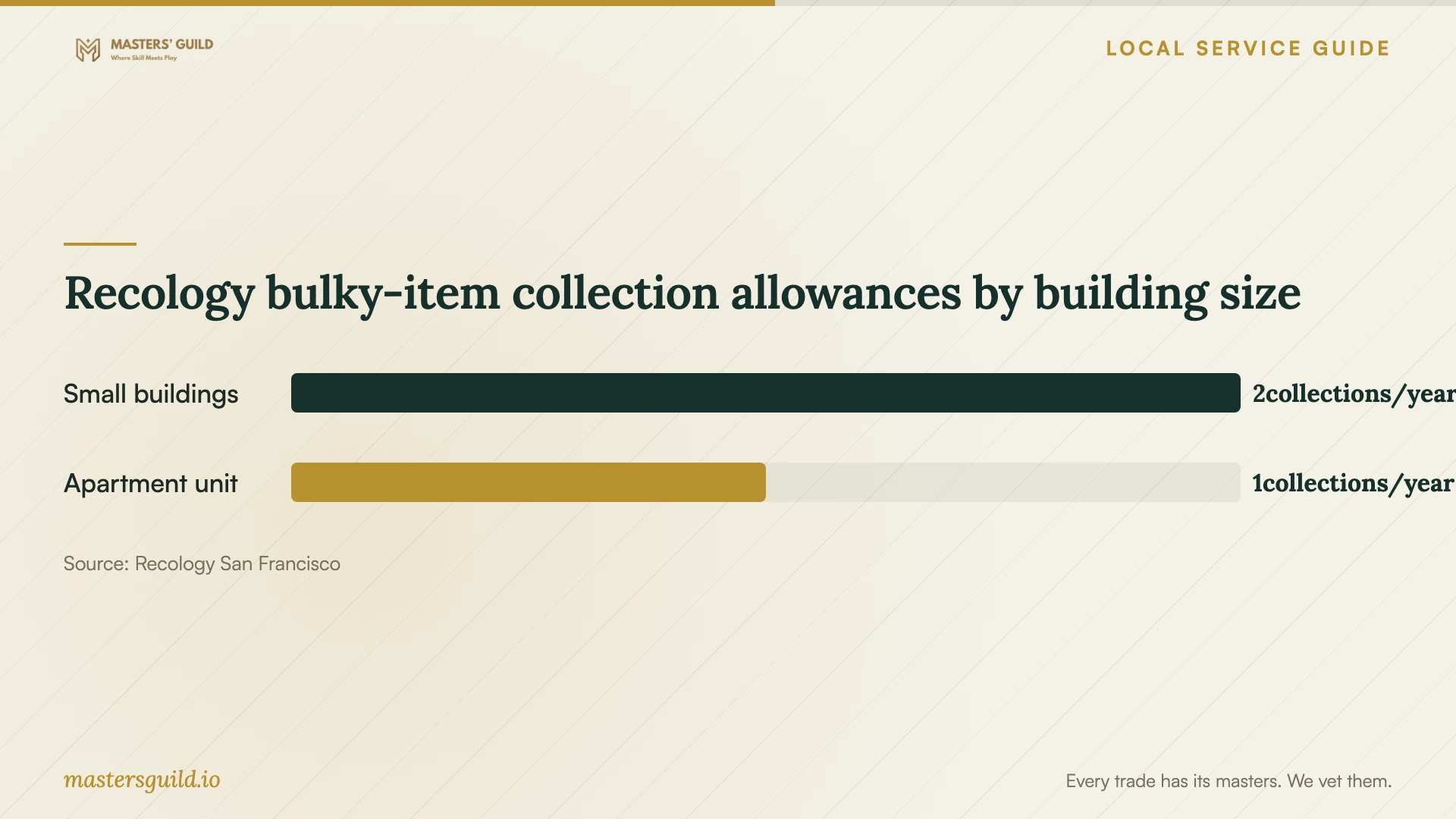
Recology bulky-item collection allowances by building size
Local details that affect your job
Use the collection allowance for your building
Recology San Francisco gives residential customers in buildings with five units or fewer two no-additional-charge curbside bulky-item collections per calendar year. Each unit in a building with six or more units can receive one no-charge collection. Unused collections do not accumulate. Check your remaining allowance before adding hauling to the cleaning quote. [2] [3]
Stage bulky items within the pickup window
Recology instructs residents to place scheduled items at the curb no earlier than 6 PM the day before pickup and no later than 6 AM on pickup day. Attach a RECOLOGY sign and keep the sidewalk clear. Plan who will move the items outside if you leave before collection. [2] [3]
Check jurisdiction before arranging moving-zone signs
Check whether your moving address falls on Port property before setting the moving date. SFMTA requires at least five business days between application and enforcement for new temporary-sign requests, excluding legal holidays; applications on Port property require at least 15 calendar days between request and event. For unmetered spaces, signs must appear at least 72 hours before enforcement; for metered spaces, at least 24 hours. Coordinate loading and sign arrangements before confirming the empty-home cleaning appointment. [4]
Choose the next step before booking
| Your situation | Recommended next step | What to confirm |
|---|---|---|
| You can complete the agreed cleaning yourself | Use the move-in condition as your reference and inspect your work | Any concerns identified during the pre-inspection |
| You need help before a fixed key-return date | Request an empty-home cleaning quote with a written scope | Completion time and correction of missed tasks |
| Furniture remains and you have a Recology allowance | Check collection availability before adding paid hauling | Active account, accepted items and remaining calendar-year allowance |
| The Recology appointment misses your handover | Arrange donation, transfer-station drop-off or separate hauling | Acceptance, transport and any charges |
| Your move requires reserved curb space | Check street jurisdiction and arrange SFMTA moving-zone signage | Five-business-day minimum for new requests, or 15 calendar days on Port property; separate lawful parking for the cleaner |
Your hiring checklist
- Compare your move-in records with the cleaning tasks you plan to request.
- Send each cleaner the same photographs and room-by-room scope.
- Confirm appliance interiors, windows and carpet work in writing.
- Arrange furniture and waste removal before the cleaning visit.
- Check street jurisdiction with SFMTA when planning a moving-zone request.
- Agree on access, parking, utilities and who supplies cleaning products.
- Confirm extra-charge approval and missed-task correction terms.
- Inspect the completed work, photograph the rooms and retain the invoice.
Frequently Asked Questions
Should I hire a cleaner or do the work myself?
Compare the agreed tasks with your available time and equipment. Consider doing the work yourself if you can complete and inspect it before handover. Hire help if you need assistance with the scope or deadline. Request a pre-inspection either way; California Courts describes the tenant’s right to request one. [1]
Can the landlord deduct for cleaning after I hire a professional?
California Courts says a landlord can deduct for cleaning needed to restore the cleanliness at move-in. Hiring a professional does not establish that every task meets that standard. Keep move-in photos, completed-work photos and the cleaner’s invoice to compare with any deduction. [1]
Can I pay Recology to collect furniture sooner?
Recology says it does not offer earlier bulky-item pickup for an extra fee. If appointment availability misses your deadline, consider donation, separate hauling or transfer-station drop-off. Confirm acceptance and charges before transporting anything. [3]
How can I request safer cleaning products?
Ask the provider to name its products before booking and explain any sensitivities or surface concerns. San Francisco Environment recommends Green Seal, EcoLogo and EPA Safer Choice certifications. It also advises following warnings and directions for products marketed as safer alternatives. [5]
Sources and scope
This guide combines the sources below with practical planning guidance. Figures apply to the stated geography and period; request a written quote for your property.