
Local service guide
Moving Services in San Diego: Hiring and Access
For Moving Services in San Diego, choose a mover whose California household-moving license you can verify, get a written estimate after a visual inspection, and settle truck or container access before booking. California’s Bureau of Household Goods and Services requires licensing for companies moving household goods within, into or out of the state. For a move crossing California’s border, the company also needs Federal Motor Carrier Safety Administration licensing. Give each bidder the same inventory and access details so you can compare the work and charges. [1]
Verify the company and define the shipment
Use the license-search option in the BHGS consumer guide to check the company you intend to hire. The bureau tells consumers to confirm licensing and insurance, check the business address, and research the company through credible sources. Ask the bidder to identify the business that will conduct your move and explain its damage coverage before you pay a deposit. [1]
Prepare an inventory that separates furniture, boxed belongings, fragile items and anything you want the crew to pack. Include photographs of stairs, doorways and the proposed loading spot. Ask whether the quote includes dismantling furniture, supplying packing materials and putting furniture back together. Have the mover record those choices in writing.
BHGS warns about quotes issued before a visual inspection, missing inventory details, unusually low estimates and large deposits. If you pay a deposit, obtain a receipt and check whether the recipient is the same company you believe you hired. [1]
Compare the written scope and price
For moves within California, BHGS requires a visual inspection with the estimate, and the mover must sign the estimate. Its guide says moves under 100 miles can use hourly charges, while moves over 100 miles must use weight and mileage. For a route at the 100-mile boundary, ask the mover to explain the applicable billing method before signing. [1]
Build your budget from inspected, written quotes. Ask each bidder to list the crew size, billing method, packing work, access arrangements and any separate charges. For an hourly proposal, ask when the clock starts and stops and how the mover handles waiting for an elevator or an available loading space. Compare quotes using the same inventory and service requests.
BHGS says the company must give you a moving agreement or Bill of Lading at least three days before the move. You and the mover must sign before work begins. For an in-state move, the agreement should include a Not to Exceed Price, which caps charges unless you agree to change orders. If you add items after the inspection, sign the change order before the crew loads the shipment. [1]
Choose between a moving truck and a storage container
Choose your loading arrangement before committing to a delivery date. For a truck move, walk the route between your door and the proposed parking spot and discuss it with the mover. For a container, establish where it will sit, who will arrange permissions and who will collect it. Ask your property manager about elevator reservations and private-property placement.
Within the City of San Diego, a temporary storage container that encroaches into the public right of way, including the sidewalk, requires a Traffic Control Permit. The city calls for Form DS-269 and a traffic control plan, submitted electronically. Provide placement dates, street and cross-street names, owner contact information and a drawing with dimensions, driveways, meters and curb zones. [2]
The July 2026 city bulletin requires at least three working days’ notice before placement. The permit holder must post Tow-Away/No Parking signs 72 hours beforehand. A storage-container permit lasts up to seven days; the city may approve an extension with additional fees. Ask the container company who handles each step before you accept its delivery slot. [2]
Prepare belongings and handle unwanted items
Photograph your belongings before loading and keep important documents, jewelry and irreplaceable family photographs with you. BHGS recommends this inventory record and personal transport of irreplaceable items. For moves into or out of California, the mover must provide an itemized inventory for you to verify. [1]
Mark items to move, donate or discard before the inspection. Ask for a separate disposal scope if you want someone to remove unwanted furniture. Confirm the destination, accepted materials and charges rather than treating removal as part of the household shipment.
The city lists Miramar Landfill and Recycling Center at 5180 Convoy Street, with business hours Monday through Saturday, 7 a.m. to 4 p.m., and Sunday closure. It also closes on specified holidays and may restrict vehicle or trailer types during rain or other weather conditions. Check facility requirements before scheduling a pre-move disposal trip, particularly if you intend to finish clearing the home on Sunday. [4]
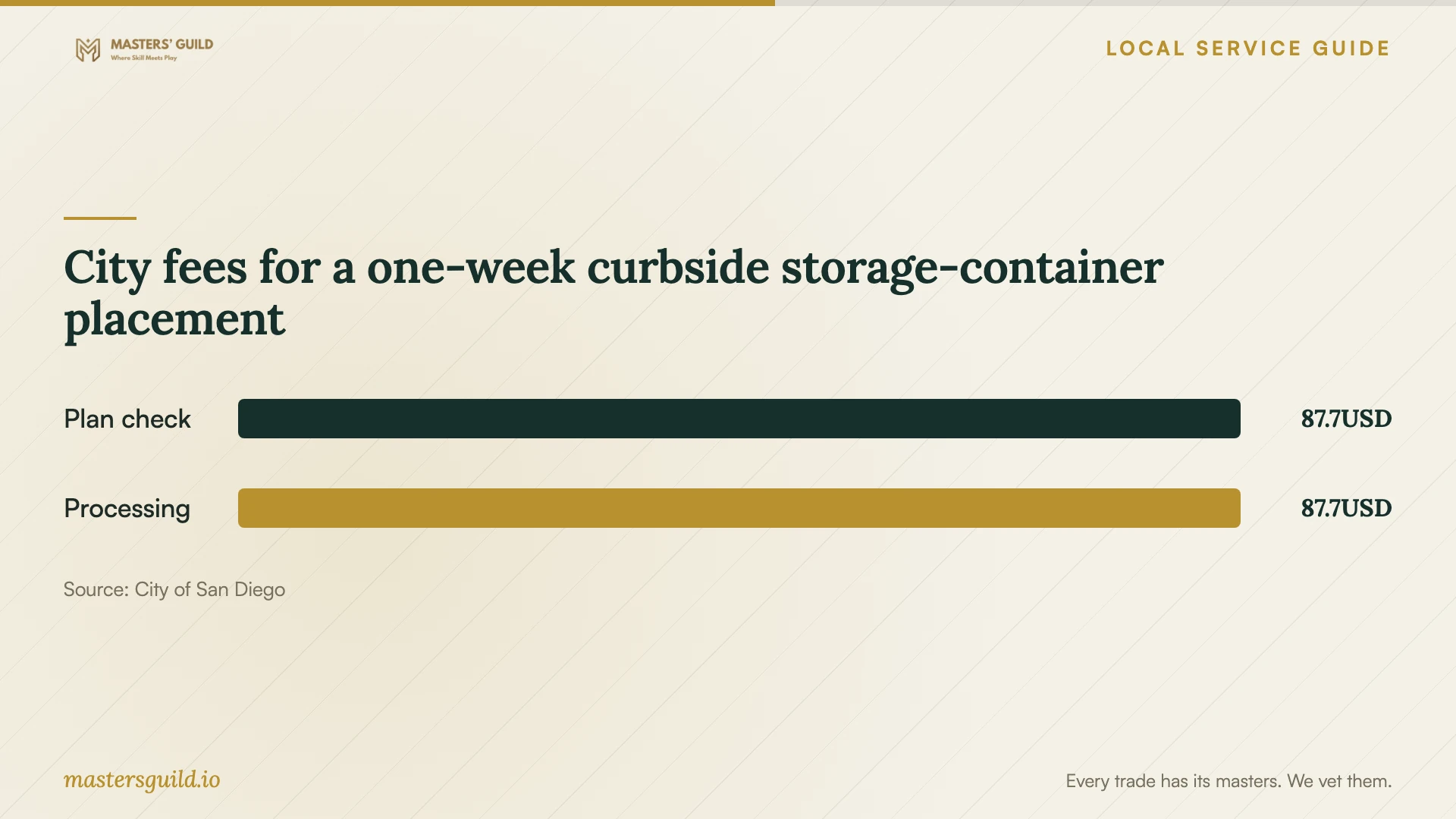
City fees for a one-week curbside storage-container placement
Local details that affect your job
Budget for curbside-container permission
The City of San Diego’s July 2026 bulletin lists a temporary-storage-container plan-check fee of $87.68 per week, with a maximum use of one week, plus a flat $87.68 processing fee. An affected metered space adds $20 per meter per day. Ask who pays these charges and how many meters the placement affects. Budget for these city fees alongside the container supplier’s quote before choosing your loading arrangement. [2]
Check Downtown and Hillcrest loading windows
The city says most meters operate Monday through Saturday from 8 a.m. to 6 p.m., while meters in Downtown’s Hospitality Zone and Hillcrest’s Commercial Zone operate until 8 p.m. Follow the signs at the actual loading location. A white curb serves active passenger loading, and a red curb prohibits stopping even with flashers. Send the mover photographs of the signs and curb before agreeing on truck access. [3]
Choose the next step for your move
| Your situation | Next step | Confirm before booking |
|---|---|---|
| Household move within California | Check BHGS licensing and arrange a visual inspection. | Signed estimate, moving agreement and Not to Exceed Price. |
| Move into or out of California | Check BHGS and FMCSA licensing. | Both signatures on the estimate and whether it is binding or non-binding. |
| Container on a city street or sidewalk | Arrange a Traffic Control Permit and placement plan. | Application notice, 72-hour sign posting, fees and collection date. |
| Truck beside a metered or painted curb | Inspect posted restrictions with the mover. | A legal loading spot within the posted time limit. |
| Pre-move trip to Miramar | Check hours, material acceptance and vehicle requirements. | Avoid Sunday and listed holiday closures. |
Your hiring checklist
- Check the mover’s license and ask for its insurance and damage-coverage explanation.
- Give bidders the same inventory, packing requests and photographs of access at both homes.
- Compare written scopes and ask each mover to explain its billing method.
- Confirm the truck location or assign responsibility for container placement and permissions.
- Reserve any building elevator or private loading area with the property manager.
- Review the moving agreement before move day and document changes before loading.
- Photograph belongings, separate discard items and carry irreplaceable possessions yourself.
Frequently Asked Questions
Does a local household mover need a California license?
Yes. BHGS says companies moving household goods within, into or out of California must hold its license. Companies handling moves into or out of the state also need FMCSA licensing. Verify the company conducting your move before paying. [1]
Can I put a moving container on the sidewalk?
A container occupying the City of San Diego’s public right of way, including a sidewalk, requires a Traffic Control Permit. Submit the required application and plan, and confirm approval before delivery. The bulletin requires advance notice and sign posting. [2]
Can the moving truck use a red curb for a quick load?
No. The city prohibits stopping, standing or parking at a red curb, including when the driver turns on flashers. Discuss another legal loading location with your mover before move day. [3]
What should I do if I add furniture after the estimate?
For a move within California, you and the mover should sign a change order before loading. For a move into or out of California, update the estimate before loading. Ask the mover to record the added items and services. [1]
Sources and scope
This guide combines the sources below with practical planning guidance. Figures apply to the stated geography and period; request a written quote for your property.