
Local service guide
Pest control in San Bernardino: Hiring and Preparation
Pest control in San Bernardino starts with identifying the pest and choosing the right service. For a household infestation, check the company's California Structural Pest Control Board registration and the branch that covers the proposed work. Ask for a written scope covering inspection, treatment, entry-point repairs and follow-up. For mosquitoes or a neglected pool, check the county's vector-control jurisdiction before arranging private yard treatment. [1] [3] [4]
Choose the inspection before the treatment
Send photographs of the pest or damage, describe where you found it, and note when you first noticed activity. Include attic noises, damaged fruit, droppings near pet food or insects around water containers if you have observed them. Ask the inspector to identify the pest and show you the evidence before you authorize treatment.
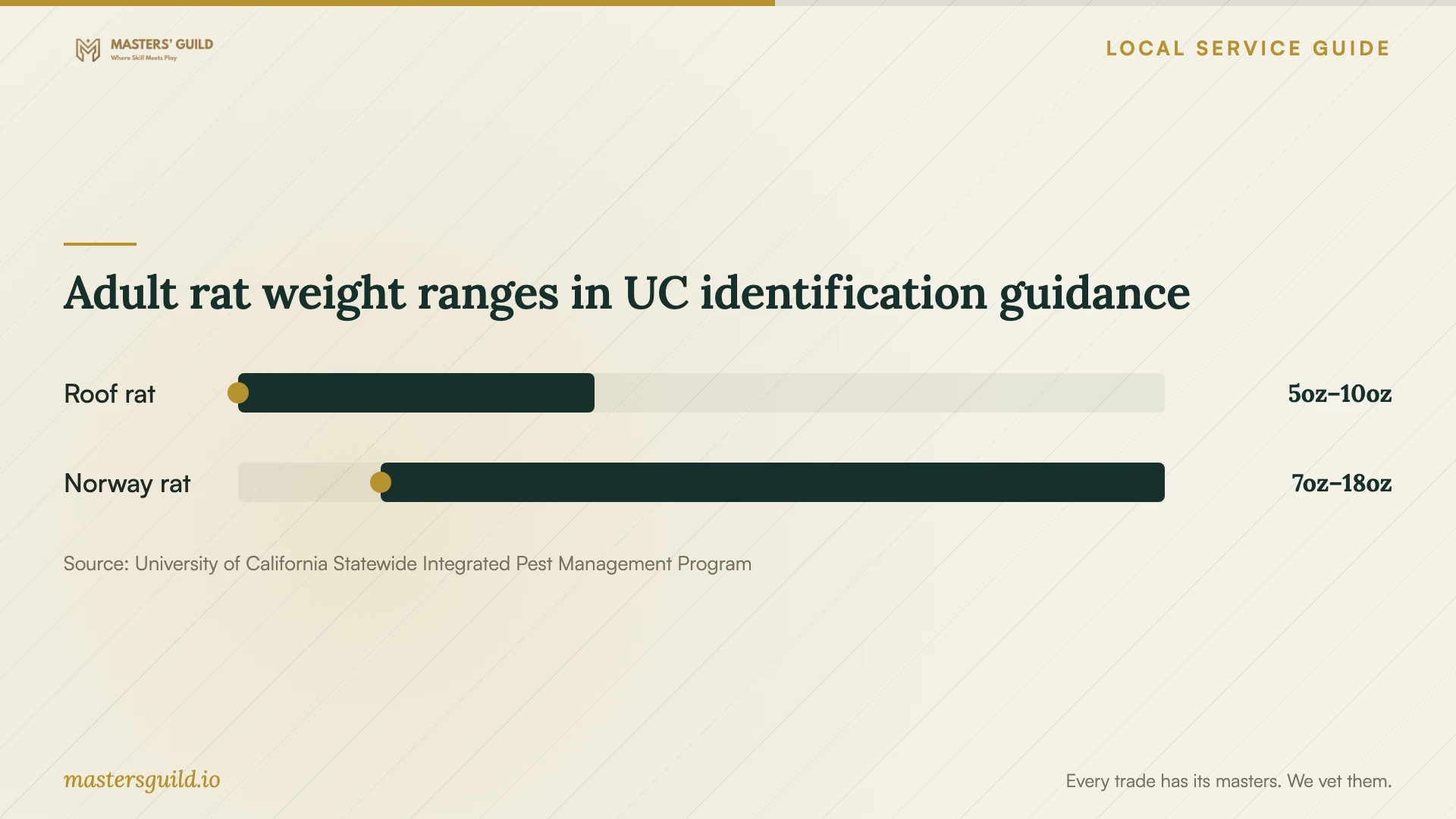
UC IPM describes roof rats as favoring attics, wall spaces and other nesting sites above ground. Norway rats often burrow along foundations and occupy ground-floor areas. Ask the provider to inspect both the signs you found and the routes into the building. Use nesting location and other identifying features alongside size when discussing the diagnosis. [5]
Describe access limits when requesting an appointment. Tell the provider about locked gates, crawl-space access, pets and rooms you cannot clear. Request preparation instructions before booking, including any arrangements you need to make for leaving and returning to the home.
Verify the company and the proposed branch
Use the Structural Pest Control Board's Online Services page to reach its company and individual license lookup. Ask for the registered company name and the name of the person inspecting or proposing the work. Check those details before paying a deposit. [4]
California defines Branch 2 as household pest control excluding fumigation with poisonous or lethal gases. Branch 3 covers wood-destroying pest control through insecticides or structural repairs and corrections, also excluding that fumigation. Branch 1 covers household and wood-destroying pest control through fumigation. Ask the company which branch covers each part of its proposal. [3]
An applicator license does not authorize someone to contract for pest-control work on their own behalf. The Board states that applicators perform their work for a registered company. If an individual offers treatment, ask which registered company will issue your agreement and take responsibility for the job. [3]
Request rat exclusion as a defined repair scope
Ask a rat-control bidder to list entry points, proposed sealing materials, trap locations and return visits. UC IPM recommends sanitation, structural exclusion and population control. Its guidance calls for sealing holes larger than one-quarter inch to exclude rats and mice, including openings above ground level. [5]
UC IPM warns that rats can chew through plastic, foam, wood and caulk. Ask the bidder to identify the material for each repair instead of accepting a general promise to seal gaps. Request photographs of completed repairs and clarify who will inspect roof vents, eaves and pipe penetrations. [5]
Discuss children, pets and wildlife before approving traps or bait. UC IPM states that rodenticide baits can poison animals that consume them and advises keeping pets away from bait and dead or dying rodents. Ask who will check traps, remove carcasses and retrieve unused bait at the end of treatment. [5]
Check county mosquito help before yard treatment
San Bernardino County's Mosquito and Vector Control Program inspects and treats water sources and responds to community vector-control requests. The county directs residents to its West Nile Zip Locator to identify their vector-control district. Confirm coverage for your address before requesting county service. [1]
Inspect plant saucers, buckets and other water-holding containers before requesting a spray quote. In its May 2025 guidance, the county advises residents to dump, drain and scrub these containers and check window and door screens. The county published that advice for prevention; its weather discussion describes May 2025 conditions. [2]
If you suspect a neighboring green pool, report its location through the county program. Stay on your own property when documenting the concern. Tell a private bidder about nearby water sources and ask which sources they can address within your job scope. [1]
Compare total scope and follow-up terms
Ask each provider for an itemized proposal: inspection, treatment areas, repairs, preparation, return visits and exclusions. Request separate totals for a one-time job and any maintenance agreement. Check cancellation terms and ask what happens if activity continues after the scheduled visits.
For suspected termite damage, use the Board's Wood Destroying Organisms Database to check whether someone inspected the property within the previous two years. Ask the new inspector to explain the need for another inspection and which findings support the proposed treatment or repairs. [4]
Keep the written proposal, preparation instructions, treatment record and repair photographs together. At the follow-up visit, ask the provider to explain what they checked and what you should monitor next. Agree on who handles any remaining repairs before closing the job.
Adult rat weight ranges in UC identification guidance
Local details that affect your job
Green-pool reports and courtesy inspections
The county's May 8, 2025 notice lists 800-442-2283 for calls or texts requesting a courtesy inspection or reporting a green pool. Use the program's district locator to confirm jurisdiction first. Ask about the response available for your address; the county program page notes that draining a pool can involve a charge to the homeowner. [1] [2]
Mosquito fish have eligibility and availability limits
The county program offers free mosquito fish for private-property mosquito control to residents within its jurisdiction. It limits requests to one per household per year, requires proof of residence and asks residents to schedule pickup. Distribution depends on availability. Contact the program about your water feature before buying fish or arranging treatment. [1]
Choose the next step for the signs you found
| Situation | Next step | Scope to confirm |
|---|---|---|
| Household insects | Request identification and a household-pest inspection. | Branch 2 covers household pest control excluding fumigation. |
| Suspected termite damage | Check the Board's property-inspection database and request an inspection. | Branch 3 covers wood-destroying pest work excluding fumigation. |
| Proposed tent fumigation | Ask which registered company will perform the fumigation. | Branch 1 covers fumigation with poisonous or lethal gases. |
| Rat signs indoors | Request inspection, trapping and an entry-point repair proposal. | Include sanitation, exclusion and population control. |
| Mosquitoes or a green pool | Check the district locator and contact the responsible vector program. | Ask about water-source inspection and the limits of private treatment. |
Your hiring checklist
- Photograph the pest or damage and list the affected rooms or outdoor areas.
- Ask the inspector to identify the pest and explain the evidence.
- Request the registered company name and verify the branch covering the work.
- Compare written scopes for treatment, entry-point repairs and follow-up.
- Tell the provider about pets, children and access restrictions.
- Get preparation and return-home instructions before booking.
- Confirm who checks traps, removes carcasses and documents repairs.
Frequently Asked Questions
Should I book recurring pest treatment immediately?
Request an inspection and written findings first. Ask why the provider recommends recurring visits, what each visit includes and whether the proposal offers a one-time option. Compare the full agreement, including cancellation and return-visit terms.
Can a licensed applicator sell me pest-control work independently?
The California Board states that an applicator cannot contract for pest-control work on their own behalf and must work for a registered structural pest-control company. Ask for that company's details and verify them through the Board's lookup. [3] [4]
Does the county provide household extermination?
The county describes its program as public-health vector control, including water-source inspections and community vector requests. Ask the responsible district what assistance it offers for your problem. Arrange a separate household-pest inspection if you need work outside that service. [1]
Does catching rats finish the job?
UC IPM recommends combining population control with sanitation and structural exclusion. Ask the provider to document entry-point repairs and explain which food or shelter sources you need to address. [5]
Sources and scope
This guide combines the sources below with practical planning guidance. Figures apply to the stated geography and period; request a written quote for your property.