
Local service guide
Door and Window Repair in San Antonio
Arrange Door and Window Repair in San Antonio by requesting a diagnosis, an itemized repair scope, and a permit plan before approving replacement. Have the contractor distinguish hardware adjustment, glass work, frame repair, and changes to the opening. The city's Development Services FAQ describes replacement and relocation under different permit categories. Use that guidance to frame your questions, then obtain scope-specific confirmation from city staff before signing. [1]
Describe the problem and request a diagnosis
Send photographs of the whole opening, the damaged area, and the manufacturer label. Describe where a door rubs and whether it latches or locks. For a window, identify broken glass, moisture, loose hardware, or difficulty opening it. Request an inspection before accepting a complete replacement proposal.
Record where you see moisture before wiping it away. ENERGY STAR explains that indoor condensation depends on glass temperature and indoor humidity; exterior condensation can occur in warm, humid weather. Have the contractor distinguish moisture on a glass surface from moisture elsewhere in the assembly. Point out water on the sill or surrounding wall as a separate inspection concern. [2]
Compare separate repair and replacement scopes. Require the contractor to identify the parts they would change and explain any proposed trim removal, wall repair, or repainting. If they recommend replacing the entire opening, request their reason in writing and ask what repair option they considered.
Confirm the permit route for the proposed work
San Antonio's Development Services FAQ lists window and door replacement as examples of residential general-repairs permit work. It also says moving walls or doors requires a building permit. Describe whether you plan to retain the opening, relocate a door, or alter the surrounding wall when requesting a city determination. [1]
Treat the FAQ as a starting point for that conversation. It contains older code references and portal placeholders, and the supplied guidance does not establish current requirements for each hardware or glass-only repair. Obtain confirmation from Development Services for your address and scope. Record the city's response, application responsibility, fees, and inspection arrangements in the estimate. [1]
The FAQ lists Development Services at 1901 S. Alamo St. and gives 210-207-1111 as its contact number. Prepare photographs and a written scope before calling. If the contractor discovers damage and proposes additional work, request a revised estimate and clarify any permit changes before approving it. [1]
Specify replacement products and glass
For a complete replacement window or glazed door, request the model number and its ENERGY STAR qualification for the installation climate zone. ENERGY STAR advises buyers to retain the ENERGY STAR and NFRC labels. Include those documents in the handover agreement so you can identify the installed product. [2]
DOE explains that a lower U-factor means less heat flows through the window, while a lower solar heat gain coefficient, or SHGC, means less solar heat passes through it. ENERGY STAR recommends low SHGC for south-, east-, and west-facing windows in warmer climates. For a sun-exposed opening, discuss the glass specification and daylight together: DOE notes that lower visible transmittance means less daylight enters. [2] [3]
For glass-only work, request documentation for the repaired assembly. DOE's residential acquisition guidance excludes sash packs or kits and attachments outside a product's NFRC-certified rating. Have the contractor explain which performance rating and warranty apply to the proposed repair before you accept a complete-product certification claim. [3]
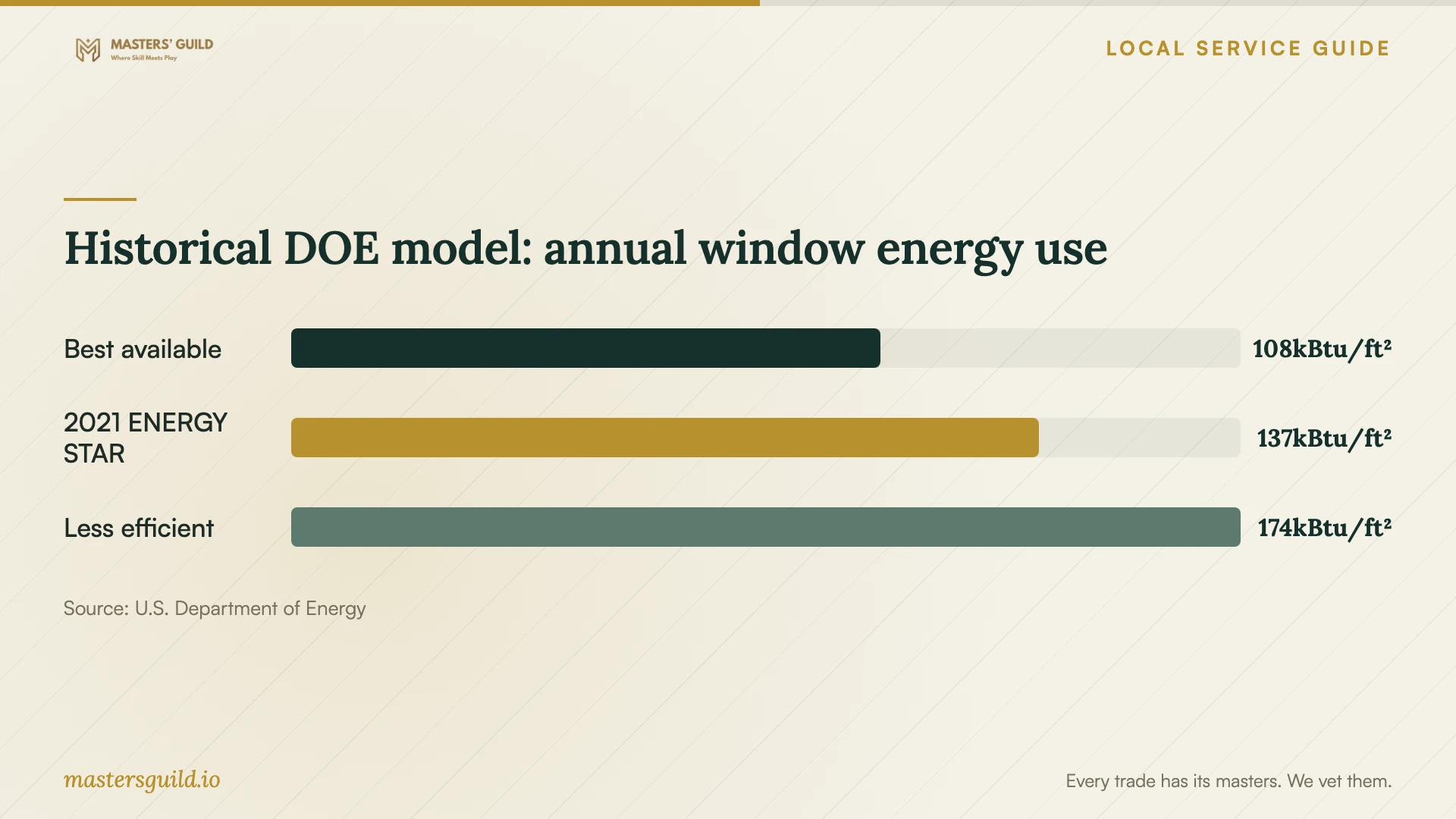
The chart presents a historical DOE modeling comparison. Its middle option uses December 2021 ENERGY STAR efficiency levels, while ENERGY STAR's supplied product page identifies newer criteria effective October 23, 2023. Use the comparison to understand the importance of specifications. It does not establish current qualification, a local repair budget, or your home's energy savings. [2] [3]
Agree on the estimate and completion checks
Request an itemized estimate for labor, parts or glass, access equipment, disposal, finish work, and permit handling. ENERGY STAR recommends several installer quotes and separate labor and material prices for complete window replacement. For a repair, also clarify diagnostic charges, deposits, return visits, exclusions, and who will authorize additional work. [2]
ENERGY STAR warns that some manufacturers can void warranties when installers do not follow their instructions, and some warranties require manufacturer-certified installers. Have the contractor identify the applicable instructions and certification conditions. Obtain written product and workmanship warranty terms. [2]
Before final payment, operate each repaired door or window with the contractor present. Check the handle, latch, lock, and opening movement. Identify unfinished work and agree on its completion. Keep the invoice, product labels, warranties, and permit records together for future repairs.
Historical DOE model: annual window energy use
Local details that affect your job
Separate replacement from relocating an opening
The city's FAQ describes door and window replacement under residential general-repairs permits and moving walls or doors under building permits. These statements come from legacy FAQ guidance, rather than independently confirmed current policy. Before ordering a unit, give Development Services the proposed scope and request confirmation of the permit route. Have the contractor revise the estimate around that determination. [1]
Update permit information when changing contractors
If you dismiss a contractor after obtaining a permit, San Antonio's FAQ directs you to call 210-207-1111 about changing the permit information. It says staff may require an in-person supervisor visit and a letter describing the change. Confirm the current procedure with staff and resolve the permit record before the replacement contractor resumes permitted work. [1]
Choose what to request before approving work
| Situation | Request | Approval checkpoint |
|---|---|---|
| Door rubs or fails to latch | A diagnosis and repair scope | Require an explanation for proposed cutting or replacement |
| Moisture on the glass surface | An assessment of condensation and moisture location | Discuss humidity and surface temperature before approving glass work |
| Complete door or window replacement | Product specifications and a permit determination | Use the city's FAQ category as a starting point; confirm current requirements |
| Door relocation or wall changes | A defined alteration scope | Confirm the building-permit route described in the city's FAQ |
| Replacement for a sun-exposed opening | Climate-zone qualification, U-factor, SHGC, and daylight information | Review the proposed performance ratings with the installer |
Your hiring checklist
- Photograph the opening, damage, hardware, and manufacturer labels.
- Describe the operating problem and the location of any moisture.
- Request a diagnosis and separate repair and replacement scopes.
- Obtain a scope-specific permit determination from Development Services.
- Assign application, fee, and inspection responsibility in writing.
- Compare itemized prices, exclusions, deposits, and additional-work terms.
- Collect product specifications, installation requirements, and warranties.
- Test operation with the contractor and retain the completion records.
Frequently Asked Questions
Does San Antonio require a permit for window replacement?
The city's Development Services FAQ lists window replacement under residential general-repairs permits. The legacy FAQ alone does not independently confirm current policy. Contact Development Services at 210-207-1111 with your scope and assign permit and inspection responsibility in the estimate. [1]
Should I replace a sticking door?
Request a diagnosis and a repair proposal first. Have the contractor identify which parts they would retain, what they would change, and why they recommend replacement. Compare the finish work and exclusions in both scopes before deciding.
Does condensation mean the window needs replacement?
ENERGY STAR explains that indoor condensation can occur when humid air meets a cold glass surface, and exterior condensation can occur in warm, humid weather. Record the moisture location and request a diagnosis before approving replacement. [2]
Can the chart predict my energy savings?
No. DOE published this comparison in guidance updated in December 2021. It uses specified modeled products, including a best-available configuration from Minneapolis office-design guidance. The source does not establish a representative San Antonio modeling climate. Use actual product specifications and your home's conditions when discussing an upgrade. [3]
Sources and scope
This guide combines the sources below with practical planning guidance. Figures apply to the stated geography and period; request a written quote for your property.