
Local service guide
Pest control in Salt Lake City: hiring and planning
Arrange pest control in Salt Lake City by requesting pest identification, checking the company’s and treating applicator’s Utah credentials, and comparing written plans for preparation, treatment and follow-up. Utah distinguishes commercial pesticide businesses from individual for-hire applicators. For bed bugs, request specific training and an inspection-based proposal. For confirmed elm seed bugs, include window and door sealing in the scope. [1] [2] [3]
Describe the problem before requesting treatment
Send clear photos, identify the affected rooms or exterior surfaces, and record the dates you noticed activity. Describe what you saw without guessing the species. Ask the provider to identify the pest and explain the findings before you authorize treatment.
USU Extension says elm seed bugs can enter buildings in large numbers, release an odor when crushed and leave fecal spots. They do not pose a human health threat. For a confirmed infestation, request an assessment of entry points alongside any proposed pesticide application. [2]
For suspected bed bugs, ask about the company’s bed bug training and inspection process. Utah DHHS cautions that some licensed pest professionals lack training in managing bed bugs and recommends interviewing several companies before choosing. [3]
Check the company and the person doing the work
The Utah Department of Agriculture and Food lists a commercial pesticide business license for a business providing pest-control services and a commercial pesticide applicator license for an individual making for-hire pesticide applications. It also lists a pesticide salesperson permit for someone soliciting services. Request the company’s credential details and the name of the applicator who will perform your treatment. [1]
Get credential numbers before booking. UDAF lists a pesticide licensing contact at 801-982-2300; use that contact to resolve questions about license type or status. Ask the company for proof of liability insurance and the name of the person responsible for follow-up. Keep those details with your proposal. [1]
Compare the complete scope and cost
Give each company the same description of affected areas and requested work. Ask providers to separate inspection, treatment, exclusion repairs and return visits in their proposals. Record the total price, payment schedule, cancellation terms and any recurring-service commitment. Ask whether you can purchase the proposed work without a continuing contract.
For bed bugs, Utah DHHS recommends an inspection before a quote or pesticide application, a written inspection report and an action plan for preparation and prevention. It advises companies to base quotes on inspection findings. Request the report before approving the price, then ask how the company will confirm elimination and charge for additional visits. [3]
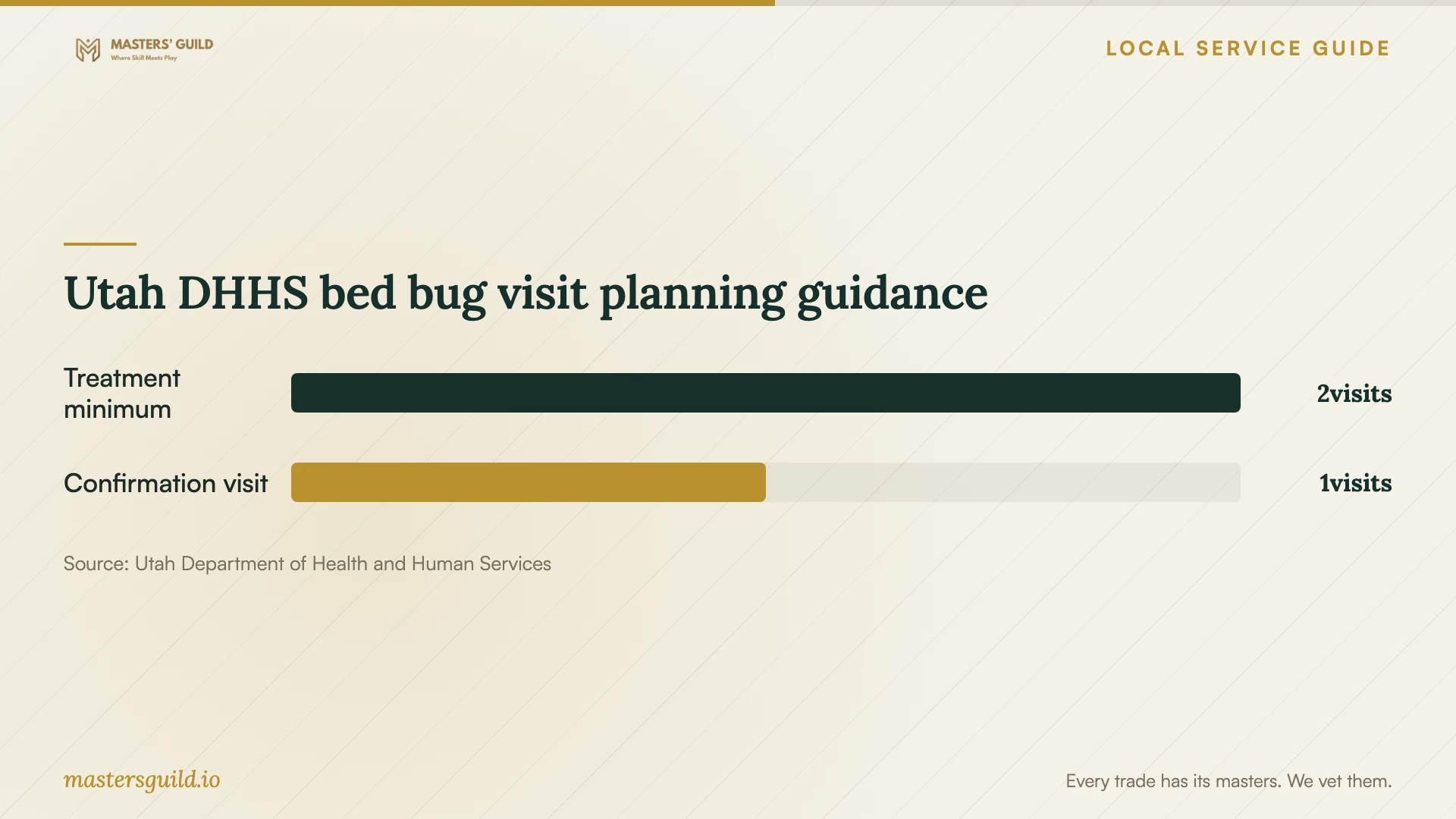
Plan for the bed bug treatment course that DHHS describes: at least two treatment visits and a third follow-up visit. Severe infestations or cluttered homes may require more visits. The visit chart summarizes this statewide guidance; it provides no local price or completion date. [3]
If you receive a recurring-service proposal, ask the provider to explain which identified pest it addresses and what each visit includes. Compare that proposal with an option for the current problem. Have the company record any promised return service, exclusions and extra charges before you sign.
Prepare for the visit and agree on follow-up
Get preparation instructions in writing before moving belongings, cleaning affected areas or applying a product yourself. Tell the provider about children, pets and access limitations. Ask for the proposed products, treatment locations, instructions for leaving and returning, and a contact for questions after the visit.
Agree on how you will report continued sightings and when the provider will reassess the job. Keep a dated photo log and the inspection report. Ask the provider to define the result you are paying for, the period covered by return visits, and any conditions attached to those visits.
For confirmed elm seed bugs, USU Extension recommends sealing openings, repairing window and door gaps, vacuuming bugs and clearing fallen elm seeds and debris. The university cautions that pesticide applications may not stop entry. Ask who will complete sealing work and whether the proposal includes it. [2]
Utah DHHS bed bug visit planning guidance
Local details that affect your job
Include an entry-point assessment for Wasatch Front elm seed bugs
USU Extension’s October 2018 fact sheet describes elm seed bugs along the Wasatch Front and identifies mid-June through August as their peak nuisance period. Adults can remain through fall and overwinter around structures. For an October assessment here, ask the provider to inspect window frames and door seals. USU highlights gaps where sliding windows meet and recommends exclusion. This older guidance supports an inspection plan; it does not establish a current outbreak or neighborhood prevalence. [2]
Use the county debris process only for qualifying health concerns
Salt Lake County Health Department responds to complaints about large amounts of debris on private property when the debris presents a public-health threat, such as housing rodents or breeding mosquitoes. If staff find a threat, they direct the responsible person to remove and dispose of the debris. Property owners handle cleanup; the county does not remove debris. Do not report litter through this process. For large amounts of debris that concern you but present no public-health threat, contact your city’s zoning or code enforcement office. Document the location and suspected pest source, and discuss work at your home with your provider. [4]
Match the proposal to the problem
| Situation | Request | Before approving or reporting |
|---|---|---|
| Unidentified insects | Identification and inspection | Ask which observed features support the identification. |
| Confirmed elm seed bugs | Window and door exclusion assessment | USU recommends sealing entry points; ask who will perform repairs. |
| Suspected bed bugs | Provider with bed bug training, inspection and written plan | DHHS advises at least two treatment visits and a third follow-up visit. |
| Pesticide treatment proposal | Company and applicator credential details | Utah lists separate commercial business and for-hire applicator license types. |
| Large amounts of neighboring private-property debris presenting a public-health threat | Salt Lake County Health Department complaint assessment | Examples include debris housing rodents or breeding mosquitoes. Owners handle cleanup; do not report litter. |
Your hiring checklist
- Photograph the pest and affected areas; record when and where you noticed activity.
- Ask the provider to identify the pest and explain the inspection findings.
- Request the company’s and treating applicator’s Utah credential details.
- Compare written scopes, total prices, return visits and contract terms.
- For suspected bed bugs, request an inspection report and a complete treatment and follow-up proposal.
- Get preparation, pet-access and return instructions before the appointment.
- Assign responsibility for sealing repairs and debris cleanup.
- Keep the report and a dated sighting log for the follow-up discussion.
Frequently Asked Questions
Can I use a general pest-control company for bed bugs?
Ask about bed bug training before hiring. Utah DHHS says some licensed pest professionals lack that expertise. Request an inspection-based quote, written report, preparation plan and a schedule for treatment and confirmation visits. [3]
Does a salesperson’s Utah permit establish applicator credentials?
UDAF lists the salesperson permit and commercial pesticide applicator license as different credential types. Request the treating applicator’s details as well as the company’s business credential. [1]
Will spraying stop elm seed bugs from entering?
USU Extension cautions that pesticide applications may not stop entry. For confirmed elm seed bugs, request an assessment of window and door gaps and ask who will perform the sealing work. [2]
When should I report neighboring debris to Salt Lake County?
Use the health department’s process for large amounts of private-property debris presenting a public-health threat, such as housing rodents or breeding mosquitoes. Do not report litter. Staff direct the responsible person to arrange cleanup if they find a threat; the county does not remove debris. For large debris concerns without a health threat, contact your city’s zoning or code enforcement office. [4]
Sources and scope
This guide combines the sources below with practical planning guidance. Figures apply to the stated geography and period; request a written quote for your property.