
Local service guide
Yard Cleanup in Salem, OR: Scope, Hauling and Hiring
Arrange Yard Cleanup in Salem, OR by agreeing on what the crew will remove, where the debris will go and whether hauling belongs in the price. Send photos and request a written scope before booking. Marion County charges separate rates for clean yard waste and garbage at the Salem-Keizer transfer station, and charges mixed loads at the garbage rate. Ask the crew to separate materials and identify any tree removal, stump grinding, irrigation repair or drainage work that needs a licensed contractor under Oregon rules. [1] [3]
Define the cleanup before requesting offers
Photograph the front yard, back yard, side passages and debris piles. Mark the areas you want cleared and name the plants you want the crew to keep. Separate leaf collection, hand weeding, fallen-branch pickup and rubbish removal in your request so each provider can price the same tasks.
Describe the finish you expect. You might want leaves collected from the lawn, loose debris removed from beds and paths swept, while leaving mulch and planted areas undisturbed. Tell the crew whether you want debris placed in your cart, kept in a compost area or hauled away.
Include access details: gate width, steps, parking space and the route between the yard and the loading area. Ask the provider to inspect the property before confirming a price if your photos leave the amount or type of debris unclear.
Choose a disposal plan before the crew starts
Marion County lists yard trimmings, twigs, leaves, pine needles and grass clippings among curbside yard-debris materials. Its mixed-organics guidance includes Salem residents living within city limits and tells readers to confirm service availability with their hauler. Ask about your address, cart capacity, lid closure and collection day before promising the crew it can leave all debris in the cart. [2]
For a haul-away job, ask the provider to name the destination and separate clean vegetation from rubbish. At the Salem-Keizer transfer station, the county charges mixed loads at the garbage rate. Keep discarded plastic pots, broken outdoor items and other rubbish in a separate pile for the provider to assess. [1]
Check unusual materials before loading. The station excludes dirt, timbers measuring 6 by 6 inches by 4 feet or larger, and stumps larger than 6 inches in diameter at 24 inches above the soil line from its clean-yard-waste acceptance. Send photos and measurements to the provider and ask it to confirm a suitable destination for those materials. [1]
Compare the complete price
Request a total that identifies labor, loading, transport and disposal. Ask whether the provider charges a fixed amount or bills by time, and how it will handle additional debris discovered during the job. Agree that the crew will seek your approval before adding work or exceeding the quoted scope.
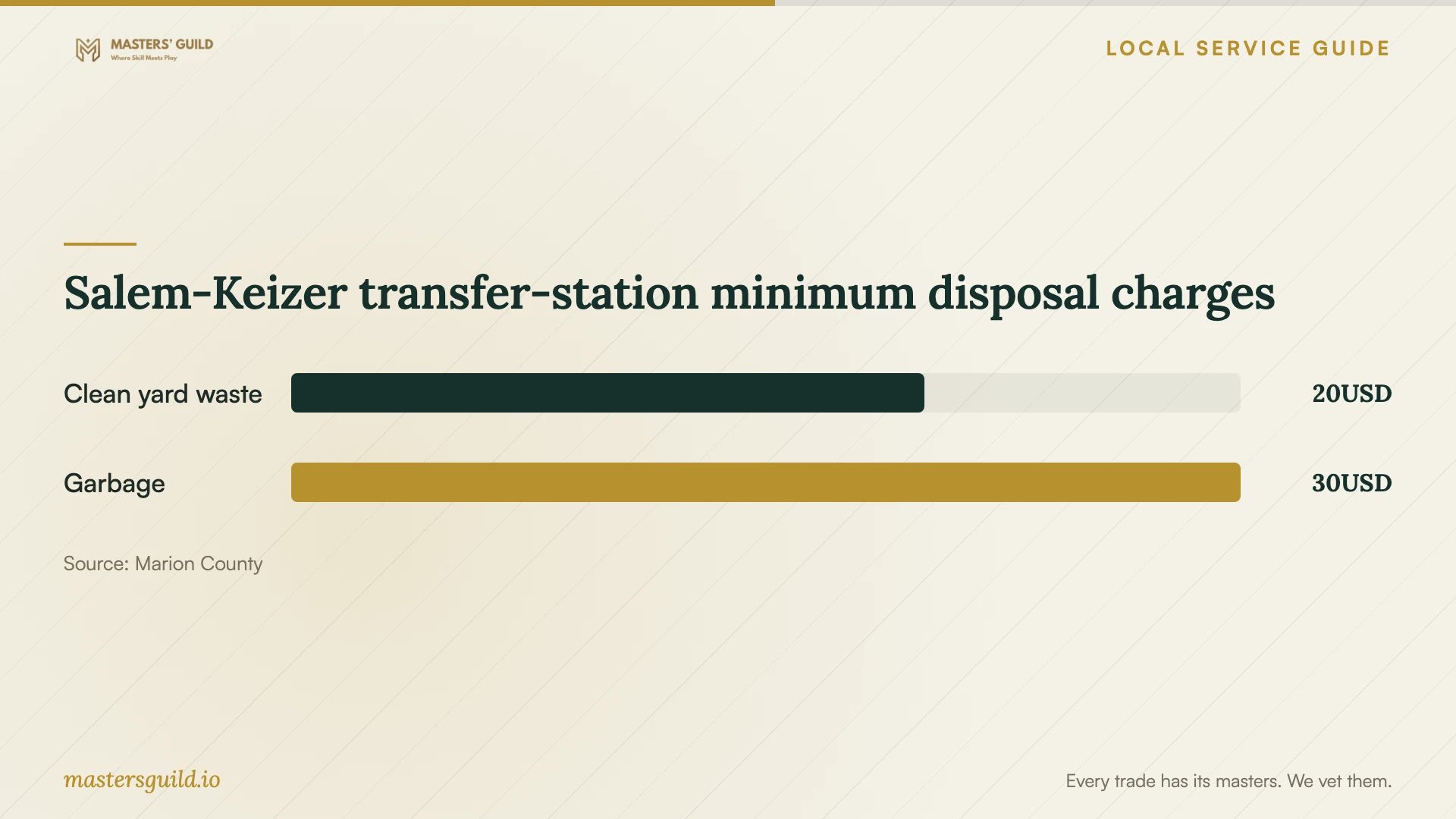
The county lists clean yard waste at $80 per ton with a $20 minimum, and garbage at $130 per ton with a $30 minimum. Treat these as published facility charges when reviewing the hauling portion of an offer. You still need a provider's quote for the work at your property and transportation. [1]
Ask whether disposal charges are included, passed through with a receipt or subject to an allowance. If one offer includes hauling and another leaves debris on site, request matching disposal options before comparing their totals. Ask for proof of insurance and a written description of exclusions.
Separate regulated work from the cleanup
Check credentials against the work you intend to buy. Oregon's Landscape Contractors Board requires an LCB or CCB license for tree removal, stump grinding and guying limbs. The board requires an LCB license for irrigation repair and identifies drainage installation, maintenance and repair as work requiring a landscape contractor license. [3]
If you want the crew to repair a sprinkler, remove a standing tree or work on a drainage system, request that task as a separate line item. Ask who will perform it and verify the relevant license before accepting the offer. Do not treat a general cleanup description as confirmation that the provider holds credentials for those additions. [3]
Before work begins, walk the yard with the crew. Point out irrigation heads, lighting cables, plants to preserve and areas you want left untouched. At completion, inspect those areas and confirm that the crew removed or stored debris as agreed.
Salem-Keizer transfer-station minimum disposal charges
Local details that affect your job
Local transfer-station access and load rules
The Salem-Keizer Recycling & Transfer Station operates at 3250 Deer Park Dr. SE from 8 a.m. to 5 p.m., seven days a week except listed holidays. Marion County adds $10 for an unrestrained load and doubles fees for repeated occurrences. Ask your provider to secure the load and confirm operating hours before dispatch. [1]
Confirm curbside service at your address
Marion County's curbside guidance includes Salem residents within city limits in its mixed-organics program and directs readers to check availability with their hauler. For a West Salem address, confirm service with your own hauler rather than assuming this county guidance establishes your collection arrangements. Decide between cart placement and haul-away after that check. [2]
Keep hazardous leftovers out of the debris load
Marion County prohibits household hazardous waste in the transfer station's paid disposal and recycling areas. It provides a separate household hazardous-waste facility at the same site. Flag old chemicals or unidentified containers before the crew starts, and confirm the separate facility's acceptance requirements and hours. [1]
Choose the scope and disposal route
| Your situation | What to arrange | What to confirm |
|---|---|---|
| Leaves and trimmings you want placed in a cart | Collection and cart placement | Hauler availability, accepted materials and cart limits; county guidance includes Salem within city limits. |
| Clean vegetation that needs hauling | Separate collection and transport | Destination acceptance; the local transfer station lists an $80-per-ton rate and $20 minimum. |
| Vegetation mixed with rubbish | Separate piles and disposal pricing | The local transfer station charges mixed loads at the garbage rate. |
| Tree removal or stump grinding | A separate scope with a licensed provider | Oregon requires an LCB or CCB license for these tasks. |
| Sprinkler repair or drainage work | A separate scope with an LCB-licensed contractor | Verify the license and define the repair before accepting the offer. |
Your hiring checklist
- Send overview photos and close-ups of each debris pile.
- Mark plants to preserve and areas to leave untouched.
- Choose cart placement, on-site storage or haul-away.
- Confirm material acceptance and disposal destination before booking.
- Request a written total with hauling, disposal and exclusions.
- Identify any tree, stump, irrigation or drainage additions and verify credentials.
- Agree on access, parking and approval for extra work.
- Inspect the yard and debris disposition before signing off.
Frequently Asked Questions
How much should I budget for a hired cleanup?
Request a property-specific quote for labor, loading, transport and disposal. The available local evidence establishes transfer-station fees, rather than a crew price range: clean yard waste has a $20 minimum and garbage has a $30 minimum. Ask providers to price the same tasks and disposal route. [1]
Can the crew put leaves in my organics cart?
Marion County lists leaves among yard-debris materials and includes Salem residents within city limits in its mixed-organics guidance. Confirm your address and cart limits with your hauler, then tell the crew how much space it may use and what to do with overflow. [2]
Can a cleanup provider remove a tree or repair sprinklers?
Verify credentials for each task. Oregon permits contractors with an LCB or CCB license to remove trees and grind stumps. Irrigation repair requires an LCB license. Ask the provider to identify who will perform the work and put it in the written scope. [3]
Will the transfer station accept soil and large stumps?
The Salem-Keizer station excludes dirt and stumps larger than 6 inches in diameter at 24 inches above the soil line from clean-yard-waste acceptance. Have the provider confirm another suitable destination before including those materials in the hauling quote. [1]
Sources and scope
This guide combines the sources below with practical planning guidance. Figures apply to the stated geography and period; request a written quote for your property.