
Local service guide
Tile setting in Salem, OR: Hiring and Planning
For tile setting in Salem, choose a contractor with an Oregon CCB license and agree on removal, preparation and installation in writing. Before contracted renovation in a home constructed before January 1, 2004, resolve Oregon DEQ's asbestos survey requirement. Send bidders room dimensions, photos, the building age and a description of the surfaces you want removed. [1] [2]
Check the business that will take responsibility
Oregon's Construction Contractors Board says compensated construction involving improvements to real property generally requires a license. It includes floor covering among its examples. Ask for the business's CCB number, use the License Search option on the agency's website and confirm that the business holds the proper endorsement for your residential project. [2]
Ask who will perform the work and who will supervise it. Confirm whether the same business will handle removal and installation. Request examples that resemble your project, such as a shower with a niche or a floor with doorway transitions. Ask the installer to explain those details rather than relying on finished-room photos.
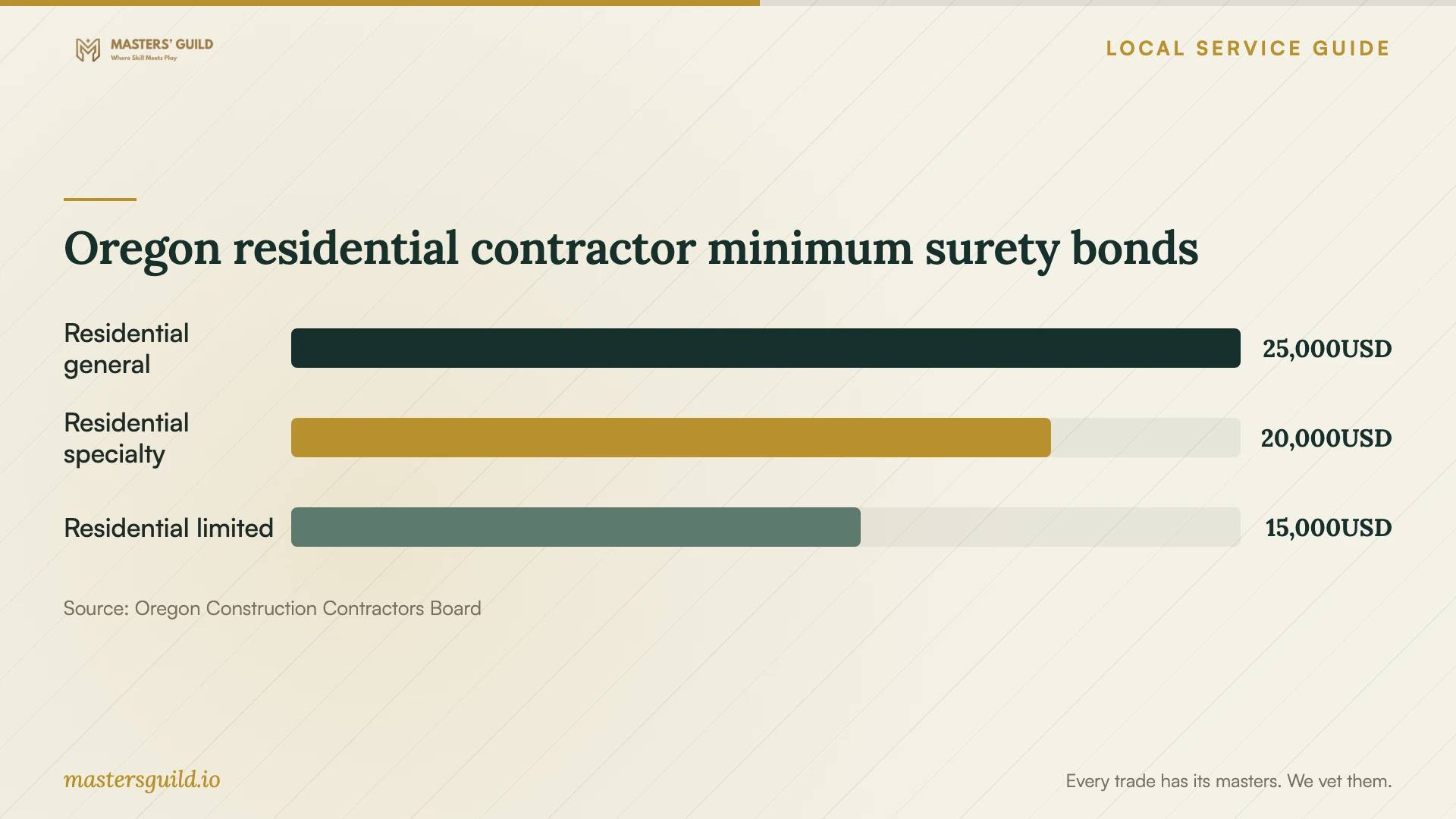
CCB requires contractors to carry general liability insurance and surety bonds according to their endorsements. The agency explains that liability insurance does not reimburse customers for poor work or construction defects, though it may cover damage caused by faulty work. Request written workmanship terms and a procedure for reporting problems alongside proof of insurance. [2]
Resolve old-floor removal before scheduling demolition
DEQ requires an accredited inspector's asbestos survey before renovation in residential buildings constructed before January 1, 2004. Its definition of renovation includes replacing, stripping and repairing flooring. For contracted removal in a home within that age range, give the inspector the proposed scope and ask the installer to review the report before demolition. [1]
DEQ exempts owner-occupants of single-family homes doing their own renovation work from the survey rule. Do not assume that exception covers a contractor's work. DEQ also describes an alternative: assume all impacted materials will undergo removal as friable asbestos-containing materials and use a DEQ-licensed asbestos abatement contractor. [1]
Ask who will arrange and pay for the survey, and how the contractor will handle proposed removal outside the surveyed area. DEQ requires a copy of the survey report on-site during renovation or demolition. Keep the report with the agreed scope so the removal crew can consult both. [1]
Request a quote for the complete installation
Give each bidder the same room dimensions, existing-surface description, tile preference and layout. Ask them to identify tile supply, delivery, removal, disposal, surface preparation, setting materials, grout, edge trim and cleanup. Request quantities, allowances and exclusions rather than accepting a total without a scope.
For a shower, ask the installer to name the proposed waterproofing system and explain the work at corners, penetrations, the drain and any niche. Request a written sequence and checks before anyone covers the work. Ask who will coordinate plumbing changes and confirm permit requirements with the authority responsible for your address.
For a floor, discuss the finished height at doors and adjoining rooms. Ask the bidder to inspect the existing surface and describe the proposed preparation. Approve the layout, grout color and exposed edges before ordering. Agree on written pricing and your approval for additional preparation discovered during removal.
Agree on access, completion and follow-up
Build your budget from project-specific written quotes. Compare included materials, quantities, preparation allowances and responsibility for unexpected work. Ask bidders to explain differences in scope before choosing a total. Keep survey or abatement arrangements visible in the budget rather than leaving responsibility undecided.
Request separate milestones for removal, preparation, installation, grouting and return to use. Ask for the product instructions governing foot traffic or shower use. If you have one bathroom, arrange access elsewhere and agree on how the contractor will communicate delays.
At the walkthrough, review unfinished items and agree on their handling before final payment. Ask for cleaning instructions, product names and written workmanship terms. Keep leftover tile and project documents together, and confirm whom to contact about a loose tile, damaged joint or other concern.
Oregon residential contractor minimum surety bonds
Local details that affect your job
Oregon licensing covers paid flooring work here
The statewide CCB licensing rule applies to Salem projects, and the agency names floor covering as work requiring a license. Check the business's CCB number and proper residential endorsement before signing. If an installer claims an exemption, ask them to identify it and confirm its application with CCB. [2]
Construction year changes the removal plan
Oregon DEQ's statewide survey requirement applies to residential buildings constructed before January 1, 2004. Flooring replacement falls within its renovation definition. For contracted removal in a Salem home within that age range, arrange the accredited inspector's survey before demolition and keep the report on-site. The owner-occupant exception concerns owners doing their own single-family renovation work. [1]
Choose your next step before booking
| Your situation | Next step | Question to ask |
|---|---|---|
| You want to hire someone for tile flooring | Check the business's CCB license and proper endorsement. | What business name and CCB number will appear on our agreement? |
| You plan contracted removal in a home constructed before January 1, 2004 | Resolve DEQ's accredited-inspector survey requirement before renovation. | Who will arrange the survey and keep the report on-site? |
| You plan your own renovation in an owner-occupied single-family home | Review DEQ's owner-occupant survey exception before dividing the work. | Does my plan fit the exception if I hire someone for part of the removal? |
| You are comparing shower bids | Request the waterproofing system, work sequence and exclusions. | Who handles the drain connection and coordinates plumbing changes? |
| You need the room available by a fixed date | Agree on milestones and product-specific return-to-use instructions. | How will you communicate delays and changes to access? |
Your hiring checklist
- Record the construction year and describe each surface you want removed.
- Send bidders matching dimensions, photos, tile preferences and scope.
- Ask for the business's CCB number and check its license and endorsement.
- Resolve survey arrangements before booking contracted removal.
- Compare removal, preparation, materials and finishing allowances.
- Approve the layout, grout, trim and doorway transitions.
- Agree on access, return-to-use instructions and written change approvals.
- Collect product details, leftover tile and workmanship terms.
Frequently Asked Questions
Does a tile contractor need an Oregon license?
Oregon generally requires a CCB license for compensated construction involving improvements to real property. CCB names floor covering as an example. Ask for the business's number and confirm the proper endorsement for your project. [2]
Do I need an asbestos survey before replacing flooring?
DEQ requires an accredited inspector's survey before renovation in residential buildings constructed before January 1, 2004. Its renovation definition includes flooring replacement. It exempts owner-occupants doing their own single-family home renovation; confirm how that exception applies before dividing removal between yourself and a contractor. [1]
Does the contractor's bond guarantee reimbursement?
CCB explains that a surety bond can pay all or part of a CCB final order if the contractor fails to pay, up to the bond amount. The endorsement minimum does not promise payment for a particular complaint. [2]
What should I send when requesting a quote?
Send dimensions, photos, construction year, existing surfaces and your tile and layout preferences. Ask bidders to separate removal, disposal, preparation, materials and finishing. For a shower, request the proposed waterproofing system and a plan for coordinating plumbing work.
Sources and scope
This guide combines the sources below with practical planning guidance. Figures apply to the stated geography and period; request a written quote for your property.