
Local service guide
pest control in Salem, OR: Choose the Right Treatment
Arrange pest control in Salem by requesting an inspection, checking Oregon pesticide credentials against the proposed treatment, and comparing written quotes that include preparation and follow-up. Oregon limits commercial pesticide work to categories held by both the business operator and its applicator. For suspected termites, ask the inspector to identify the species and include moisture correction and damaged-wood repairs in the plan. [1] [2]
Ask for identification before choosing treatment
Send clear photographs of the insects or damage, describe the affected rooms or exterior areas, and record when you first noticed activity. Ask whether the company charges for inspection and which spaces the inspector will examine. Request photographs or a written explanation of the findings before approving work.
OSU's Pacific Northwest guidance identifies Pacific dampwood and Western subterranean termites as pests that damage structures. Dampwood termites occupy moist, water-damaged wood. Carpenter ants can nest in dry or water-damaged wood but do not eat it. Ask the inspector to explain how the signs support the identification. [2]
Distinguish outdoor sightings from activity inside the house. OSU says flying termite swarms alone do not show an infestation in a structure. Its guidance recommends action for termites living in buildings and tolerating termite activity outdoors. Ask what evidence supports the proposed treatment area. [2]
Match Oregon licenses to the proposed method
For a business advertising or performing pesticide application on other people's property, request its Commercial Pesticide Operator license and the responsible Commercial Pesticide Applicator's name. ODA requires commercial applicators to work for licensed operators and limits the work to categories held by both. Operator applicants must provide an insurance certificate or policy copy; ask for current insurance information with your quote. [1]
Check categories as well as license numbers. Oregon distinguishes General pest, Structural and Space fumigation under its Industrial, Institution, Health and Structural category. Structural covers non-fumigant pesticide treatment for wood-destroying pests in, on or around structures. Ask which category authorizes the proposed method. [1]
Confirm who will perform the application. Oregon allows licensed apprentices and immediately supervised trainees to work within their supervisor's categories. An immediately supervised trainee's supervisor must remain on site throughout application and be available at the point of use within five minutes. An apprentice's supervisor must remain reasonably available for consultation but need not remain on site. [1]
Include moisture correction in termite planning
OSU recommends inspecting the interior, exterior, crawl space and attic for termite activity and damage. Its control guidance includes fixing leaks, eliminating damp areas, replacing damaged wood, sealing exterior openings and removing wood debris. Ask the inspector to identify inaccessible areas and list the repairs alongside treatment recommendations. [2]
Separate the pest company's work from plumbing, drainage or wood repairs. Assign each task to a named person or contractor and request a sequence before work starts. Keep the inspection photographs so you can compare the repaired areas at follow-up.
JMA's Salem/McNary station table lists October precipitation as a monthly normal of 106.9 mm. The page does not identify the normal's reference years, so this value does not describe this October's weather. OSU warns that rain can wash exterior insecticides into waterways. Discuss the forecast and product-label requirements with the applicator when arranging exterior work. [2] [3]
Compare written scope and prepare for the visit
Request a written quote after inspection. Ask for separate amounts for inspection, initial treatment, monitoring, return visits and repairs. Give each company the same description of the affected areas, then compare what each proposal includes. Ask how the company will judge success and what additional visits would cost.
Request the proposed products, application locations and household preparation instructions. OSU advises following pesticide labels and keeping children and pets away from application areas for the label's specified time. Ask the company to provide written return instructions and explain what to do with toys, pet dishes and belongings near treatment areas. [2]
Before choosing an ongoing agreement, ask which pests it covers, what triggers a return visit and how cancellation works. Agree on a follow-up date for a one-time treatment. Record new sightings by location and date so you can discuss continuing activity with the company.
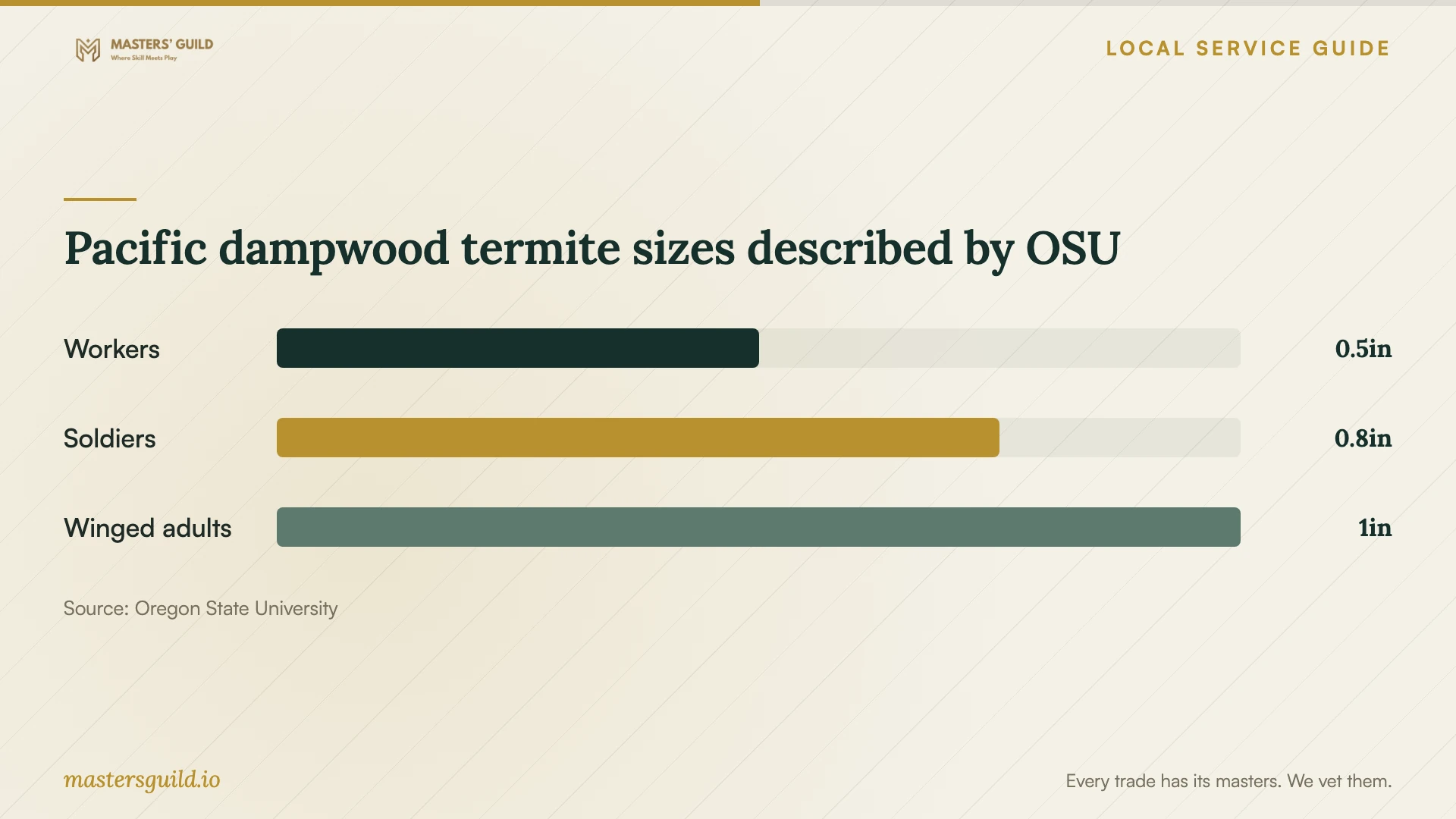
Pacific dampwood termite sizes described by OSU
Local details that affect your job
Oregon's category limits change credential checks
For a Salem job involving pesticide treatment of wood-destroying pests, check the operator and applicator categories against the method. ODA distinguishes non-fumigant Structural work from General pest and Space fumigation. Ask the company to identify the category covering your treatment before accepting a license number as sufficient documentation. [1]
Regional species guidance changes the repair discussion
OSU describes dampwood and subterranean termites as structural pests in the Pacific Northwest and drywood termites as uncommon in the region. This regional guidance does not establish which species occupies your house. Ask for identification and a moisture assessment: OSU says dampwood and subterranean termite insecticide treatments will not work unless you remove moisture sources and repair damaged wood. [2]
Choose the next step from the inspection findings
| Finding or proposed work | Next step | Question to ask |
|---|---|---|
| Flying termites outdoors without confirmed activity inside | Request identification and inspection before approving structural treatment. | What evidence shows termites in the building? |
| Termites with moisture damage | Coordinate treatment with moisture correction and damaged-wood repairs. | Who handles each repair, and in what order? |
| Non-fumigant pesticide treatment for wood-destroying pests | Check the Structural category on both relevant licenses. | Do the operator and applicator categories cover this method? |
| Application by an immediately supervised trainee | Confirm the supervising applicator will remain on site. | Who will supervise this visit? |
Your hiring checklist
- Photograph the insects and damage; record locations and dates.
- Request written identification and an inspection scope.
- Check the operator and responsible applicator credentials against the method.
- Confirm who will attend and supervise any trainee or apprentice.
- Separate treatment, moisture correction and wood repairs in the quote.
- Get written preparation and return instructions for your household and pets.
- Confirm included visits, additional charges and cancellation terms.
- Agree on follow-up and keep a record of continuing activity.
Frequently Asked Questions
Which pesticide credentials should I ask for?
Ask a business offering pesticide application for its Commercial Pesticide Operator license and the responsible Commercial Pesticide Applicator's name. ODA limits pesticide activities to categories held by both. Ask the company to explain how those categories cover your proposed method. [1]
Do flying termites mean my house needs treatment?
OSU says flying termite swarms alone do not establish an infestation in a structure. Request identification and inspection before approving treatment. Termites living in a building need action. [2]
Can treatment replace leak and wood repairs?
OSU says dampwood and subterranean termite insecticide treatments will not work unless you remove moisture sources and repair damaged wood. Ask the inspector to list the repair needs and agree who will complete them. [2]
How should I compare treatment prices?
Request written quotes after inspection and compare the same treatment areas, methods and follow-up responsibilities. Ask each company to separate inspection, treatment, monitoring and repairs, and to explain charges for continuing activity.
Sources and scope
This guide combines the sources below with practical planning guidance. Figures apply to the stated geography and period; request a written quote for your property.